Nepal Tour Package 2026/2027: Best Itinerary, Price, and Travel Advice
From the ancient, brick-paved streets of Kathmandu's Durbar Squares to the breathtakingly wild and rugged peaks of the deep Himalayas, Nepal is truly the ultimate destination of your lifetime dreams. Are you ready to experience the breathtaking beauty of standing beneath Mount Everest, searching for rhinos in the subtropical jungle, or watching the sunrise over the Annapurna range? Proper trip planning takes into account timing, budget, and routing.
And as the 2026/2027 travel season starts, Nepal becomes even more accessible due to improved infrastructure and easier booking, while still retaining its mystical charm. Here is everything you need for the ideal itinerary for your Nepal trip, along with a transparent price breakdown and travel advice.
Tour in Nepal: The Ultimate Travel Guide
Despite being known worldwide as a mountaineering and trekking paradise, Nepal still has much more to offer than just climbing the mountain peaks. In addition to the incredible opportunities for adventure tourism, this amazing country offers a wealth of cultural and spiritual treasures to explore and enjoy. A Tour in Nepal is an opportunity to enjoy the grandeur of the Himalayan Range and the spiritual heritage of the Nepali valleys without having to go on a multi-week high-altitude trek.
From the medieval durbar squares of the Kathmandu Valley to the beautiful lakeside of Pokhara and the subtropical jungles of Chitwan, here is a comprehensive description of everything a classic Tour in Nepal has to offer.
Major Tour Destinations in Nepal: The Complete Travel Guide
Whenever people talk about Nepal travel plans, their minds immediately fill up with images of high altitude, backpacks, and mountaineering shoes. However, there is another side of Nepal that does not require such extreme measures and is equally accessible. A leisure and cultural Tour in Nepal offers the opportunity to enjoy the awe-inspiring vistas of the high Himalayas, explore centuries-old artistic traditions, and go on safari through pristine jungles without putting on any climbing gear whatsoever. Here is everything you need to know about Nepal's best tour destinations.
The Kathmandu Valley: A Living Museum of Culture
The historic core of Nepal is an urban valley housing three ancient Newari cities: Kathmandu, Patan, and Bhaktapur. seven UNESCO World Heritage sites within a 15-kilometre radius, the Kathmandu Valley is a true foundation of any classic Nepalese trip.
Kathmandu Durbar Square & Swayambhunath
The Experience: Stroll through the brick-timber palaces where the ancient Malla kings ruled. The Kathmandu Durbar Square is full of incredible architectural masterpieces, ranging from tiered pagodas, erotic woodcarvings, and the heavy stone statue of Kal Bhairav. Inside the corner, you will find Kumari Ghar, a courtyard palace where the Living Child Goddess of Nepal occasionally appears through a carved wooden window.
The Viewpoint: Swayambhunath (Monkey Temple) is a magnificent white-domed stupa on a hill just west of Durbar Square. After climbing 365 stone steps, you will be greeted by a stunning view of the entire valley and the playful monkeys that live there.
Patan & Bhaktapur: Golden Era of Architecture
Patan (Lalitpur): Often called "City of Beauty," Patan is considered to be Nepal's art capital. Dominating the Patan Durbar Square is a magnificent Krishna Mandir – a multi-tiered stone temple built in Mughal-inspired shikhara style. Do not miss the Patan Museum – one of the best art galleries in South Asia, renowned for its collection of sacred bronze and copper art.
Bhaktapur: Step right into the Middle Ages as soon as you enter Bhaktapur. This entire city is pedestrian-only and built from signature red bricks and clay. Famous places include the Nyatapola Temple (the tallest five-tiered temple of Nepal), 55-Window Palace, and Pottery Square, where locals produce thousands of clay objects using the ancient technique.
Spiritual Poles: Boudhanath & Pashupatinath
Boudhanath Stupa: The spiritual centre of Tibetan Buddhism, except in Tibet. This massive white dome features Buddha's eyes on all four sides. Take a clockwise kora walk around this amazing monument with thousands of Tibetan pilgrims, spinning the copper prayer wheels and singing "Om Mani Padme Hum."
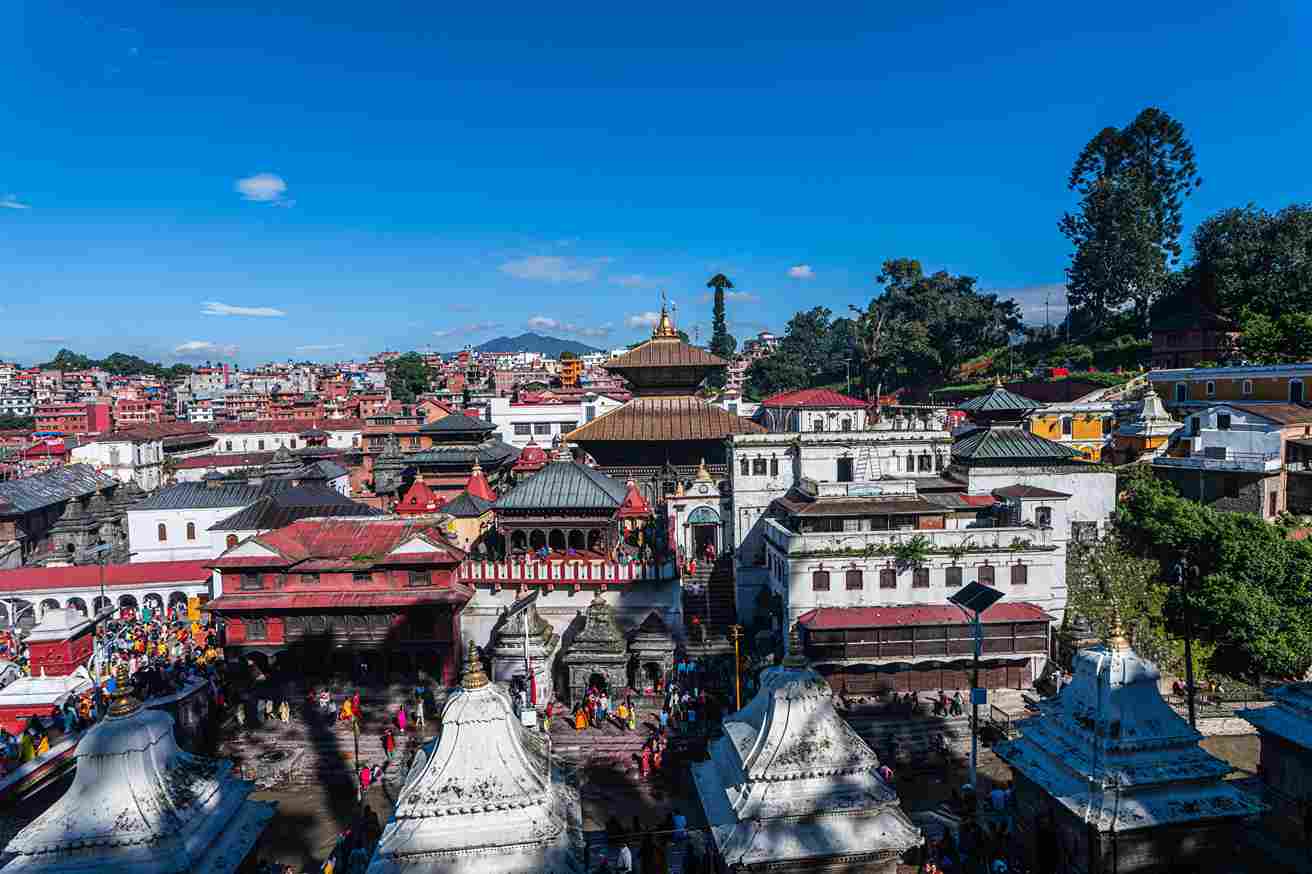
Pashupatinath Temple: Situated on the banks of the sacred Bagmati River, this is one of the holiest Hindu temples devoted to Lord Shiva. Non-Hindus are prohibited from entering the Golden Temple itself, but you can see everything from the other side of the river, including the Bagmati Aarati ritual featuring huge oil lamps and cymbals.
Pokhara: Alpine Oasis
Whereas Kathmandu offers the culture, Pokhara offers the views. Nestled right below the shadow of the Annapurna Range, this tranquil lakeside city is a true leisure paradise.
Lakeside & Phewa Lake
The Experience: Hire one of the brightly-colored wooden "dunga" boats and paddle across the glass-like Phewa Lake to the Tal Barahi Temple, a two-tiered pagoda on a small island in the middle of the lake. Lakeside is full of trendy cafes, restaurants, and boutiques, creating a very relaxed, bohemian vibe.
Sarangkot & Adventure from Above
Sarangkot: Wake up early in the morning and drive to this hilltop ridge. When the sun rises above the horizon, it illuminates the towering peaks of Machapuchare (Fishtail Mountain), Annapurna I, and Dhaulagiri with pinkish-gold hues.
The Thrill: Sarangkot is also one of the world's top paragliding spots. Enjoy tandem flights with a licensed pilot and soar with Himalayan gryphons over the Annapurna Range and Phewa Lake.
Chitwan National Park: The Subtropical Jungles
When travellers think about Nepal, they rarely imagine thick subtropical jungles, elephant grass, and alligators in rivers. However, this is precisely what the southern Terai region of Nepal has to offer.
The Experience: Instead of climbing the hills, enjoy the jeep safari into the UNESCO-protected national park. Chitwan National Park is widely known for its anti-poaching success, making the chances of encountering the endangered Greater One-horned Rhinoceros very high.
The Deep Wild: During your morning canoe ride down the Rapti River, keep your eyes open in search of fish-eating Gharial crocodiles sunning themselves along the banks. And if you're lucky enough, you might spot traces or silhouettes of the majestic Royal Bengal Tiger.
Lumbini: The Birthplace of Buddha
Located in the dusty plains of western Nepal, Lumbini is one of the most spiritually important pilgrimage sites in the world.
The Experience: This place is officially recognised as the birthplace of Siddhartha Gautama, better known as the Lord Buddha, in 563 BCE. The focal point of the area is the Maya Devi Temple, an archaeological site housing the exact marker stone of the Buddha's birthplace and the famous Ashoka Pillar, erected by Emperor Ashoka in 249 BCE to commemorate his pilgrimage.
The Monastic Zone: A large, silent sanctuary where no vehicles are allowed. Hire a bicycle or an electric rickshaw and explore dozens of unique monasteries built by countries from around the world – from the grand German Lotus Stupa to the golden Thai Monastery and the white Japanese Peace Stupa.
The Hill Stations: Nagarkot & Bandipur
For those who prefer to enjoy panoramic mountain views from a cosy hotel room, hill stations are the right choice.
Bandipur: Living Newari Town
The Experience: Built on a hill ridge halfway between Kathmandu and Pokhara, Bandipur is a perfectly preserved 18th-century trading post. The main street of the town is pedestrianised and features magnificent European neoclassical facades, wrap-around wooden balconies, and bougainvillaea vines hanging over the cafes.
Nagarkot: The Mountain Balcony
The Experience: Located only 32 kilometres east of Kathmandu, Nagarkot sits on the rim of the valley at an altitude of 2175 meters. On a clear day, you can sit in your hotel room with a hot cup of tea and admire the 360-degree view of the Himalayas from the Annapurna Range in the west all the way to the distant view of Mount Everest in the east.
Popular Types of Tour Packages in Nepal
Based on the intention of the tourists, tours in Nepal can be classified into several different types of archetypes:
Cultural & Heritage Tours
In-depth exploration of various aspects of Hindu-Buddhist culture, ethnic festivals, historical background, and Newari art.
Recommended for: History lovers, families, older people.
Duration: 4-6 days.
Wildlife Safari Tours
A combination of luxurious accommodations in Nepal's jungles and wilderness tours in the south of the country.
Recommended for: Nature lovers, photographers, and families with kids.
Duration: 3-5 days.
Luxury Helicopter & Scenic Tours
For travellers with limited time or those seeking the utmost comfort, helicopter tours can fly directly to alpine regions (Everest Base Camp, Annapurna Base Camp) for breakfast, then return to Kathmandu the same day.
Recommended for: Luxurious customers, honeymooners, bucket listers.
Duration: 1-3 days.
Spiritual, Yoga & Wellness Tours
Exploration of the country's sacred sites, combined with stays at monasteries, sound-healing centres, or high-altitude yoga resorts.
Recommended for: Health and spiritual travellers.
Duration: 7-10 days.
The Best 10 Day Tour Package in Nepal
If you are looking for the perfect tour itinerary in Nepal, which will cover all three faces of the country - historic valleys, alpine mountains, and the jungles of the south, the 10-day Golden Triangle Route is the one to choose. It will ensure you have the maximum variety in your itinerary without requiring you to spend weeks on exhausting treks.
Day 1: Welcome to Kathmandu
Arrival at Tribhuvan International Airport (KTM). Accommodation at Thamel, Kathmandu's colourful tourist area.
Day 2: Living History of Kathmandu Valley
Visit to UNESCO World Heritage Sites. Morning: Swayambhunath (Monkey Temple) for a view of the whole valley. Then continue your journey to the huge Boudhanath Stupa and finish the day watching the sunset at Pashupatinath Temple on the banks of the Bagmati River.
Day 3: Pokhara via Manakamana
Early morning, either a tourist bus ride or a quick domestic flight from Kathmandu to Nepal's Adventure Capital - Pokhara. If you are travelling by road, do not forget to take a breathtaking cable car ride up to Manakamana Temple on your way to Pokhara. After you have arrived, spend the evening relaxing in the tranquil atmosphere of Phewa Lake.
Day 4: Sarangkot Sunrise & Pokhara City Tour
Wake up early and travel to Sarangkot to see the fantastic sunrise over the Annapurna and Dhaulagiri mountain ranges. After breakfast, return and explore attractions such as the roaring waterfall at Devi's Fall, the depths of Gupteshwor Mahadev Cave, and row across Phewa Lake to Tal Barahi Temple.
Day 5: Drive to Bandipur
Drive away from Pokhara towards Bandipur, a hilltop town with perfectly preserved architecture and unique Newari culture. Take a walk along a narrow, pedestrian-only main street and enjoy mountain scenery free of city pollution.
Day 6: To Chitwan National Park
Leave the hills and move into the flat lowlands of Nepal's Terai region. Accommodation in a jungle resort in Chitwan. Every evening, watch a traditional dance performance by the local Tharu community.
Day 7: Full-Day Jungle Safari
Deep in Chitwan National Park, home to endangered animals. In the morning, go on a jeep safari to track the One-horned Rhinoceros and the Royal Bengal Tiger. Continue with a canoeing trip along the Rapti River to see gharials and exotic birds.
Day 8: Back to the Ancient Kingdom of Bhaktapur
Journey back to the Kathmandu Valley, avoiding the busy city of Kathmandu and moving into the old kingdom of Bhaktapur. The whole of Bhaktapur is an open-air museum with red-brick buildings, ornate wood carvings, and soaring pottery squares.
Day 9: Sunrise in Nagarkot & Farewell Dinner
Make a short journey to Nagarkot to view the Himalayan range (including a distant view of Everest on a clear day). Return to Kathmandu for some final shopping in Thamel and have a farewell dinner with a cultural performance.
Day 10: Farewell
Enjoy the last morning Breakfast in Kathmandu before transferring to the airport.
How Much Does a Nepal Tour Cost in 2026/2027?
Nepal is widely celebrated as one of the most budget-friendly destinations in the world, offering incredible value across all travel tiers.
|
Travel Style |
Estimated Daily Cost |
What It Includes |
|
Budget Backpacker |
$25 – $40 |
Hostels or basic tea houses, local buses, local meals (Dal Bhat). |
|
Mid-Range Explorer |
$50 – $100 |
3-star boutique hotels, tourist buses/private cars, mix of local and international restaurants, main entry fees. |
|
Luxury Traveler |
$150 – $300+ |
4 to 5-star heritage resorts, domestic flights, private guides, luxury vehicles, and fine dining. |
Up-to-Date Cost Components to Budget For:
Tourist Visa on Arrival: $30 for 15 Days | $50 for 30 Days | $125 for 90 Days. (Can be paid in cash USD at the airport).
Domestic Flights: Expect around $100 to $180 one-way for major routes like Kathmandu to Pokhara and Kathmandu to Bharatpur.
Essential Tourist Tips for 2026/2027
Get the Timing Right
Nepal offers two prime seasons to visit. The absolute best time to visit Nepal is Autumn (September - November), when you can enjoy crisp, perfect blue skies, amazing mountain scenery, and great views right after the monsoons. Springtime (March - May) is the second-best time to visit Nepal, as it offers warm weather and blooming rhododendrons in the valleys.
Pack Your Travel Diet with Dal Bhat
When it comes to food, always remember the local saying: "Dal Bhat Power, 24 Hours!" This traditional Nepalese meal includes rice, lentil soup, spiced vegetables, and pickles. Apart from being very tasty and highly nutritious, this dish is included in the meal cost and is served with unlimited refills at virtually any local establishment.
Use Tourist Buses Instead of Local Buses
If you prefer travelling by road between Nepalese cities, never opt for the usual local buses, as they are extremely crowded and uncomfortable. You should spend an additional $10-$20 on special Tourist Buses such as Jagadamba or Baba Adventure that offer air conditioning, comfortable reclining seats, WiFi, and scheduled stops at clean roadside restaurants.
Be Prepared for Higher Costs in the Mountains
If your tour involves hiking on mountain trails, keep in mind that prices will increase the higher you go. Teahouses will charge you an additional fee ($2-$5 per service) for activities such as charging your mobile phone, using WiFi, and taking a hot shower. Pack a high-quality power bank, as well as some local currency (Nepalese Rupees), since ATMs do not operate in the mountains.
Seasonal Overview: When to Plan a Tour?
Unlike high-altitude trekking packages that depend significantly on the weather (due to winter snows and monsoon rains), cultural and city tours in Nepal can be booked virtually year-round. However, there are some seasons that provide much better conditions than others:
Autumn (Sept-Nov) - Peak Season: Completely clear blue skies, mountain vistas, and mild daytime temperatures. This is also the season when the most amazing Nepalese festivals take place (Dashain and Tihar).
Spring (Mar-May) - Peak Season: Warm, bright weather with great opportunities for wildlife viewing in Chitwan, as animals gather around watering holes. All wild flowers and rhododendrons are in bloom.
Winter (Dec-Feb) - Shoulder Season: Clear skies with rather cold mornings and evenings in the cities. Good time for low-altitude tours and to avoid crowds.
Monsoon (Jun-Aug) - Off-Peak: Rainy weather that can spoil your views of mountains and make roads impassable. However, it is a perfect opportunity to see lush green scenery and take spiritual and cultural tours in the Kathmandu Valley.
Why Choose a Tour Instead of a Trekking Package?
Tours include private vehicles, luxury and mid-range tourist hotels, and domestic flights. There is no need for physical preparation, and you will never have to worry about altitude sickness. In addition, with a tour package, you will experience the best of Nepalese culture and landscape in comfort and with minimal stress.
A Little Note about Etiquette
When visiting temples or walking past stone prayer walls (Mani walls), you are supposed to move clockwise to show respect for the local Buddhist tradition. Do not forget to take off your shoes before entering a temple or someone's house.
Regardless of whether you are travelling alone or ordering an all-inclusive private package, Nepalese hospitality will remain the best memory of your vacation long after you have left.
Tour in Nepal: FAQs
How to get a tourist visa for Nepal?
You can either get a Visa on Arrival upon entering Nepal through Tribhuvan International Airport (KTM) or via land borders, or apply online for an Electronic Travel Authorisation (eTA) 1 to 3 days before your departure in order to avoid waiting queues at the airport.
What is the tourist visa fee?
Standard tourist visa costs depend on the period of your stay:
15 Days - $30 USD
30 Days - $50 USD
90 Days - $125 USD
Note: Children younger than 10 years old receive their visas gratis (free of charge); however, they should provide a completed application form and a passport valid for at least 6 months.
What documents do I need to clear immigration?
You should have a passport valid for at least 6 months from your date of arrival and with at least 2 blank pages. If obtaining a Visa on Arrival, bring USD cash to pay for it, as card terminals sometimes experience connectivity issues. You may also want to have digital or printed copies of the hotel booking and the return flight ticket with you.
Will I suffer from altitude sickness during the tour in Nepal?
No. Unlike high-altitude trekking packages that go over 4,000 m, cultural and classic leisure tours (Kathmandu, Pokhara, Chitwan, Bandipur, Lumbini) stay in areas safe from altitude sickness. Kathmandu is situated at 1,400 m above sea level, and Pokhara – at 822 m. You do not need to take altitude medication (e.g., Diamox) for a standard tour package.
Is it safe to drink tap water?
No, tap water in Nepal is not considered to be potable. Always drink only bottled mineral water or purified water (via water purification pills/UV filters). When eating at local restaurants, make sure your salads are washed with pure water. Avoid drinking ice cubes in your beverages unless you are in a high-end luxury hotel.
What if I need medical assistance?
Kathmandu and Pokhara have high-quality private international hospitals that have modern medical equipment and English-speaking staff (for example, CIWEC Hospital). Remote tours, such as jungle safaris in Chitwan National Park, can be assisted by local clinics; however, you should have travel insurance that includes emergency medical evacuation in any case.
What are the road conditions like between cities?
Although there has been some improvement in Nepal's road infrastructure, highway travel between cities can still be quite bumpy and slow due to the mountainous terrain. The 200 km Travel between Kathmandu and Pokhara takes 6 to 8 hours by road. To make the journey more comfortable, it is highly recommended to book private air-conditioned Scorpio jeeps or take domestic flights.
How reliable are domestic flights in Nepal?
There are highly efficient domestic flights (operated by companies such as Buddha Air and Yeti Air) that reduce travel time between major destinations to 25 minutes. However, due to the mountainous location, mountain weather is unpredictable, and morning flights face much fewer delays caused by afternoon winds and valley fog.
What is the local currency, and can I use my credit card?
The local currency is the Nepalese Rupee (NPR). Although upscale hotels, boutiques, and fine dining restaurants in Kathmandu and Pokhara accept major international credit cards, the country uses cash for payments in almost all places. There are many ATMs in the major cities, but they charge a local transaction fee of about NPR 500 per withdrawal.
What is the dress code for cultural tours?
Nepal is quite a conservative country, especially when it comes to religious monuments. You should cover your body when visiting temples, monasteries, and historical durbar squares. You should take off your shoes before entering the Hindu temple or Buddhist shrine.
