A Lavish Journey to the Roof of the World: Everest Luxury Trekking with Team Himalaya offers carefully curated luxury accommodations and personalised service, ensuring an unforgettable, pampered expedition.
DestinationNepal
Duration15 days
GradeModerate to Adventurous
ActivitiesTrekking
AccommodationTea-House and Lodge
Max. Elevation5555m.
Group SizeMin. 1 Pax
Vehicleprivate vehicles
MealsBreakfast, Lunch, and Dinner during The Trek
Overview
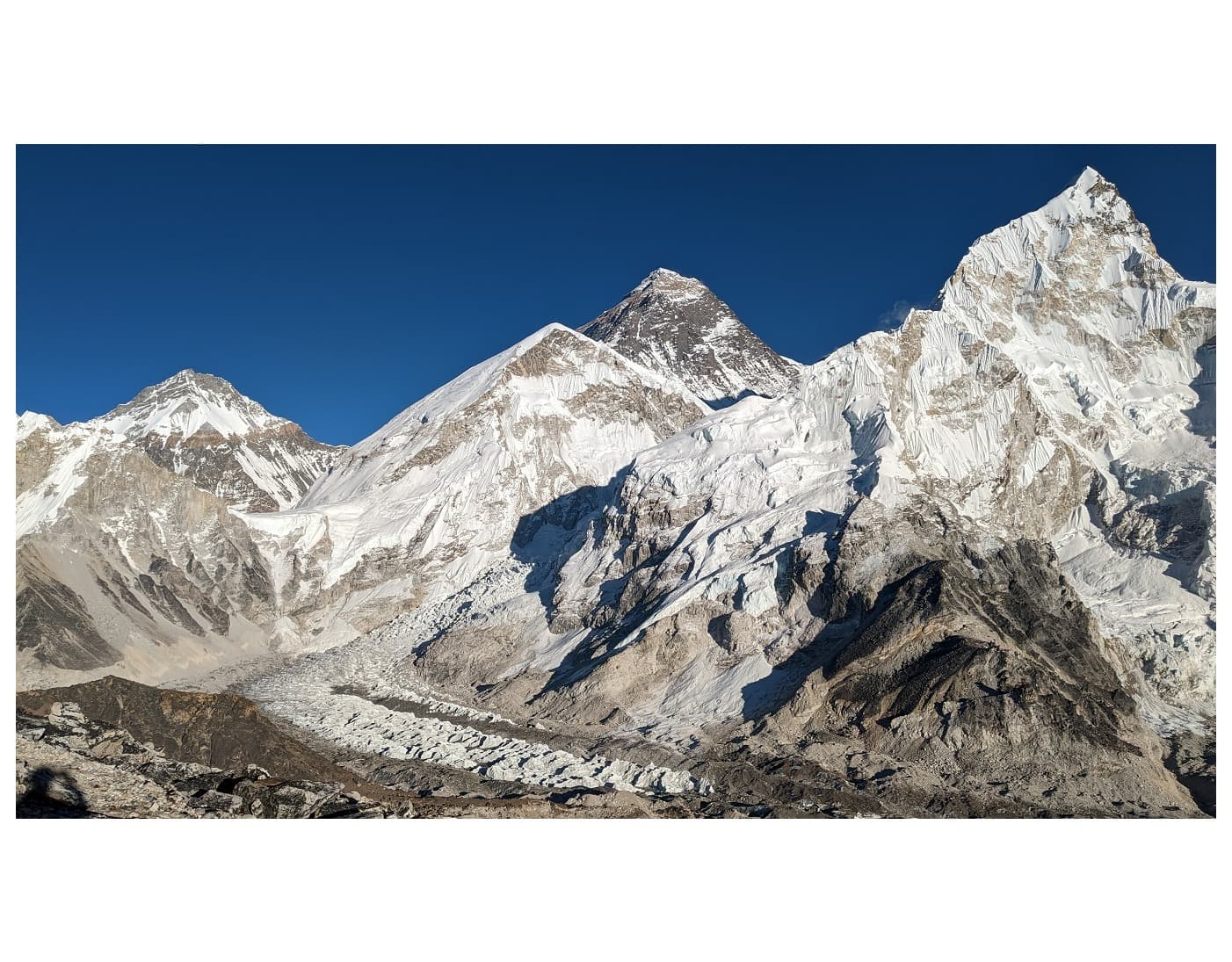
Everest Luxury Trek is a renowned adventure into the lap of the world's highest mountain, Mt. Everest, encompassing the highlights of the Sherpa kingdom of Khumbu. This trek is among the most celebrated in the world. It connects Kathmandu to Everest Base Camp, the world's highest base camp. The trekkers will be mesmerised to witness the breathtaking mountain panorama, including Pumori, Lhotse, Nuptse, Cho Oyu, Thamserku, Makalu, and Mt. Everest. Everest Luxury Trekking also takes us to Sagarmatha National Park, a UNESCO World Heritage Site and the world's highest-elevation park. It offers an opportunity to experience Himalayan flora and fauna. Besides, this trek bridges a significant gap between Kathmandu and Lukla, Namche, Tengboche, Kalapatthar, and Everest Base Camp. EBC Luxury Trekking begins in Lukla after a short, scenic flight from Kathmandu. Once we are accompanied by our porter and guide, we begin our trek to Phakding. Slowly, we enter Sagarmatha National Park and learn about some unique and endangered flora and fauna.
Trip Highlights
A Scenic flight to Lukla from Kathmandu.
Lukla Airport
Sagarmatha National Park, its flora and fauna
Namche Bazar and its premises
Tengboche Monastery
Kalapatthar, Everest Base Camp, and mountain views: Pumori, Lhotse, Nuptse, Cho Oyu, Thamserku, Makalu, and Mt. Everest
We arrive in Namche Bazar, considered the capital and a popular tourist hub of the Everest region. Hotel Everest View, the Sherpa Cultural Museum, restaurants, shops, and the Tibetan market are some of the highlights of Namche Bazar. Passing Tengboche and Lobuche, we arrive at Gorekhshep. During this trek, we got to know the core Sherpa people and their culture. They are known as climbers. Then, our early-morning climb to Kalapatthar offers the most astonishing mountain views in the entire Everest region, including Mt. Everest. Further, we trek to Everest Base Camp and accomplish our adventure.
On the Backtracking Route, we follow the same trail down to Lobuche, Tengboche, Namche, and Lukla, then take a short flight to Kathmandu to end the trek.
Itinerary of Everest Luxury Trek - 15 days
As you arrive at the TIA, you can see a Team Himalaya staff member welcoming you and guiding you to the 5-star hotel in the town. Consider having lunch at one of Thamel's many elegant cafés when you've had a chance to freshen up. While strolling around Thamel's alleyways, you can purchase equipment for your hike and crafts to bring home. After a brief stroll through Thamel, our guide will give you an outline of the tour and other important information upon arrival at the hotel. Team Himalaya will provide you with a down jacket and a sleeping bag for your upcoming trip, which you need to return as soon as you return from the trip.
Max. Elevation:1350 M
Duration:30 Mins
You'll check out of the hotel and proceed to the airport early in the morning. As you fly domestically to Lukla, you will be stunned by the breathtaking mountain views. The 35-minute journey will appear to have taken only a few seconds as you take in the Himalayas' stunning splendour. Once you arrive at Lukla Airport, you can take a break and have breakfast. Once you are fully charged, we will slowly walk through Lukla's marketplaces and shops before descending for a time along gradually curving pathways that pass through settlements. You will be accompanied by a guide and a porter. The overnight stop is in Phakding, next to the Dudh Kosi River, where you'll find Buddhist temples and views of the snow-covered Kusum Kanguru and Kwangde mountains.
Note: Nepal Civil Aviation will not allow giving flights from KTM to Lukla and back. The flight departs from Ramechap to Lukla and returns from Lukla to Ramechap, including an air ticket and airport transfer.
Max. Elevation:2846 M
Duration:30 to 40 MIn
Distance:138 KM
The second day starts with a little morning stroll that primarily follows the Dud Koshi River. By crossing the DudhKoshi River on the Suspension Bridge, you may reach Monjo Village, a lovely place with hotels that have been welcoming travellers for quite some time. The vista of Thamserku Peak and the Khumbu-la Mountains is magnificent. The main entrance to Sagarmatha National Park is near Monjo, where you can stop at the gate after obtaining the required permissions and paying the associated costs, then continue to Jorsale village for lunch. For the following two to three hours, all the way to Namche, this is the only village.
After lunch, we'll proceed down the river for a while before continuing to Namche Bazar, where we'll be greeted by a stunning vista of the mountains and rhododendron-filled jungles.
Max. Elevation:3440 M
Duration:5 hours
Distance:10.5 KM
As you arrive at the TIA, you can see a Team Himalaya staff member welcoming you and guiding you to the 5-star hotel in the town. Consider having lunch at one of Thamel's many elegant cafés when you've had a chance to freshen up. While strolling around Thamel's alleyways, you can purchase equipment for your hike and crafts to bring home. After a brief stroll through Thamel, our guide will give you an outline of the tour and other important information upon arrival at the hotel. Team Himalaya will provide you with a down jacket and a sleeping bag for your upcoming trip, which you need to return as soon as you return from the trip. At such a high altitude, acute mountain sickness (AMS) can be a serious problem if acclimatisation isn't built into the trekking itinerary. Every trekker needs a day of rest. Such trips call for further prudence, including drinking lots of water and avoiding alcohol altogether because it dehydrates you. Your guide will carry medication and a first-aid kit in case you need medical assistance. This day should be used for acclimatisation, sightseeing, and market exploration. Located at an altitude of 3,880 meters, Everest View Hotel is considered the world's highest-altitude hotel. If you walk for a few hours to the top of Namche, you can see Everest, Lhotse, Tawache, Tarmasarku, Kwangda, and Ama Dablam up close. The Namche Museum, packed with information about the Khumbu region, is another place you might visit while acclimating to the altitude. As evening approaches, you might notice your fellow hikers pursuing the stores, and you might even strike up a conversation with them.
Max. Elevation:3880 M
Duration:4 Hours
Distance:5.4 Km
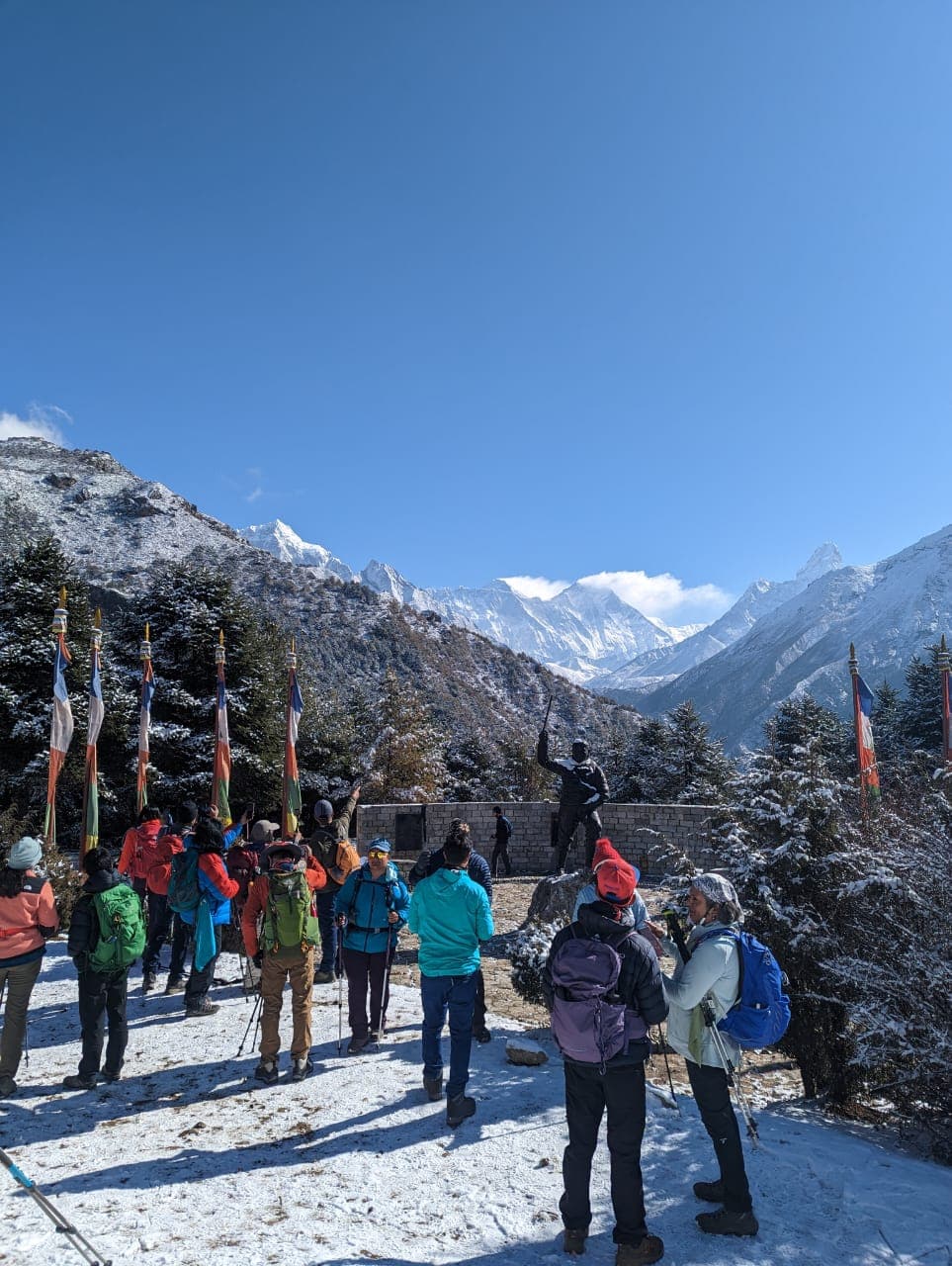
You swiftly ascend beyond Namche after waking up in Namche Bazar and trek for a full day next to a breathtaking view of the Mountains. You encounter a wide area of alpine woods and the ImjaTse river as you make your way down to Phungi-tenga for lunch. Before arriving at Tengboche Monastery for the night, we will hike a few hours uphill through gorgeous, scattered forests of rhododendron, pine, and other trees, enjoying the vast panorama of numerous peaks.
The area offers a stunning view of several peaks, but as the afternoon approaches, lamas and monks start chanting prayers in the neighbouring gumba, diverting everyone's attention there. We can join them in their prayers and stand close to them before the statue of Sakyamuni Buddha and the thanka paintings that decorate the walls and ceilings of the main hall. Additionally, if you like, you could go to the nearby small museum.
Max. Elevation:3867 M
Duration:5 Hours
Distance:10.5 KM
After a great night at Tengboche, the morning will once again lead us to a descent through a lovely forest and a bridge over the Imja Tse River. We must first ascend for a while before descending to get to Pangboche village, the final permanent community along the EBC route. We will once more ascend for a bit to the Shomare village for dinner, as this spot is highly known on the EBC route for its lunch.
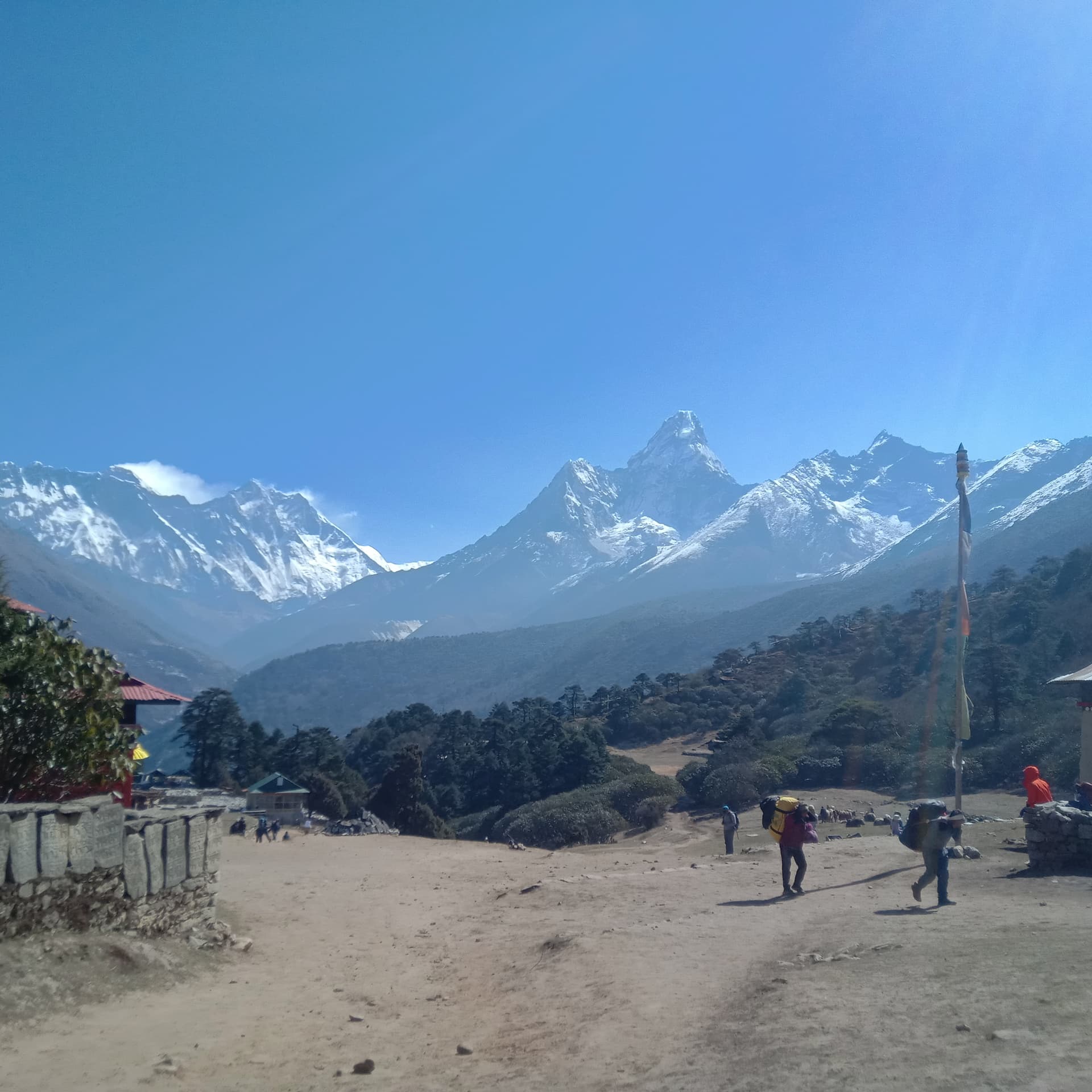
As you refuel, we gradually climb through the vast landscapes and rivers until we reach Dingboche, where we will spend the night. We'll spend the night in the ImjaTsa Valley, surrounded by the spectacular Mt. Lhotse, the AmaDablam North Face, and the Island Peak in the east.
Max. Elevation:4410 M
Duration:5 Hours
Distance:9.1 Km
After a great night at Tengboche, the morning will once again lead us to a descent through a lovely forest and a bridge over the Imja Tse River. We must first ascend for a while before descending to get to Pangboche village, the final permanent community along the EBC route. Day 7 will serve as the trek's final acclimatisation day. You'll be able to enjoy Dingboche's natural beauty today while resting. You can take a short climb from here to a lookout with views of the expansive Imja Tse Valley, Nagarjuna Hill, and the nearby Himalayan backdrop of Mt. Makalu, the fifth-tallest peak in the world. After this short hike, you return to the hotel to recuperate and get ready for the next day. You can also sleep well even if you do not want to leave Dingboche. Go up a bit to the Shomare village for dinner, as this spot is highly known on the EBC route for its lunch. As you refuel, we gradually climb through the vast landscapes and rivers until we reach Dingboche, where we will spend the night. We'll spend the night in the ImjaTsa Valley, surrounded by the spectacular Mt. Lhotse, the AmaDablam North Face, and the Island Peak in the east.
Max. Elevation:5053 M
Duration:4 Hours
Distance:5.4 Km
After a filling breakfast, set off on the trek to Lobuche while admiring the breathtaking mountain scenery around you. The route gradually ascends and offers stunning views of enormous peaks, including Ama Dablam and Nuptse. You will be in awe of the untamed, spectacular scenery as you hike down the moraine of the Khumbu Glacier. You'll see insights into the Sherpa people's rich cultural legacy as you pass through little Sherpa communities.
Finally, you will arrive at Lobuche, which is tucked away at the foot of the Khumbu Glacier, after a few hours of walking. Before starting the last leg of your Everest Base Camp journey, take some time to relax and get back while taking in the peace of the Himalayan surroundings.
Max. Elevation:4930 M
Duration:5 Hours
Distance:8.5 KM
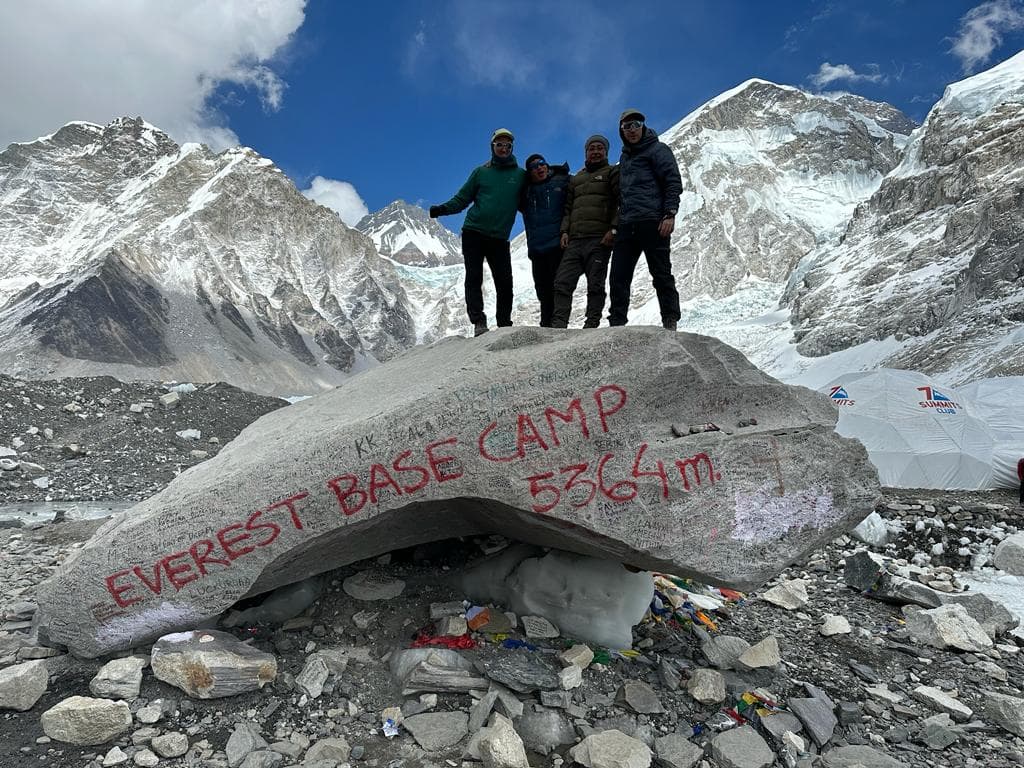
The pinnacle of this stunning journey is today. We will pass by the glass pyramid observatories on the nearby glacier, which Italian and Nepalese scientists have been investigating, as we drive for a few hours. As we pass the stations, we come upon the spectacular Mounts Pumori, Nuptse, and Everest as we traverse a steep ridge and ice just below the Khumbu Glacier. As we descend the Everest Base Camp Moraine, Mt. Pumori will tower over us as we reach Gorak Shep, then ascend to Kalapathar. After a brief break to take in the majestic views of Nuptse, Lho-la, Changtse, and the Great Everest with its dreaded Khumbu icefall, we will continue hiking for two to three hours. The scenery of all their astonishing peaks seems unfathomable, like something out of this world, making you want to keep gazing and savouring their magnificence. During the Expedition season, which runs from April to May, this area becomes crowded with groups from around the world. Please take some time to take it all in, document it on video, and then head back to Gorakshep to spend the night. Be happy about your choice to go on the EBC trip as you bid farewell to the nine nonstop days of hiking.
Max. Elevation:5164 M
Duration:2 to 3 Hours
Distance:4.5 KM
The beautiful panorama of Mount Pumori, the rocky summits of Kalapathar, and, of course, Everest can be seen from Kalapathar, the highest point of this expedition at 5545 meters. You can enjoy the breathtaking view from the top of your ascent as you reach Kalapathar. After breakfast, you'll descend toward Gorakshep, then continue past Lobuche and Thukla to the recently opened Pheriche trail. From Pheriche, we will climb downwards to Somare and the town of Pangboche, where we will spend the night.
Max. Elevation:5550 M
Duration:2 to 4 Hours
Distance:1.5 KM
As soon as you exit Pangboche, you will start trekking toward Namche Bazaar. Beginning with a descent through lush trees, the route offers first glimpses of the stunning mountain vista. You will also cross the Dudh Koshi River on suspension bridges as you continue to descend. After that, the path gradually climbs, passing a few small Sherpa settlements and terraced fields.
Finally, we will make our way down the ImjaTsa River through Tengboche Monastery to the lovely Namche Bazaar, where we will spend the night. Here, you may take in the vibrant atmosphere, browse the local market, and gaze out over Everest and the surrounding peaks in awe.
Max. Elevation:3440 M
Duration:6 Hours
Distance:9.1 KM
As you embark on the route from Namche Bazaar to Lukla, your journey to Everest Base Camp comes to a fascinating end. The DudhKoshi River rushes past as you descend, passing over suspension bridges and forested areas. As you approach Lukla, prayer flags welcome you and signify the end of your incredible journey. Recall the stunning landscape, the bond you formed with fellow trekkers, and the unwavering tenacity that kept you going. It's a fantastic event full of memories and success, and a rewarding way to round off your trip to Everest Base Camp. When we get to Lukla, we may explore the local markets and rest up for our journey tomorrow.
Max. Elevation:2846 M
Duration:7 Hours
Distance:13.5 KM
Today, you will board a flight from Lukla to Kathmandu to mark the exciting conclusion of your journey to Everest Base Camp. In Lukla, get up early and eat a hearty breakfast to kick off the trip. After having breakfast, depart from the charming mountain town and head for Lukla Airport. Prepare for an incredible adventure offering panoramic views of the spectacular Himalayan peaks. After a quick yet exciting flight, you will land in Kathmandu. A representative will be waiting to transport you to the proper lodging from this location. Once you get to your hotel, take some time to relax and reflect on the incredible experience you have completed.
Max. Elevation:1350 M
Duration:30 to 40 Mins
Distance:138 Km
In addition to numerous other architectural wonders that might astound visitors, Kathmandu is home to several UNESCO World Heritage sites. This day has been set aside solely to explore the valley with a guide who will accompany you to various locations. Next, you will travel to Pashupatinath Temple, a sacred Hindu temple situated on the bank of the Bagmati River. You may observe religious rituals here and experience the temple's soothing ambience.
After Pashupatinath, you will visit Boudhanath Stupa, one of the most important Tibetan Buddhist sites and the world's largest stupa. Go around the stupa in the opposite direction from the crowds, admiring its beautiful architecture as you do so, while spinning prayer wheels and soaking in the calm atmosphere. You'll end the day by seeing the Swayambhunath on a hill. You may enjoy the breathtaking views of Kathmandu from here, observe curious monkeys, and discover the colourful temples and prayer flags.
This thorough sightseeing tour will provide you with a deeper understanding of Nepal's cultural and religious past while immersed in the vibrant city of Kathmandu, allowing you to reflect on your amazing Everest Base Camp adventure.
Max. Elevation:1350 M
Duration:4 hours
Last day in Nepal, after a most memorable and overwhelming time in the high Himalayas with the excellent service of TeamHimalaya guides and staff, transfer to Kathmandu International Airport terminal for your flight to your respective destination.
Max. Elevation:1350 M
If the provided schedule isn't suitable for you, we can create personalized travel arrangements.
While the term "standard package" is typically used for a more budget-friendly trek, for a luxury Everest trek, it refers to the most common, entry-level version of a high-end experience. This is a significant step up from a regular teahouse trek, offering superior comfort and services.
Book your own private small group trip
**Discounts are determined exclusively by the size of your group. We do not add additional members to your group.
June 2026
Su
Mo
Tu
We
Th
Fr
Sa
31
1
2
3
4
5
6
7
8
9
10
11
12
13
14
15
16
17
18
19
20
21
22
23
24
25
26
27
28
29
30
1
2
3
4
Sold out dates
US $0US $0 per person (based on 1 people)
Cost Includes
Pickups and drops from hotels and airports.
5-star hotel accommodation (Yak and Yeti Hotel) with Breakfast in Kathmandu, and full-board meal-standard accommodation during the trek, including a 4-night stay at a Yeti Mountain Home.
All necessary paperwork and National Park permits \ (TIMS).
Trip achievement appreciation certificate.
Domestic flights (ktm–Lukla–ktm) and airport departure taxes (allowed to carry a maximum of 15 Kg Luggage), altogether including both backpack and day bag.
All our government taxes. VAT, tourist service charges.
An experienced, knowledgeable, helpful, friendly, and English-speaking guide.
Food, drinks. Accommodation insurance, salary, types of equipment, transportation, and medicine, all these things.
Down jacket and sleeping bag by the team Himalaya (which need to be returned after the trek).
Group medical supplies (a first aid kit will be available).
Kathmandu Valley sightseeing tour guide with private vehicle.
Provide a pulse oximeter for monitoring blood oxygen saturation at high altitudes.
Welcome and Farewell dinner in Kathmandu at an authentic Nepalese restaurant with cultural programs.
Hot water or Water purification tablets for safe drinking water.
Official expense.
Trip achievement, appreciation certificate.
Travel and rescue arrangements.
Everest luxury trek map.
Cost Excludes
Lunch and dinner in Kathmandu.
Personal expenses (phone calls, laundry, bar bills, battery recharge, extra porter, etc.)
International airfare to and from Kathmandu.
Travel and rescue insurance
Excess baggage charge.
Extra night accommodation in Kathmandu because of early, late, or early return from the mountain (due to any reason) than the scheduled.
Tips for trekking staff and drivers (tipping is expected ).
Route Map
Loading map...
Know Before you Go
Best Time to Go
The Everest Luxury Trek is best enjoyed in spring (March - May) and autumn (September - November). These months bring stable weather, clear skies, and stunning mountain views. Spring rewards trekkers with colourful rhododendron forests, while autumn offers sharp visibility and a refreshing trekking climate. Winter trekking (December to February) is possible, but trekkers must be prepared for freezing conditions, snow-covered trails, and limited lodge facilities. The monsoon season (June - August) is generally avoided due to heavy rainfall, slippery trails, and frequent flight delays. For those seeking the safest and most scenic trekking experience, spring and autumn are ideal. Tip: Secure flights and luxury lodges in advance during peak months, as availability is limited.
Difficulty
This trek is rated moderate to challenging, requiring 5 to 7 hours of walking daily, with steep ascents and descents. The highest point is Kalapatthar at 5,545 meters, where reduced oxygen makes physical exertion harder. While no technical climbing skills are required, prior hiking experience is helpful. Trekkers should prepare by engaging in cardiovascular training, such as hiking or stair climbing, to build endurance. With proper preparation, even first-time trekkers in good physical condition can successfully complete this trek. Tip: Train with a weighted backpack to simulate real trekking conditions before your trip.
Accommodation and Food
Luxury lodges and boutique hotels provide cosy rooms with comfortable bedding, attached bathrooms in some places, and heated dining areas. In villages like Namche Bazaar, trekkers can even enjoy Wi-Fi, bakeries, and cafes. Meals range from traditional Nepali dal-bhat and momos to Western dishes like pasta, pancakes, pizza, and burgers. Since supplies are carried by porters or flown in, prices increase with altitude. Hot drinks like tea, coffee, and hot chocolate are widely available, adding warmth in the cold climate. Tip: Choose vegetarian meals at higher altitudes, as meat may not always be fresh due to the difficulty of transporting it.
Permits
Two key permits are needed: The Sagarmatha National Park Entry Permit and the Khumbu Pasang Lhamu Rural Municipality Permit. These permits support conservation efforts and local development projects. They are checked at multiple points along the trail, so trekkers should carry them at all times. Our company arranges these permits in advance or at the check post, ensuring a hassle-free experience for travellers. Tip: Carry both paper and digital copies of your permits to avoid issues at checkpoints.
Cultural and History / Monasteries
The trek offers a chance to immerse oneself in Sherpa culture and Buddhist traditions. Namche Bazaar serves as a cultural hub with markets and museums, while the iconic Tengboche Monastery provides a serene spiritual experience amid mountain views. Prayer flags, mani walls, and chortens along the trails highlight the region’s deep-rooted Buddhist heritage. Respecting local customs adds value to the journey and builds a deeper cultural connection. Tip: Always walk clockwise around stupas and mani walls, as per local tradition.
Acclimatisation / Altitude Sickness
Acclimatisation is crucial for trekking above 3,500 meters. Rest days are built into the itinerary at Namche Bazaar and Dingboche to allow the body to adjust. Altitude sickness can affect anyone, so trekkers must amble, stay hydrated, and avoid alcohol or sleeping pills. Guides are trained to spot symptoms like headache, nausea, or dizziness. Following the “climb high, sleep low” method also helps the body adapt. Tip: garlic soup (locally called lasun ko jhol) or ginger tea, as locals recommend them for adjusting to the altitude.
Insurance
Comprehensive travel insurance is mandatory. Policies should cover high-altitude trekking, helicopter evacuation, medical emergencies, trip cancellations, and lost baggage. Standard insurance often excludes trekking above 4,000 meters, so trekkers must verify coverage before departure. Having the right insurance ensures safety and peace of mind. Tip: Share your insurance policy number and emergency contacts with our company before the trek begins.
Transportation
The trek begins with a domestic flight from Kathmandu or Ramechhap (Manthali) to Lukla, which takes about 30-40 minutes. Depending on the season and air traffic, flights may operate directly from Kathmandu or from Manthali airport, a 4 to 5-hour drive from the capital. Ground transfers between airports and hotels are usually included in trek packages. Flight delays are common due to mountain weather.
Tip: Book flights well in advance and carry a small daypack with snacks and water.
Electricity and Communication
Electricity is available in most lodges, though charging costs increase with altitude. Wi-Fi and mobile coverage are available in towns like Lukla and Namche Bazaar, but become unreliable higher up. Trekkers are advised to carry power banks or solar chargers for essential devices. Communication facilities ensure both safety and convenience during the trek. Tip: Download offline maps and translation apps before the trek to avoid relying on the internet.
Drinking Water
Clean drinking water is essential. Bottled water is available but expensive at higher altitudes. Many trekkers prefer to carry reusable bottles and purify water using tablets, drops, or portable filters. Lodges also provide boiled water for a small fee, which is one of the safest options. Staying hydrated helps prevent altitude-related problems. Tip: Sip water regularly rather than drinking large amounts at once, as this helps the body adjust better to altitude.
Guide and Porter
Licensed guides provide safety, cultural insights, and logistical support, while porters carry heavy loads of 10 to 15 kg per person. Their expertise ensures trekkers can enjoy the journey with comfort and security. Hiring them also supports local communities economically. Tipping at the end of the trek is a way to show appreciation for their hard work. Tip: Keep a small daypack with personal items such as a jacket, water, snacks, and documents, as porters usually walk ahead.
Flight from Kathmandu or Manthali Option
Flights to Lukla may depart from Ramechhap (Manthali) Airport or Kathmandu, depending on the schedule. During peak seasons, some flights depart from Manthali, requiring a 4-5 hour road transfer from Kathmandu. Flights are subject to change at the airline's discretion due to weather or operational issues, so flexibility is essential. It is recommended to confirm your flight and departure airport with our company in advance. Tip: If your flight is from Manthali, consider staying the night before to avoid early-morning road stress.
Health and Fitness
Good physical preparation is essential for the Everest Luxury Trek. The journey involves long walking days, uneven terrain, and high altitudes, so trekkers should focus on building stamina, strength, and cardiovascular endurance. Regular exercise, such as jogging, hiking, cycling, or stair climbing, for 6-8 weeks before the trek will help condition the body. Mental preparation is equally important, as altitude and remote conditions can be challenging. Even though this is a “luxury” trek with greater comfort, the trail itself is demanding and requires determination and a reasonable level of fitness. Tip: Practice hiking with a backpack before the trek to simulate real trail conditions and help you adjust to carrying essentials at altitude.
Responsible Trekking and Sustainability
Trekking in the Everest area is not just about personal adventure but also about respecting the local culture and protecting the fragile mountain environment. Travellers are encouraged to minimise single-use plastics, properly dispose of waste, and use refillable water bottles with purification tablets or filters. Our company also ensures that guides and porters are well compensated and properly equipped, promoting ethical tourism. By trekking responsibly, you help preserve the trails and traditions for future generations. Tip: Carry a reusable shopping bag and water bottle and avoid plastic-wrapped snacks whenever possible to reduce waste on the trail.
We had a very successful EBC trek in October 2024 because of Team Himalaya! Our guide, Raj, was very knowledgeable in all things Everest. He set us up in the best lodges where we had great service all along. He provided us with a superb porter, who also went above and beyond in taking care of us. Raj was very patient with us and was always looking out for our best interests. We would highly recommend Team Himalaya for any trek!
AAlec S1st Apr, 2024
Everest Base Camp Team Himalaya March 2024
We have just returned from a 14 day, 11 day hike with Raj and Durga from Team Himalaya to Everest Base Camp. From the minute we landed to our departure we were properly looked after and cared for by Team Himalaya. The trek to and from Everest Base Camp was wonderful, our guides and porters really looked after us and were incredibly knowledgeable. In Nepal things can go wrong especially with flights to and from Lukla but Team responded magnificently and found alternative solutions. If this is on your bucket list as ours and you are looking for a company to organise this with I would 100% recommend Raj.
JJourney379926937861st Apr, 2024
Reaching Everest Base Camp with TEAM HIMALAYA
If you are looking for an adventure of a lifetime, don’t hesitate! Choose TEAM HIMALAYA for your Everest Base Camp trek! We completed the EBC trek early November 2023 . My husband and I chose to do a private trek with Team Himalaya. Everything went smoothly with our guide Raj. His team and organization is outstanding! We could not have done it without him. Raj took care of everything throughout the trek and made sure we were well at all times, even providing us fresh fruits every night after dinner! We felt safe at all times , his experience and knowledge of the Himalayas helped us achieve our goal in reaching the EBC! His professionalism went beyond our expectations from our first contact with him for information until the very end. We will forever remember this expedition and gained a friend in our guide Raj!
eevanhH6577DL13th May, 2023
Incredible Experience by evan
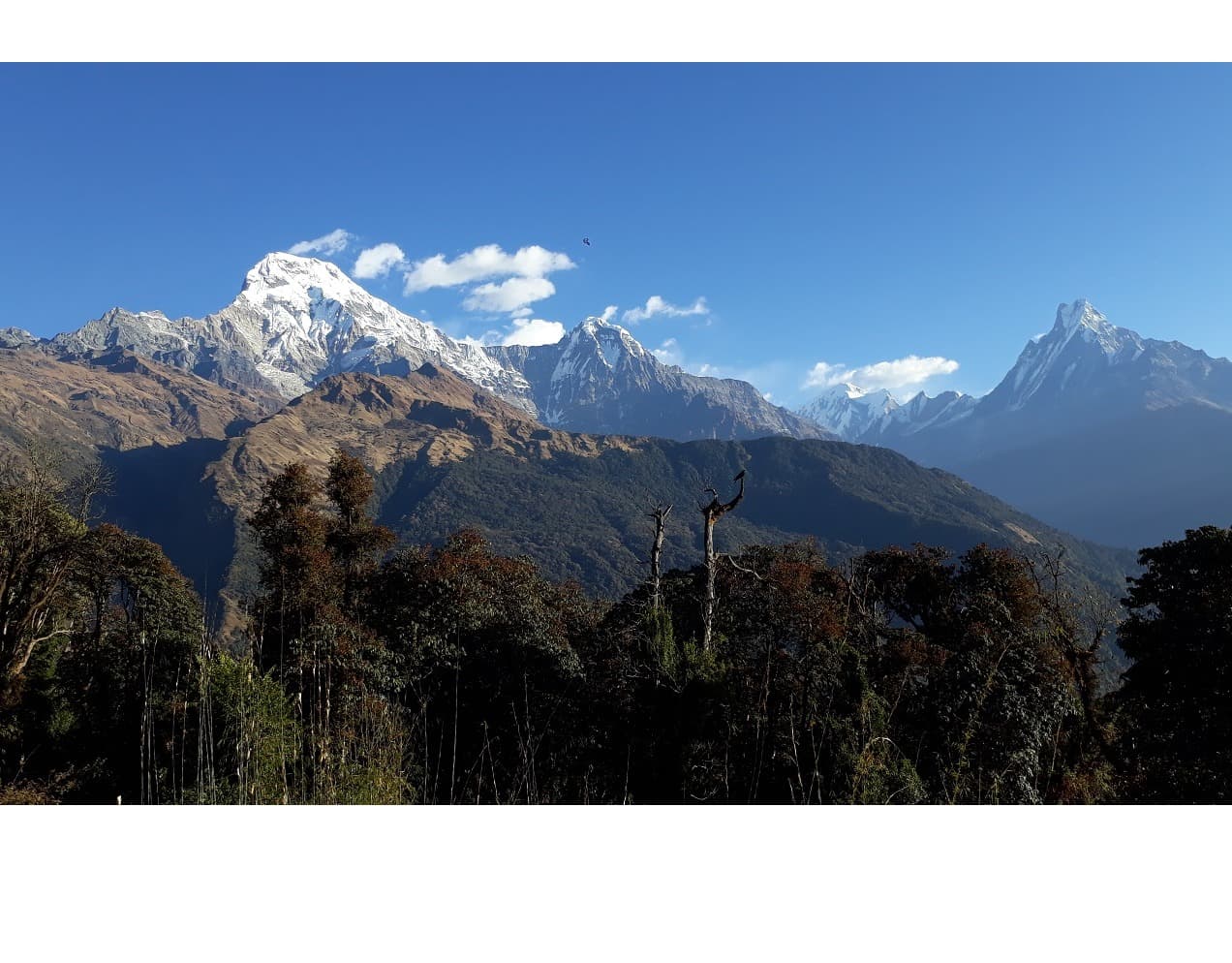
It was an incredible experience being surrounded by the towering Annapurna Himalayas. This memorable trek through Nepal offered the best scenic views and stunning landscapes. Despite being surprised at how quickly the trek ended, the daily walks were filled with dramatic views that left a lasting impression.
I highly recommend this adventure, as it is one of the best base camp treks in the Himalayas with minimal risk of altitude sickness. Although there were steep ups and downs that were tiring on some days, the breathtaking views made it all worth it. This was easily the most exciting trek I have ever experienced.
I want to thank Team Himalayas and Raj for providing exceptional service with their expert guide and staff.
Frequently Asked Questions About the Everest Luxury Trek
When is the best time to do the Everest Luxury Trek?
The ideal seasons are spring (March-May) and autumn (September-November), with stable weather, clear skies, and incredible mountain views. Winter is possible but very cold, while the monsoon months (June-August) are usually avoided.
How difficult is the Everest Luxury Trek?
It is graded as moderate to challenging. Trekkers walk 5-7 hours daily on steep trails, with the highest point being Kalapatthar at 5,545m. Prior trekking experience helps, but fit first-timers can also complete it with proper preparation.
Do I need prior trekking experience?
Not necessarily. Beginners with good fitness and preparation are welcome to join. However, prior hiking or high-altitude trekking experience makes the journey more comfortable.
What kind of accommodation is provided?
Luxury lodges and boutique hotels are used throughout the trek, offering cosy rooms, comfortable bedding, attached bathrooms in some places, and heated dining halls. In Lukla, Namche Bazaar, and other larger villages, trekkers can also enjoy Wi-Fi, bakeries, and cafes for added comfort.
What type of food is served during the trek?
Meals include both Nepali dishes such as dal-bhat, momos, and soups, and Western favourites like pasta, pancakes, pizza, and burgers. Hot drinks are widely available.
What permits are required for this trek?
You need two permits: the Sagarmatha National Park Entry Permit and the Khumbu Pasang Lhamu Rural Municipality Permit.
Who arranges the trekking permits?
All necessary permits are arranged by our company, either in Kathmandu before the trek begins or directly at the entry checkpoints. This ensures a smooth and hassle-free experience for travellers.
Will I get to experience Sherpa culture during the trek?
Yes. Villages like Namche Bazaar serve as cultural hubs with markets, museums, and monasteries, such as Tengboche, which offer insights into Sherpa Buddhist traditions.
How do I prevent altitude sickness?
Acclimatisation days are built into the trek. Strolling, staying hydrated, avoiding alcohol, and following the “climb high, sleep low” rule help. Garlic soup and ginger tea are also popular local remedies.
What happens if I get sick or injured during the trek?
Guides are trained to handle emergencies, and helicopter evacuation can be arranged if needed. This is why travel insurance with emergency evacuation coverage is mandatory.
Do I need travel insurance for this trek?
Yes. Insurance must cover high-altitude trekking, helicopter rescue, medical emergencies, trip cancellation, and lost baggage.
How do I get to the trek's starting point?
The trek begins with a short flight to Lukla, either from Kathmandu or from Ramechhap (Manthali), depending on the season and flight schedules.
Are Lukla flights reliable?
Flights are subject to mountain weather and may be delayed or rerouted. Flexibility is essential when travelling in the Everest region.
Will I have access to electricity and Wi-Fi?
Yes, but with limitations. Electricity for charging devices is available in most lodges, often at extra cost. Wi-Fi and mobile signals work in towns like Lukla and Namche, but are unreliable at higher altitudes.
Is drinking water safe during the trek?
Bottled water is available but expensive at higher altitudes. Trekkers are advised to carry reusable bottles and purify water with tablets or filters, or buy boiled water from lodges.
Do I need a guide and porter?
Hiring a licensed guide is highly recommended for safety, cultural insights, and navigation. Porters carry heavy loads, making the trek more comfortable while also supporting local livelihoods.
What should I pack for the trek?
Essentials include warm clothing, sturdy trekking boots, a down jacket, gloves, hats, sunglasses, sunscreen, and a reusable water bottle with purification tablets. Trek organisers usually provide a detailed packing list.
How fit do I need to be?
You don’t need to be an athlete, but you do need to be physically fit. Regular training with jogging, hiking, or stair climbing for at least 6-8 weeks before the trek is recommended.
Is the trek safe for solo travellers?
Yes, if arranged through a professional trekking company with licensed guides. Group treks are also common, providing both safety and companionship.
How can I trek responsibly in the Everest region?
Respect local culture, avoid single-use plastics, dispose of waste properly, refill bottles instead of buying plastic ones, and support local businesses by purchasing local products and services.
How much money should I carry during the trek?
While most costs are covered in the trek package, it’s wise to carry extra cash for personal expenses such as snacks, Wi-Fi, hot showers, charging devices, or tips for guides and porters. ATMs are available in Kathmandu, Lukla, and Namche Bazaar, but can be unreliable, so carrying enough Nepalese rupees in small denominations is recommended.