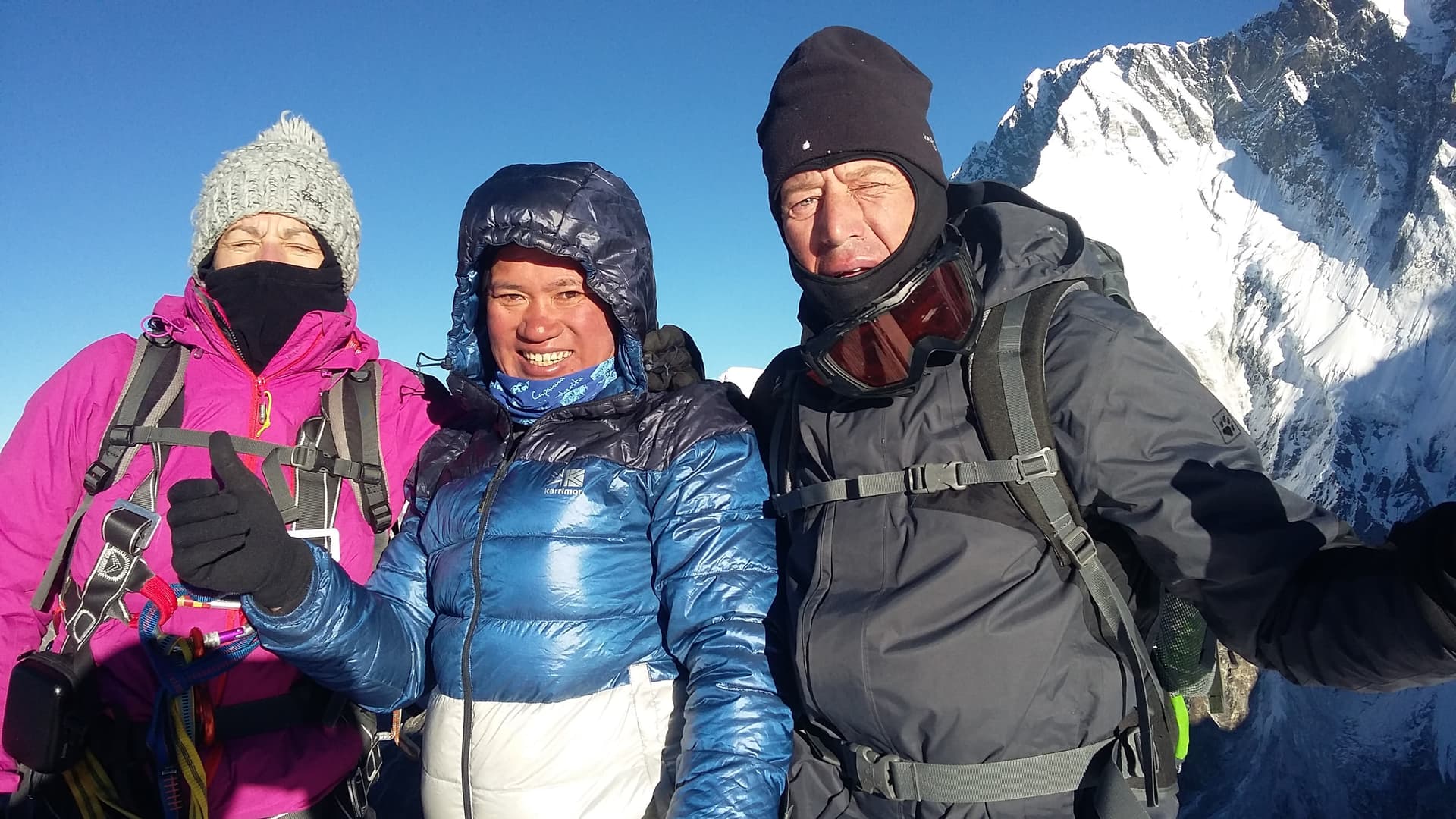
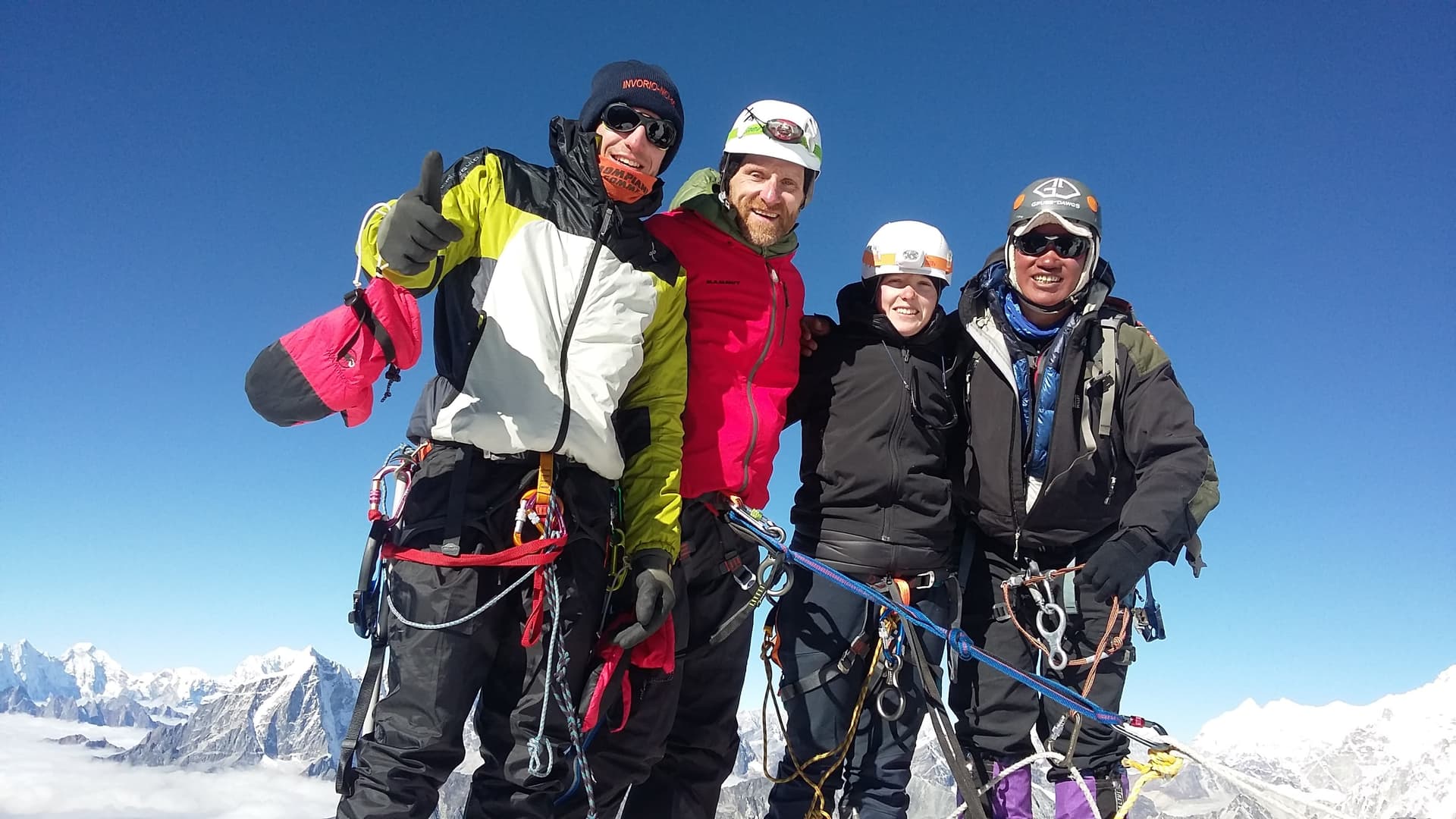
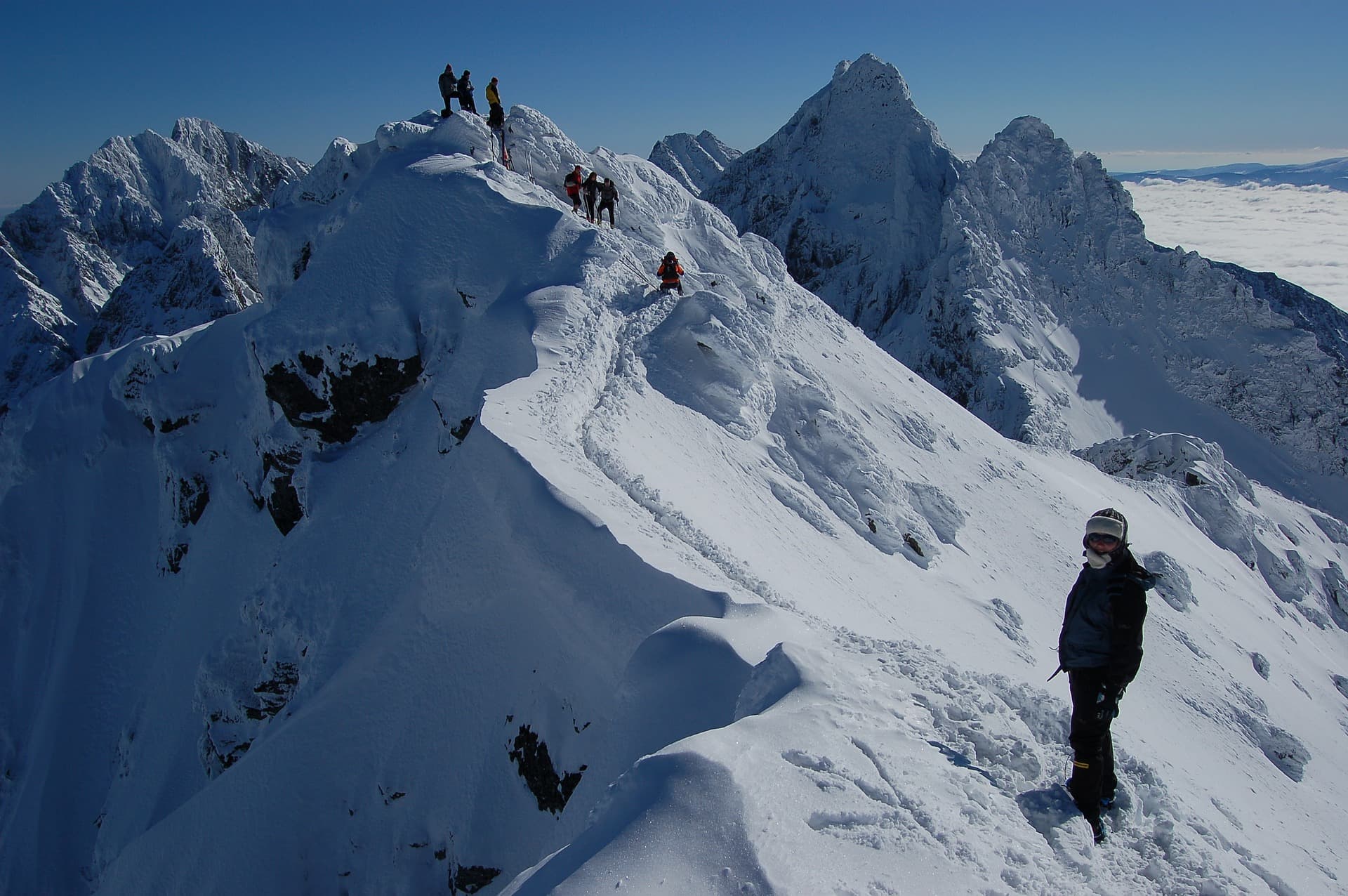
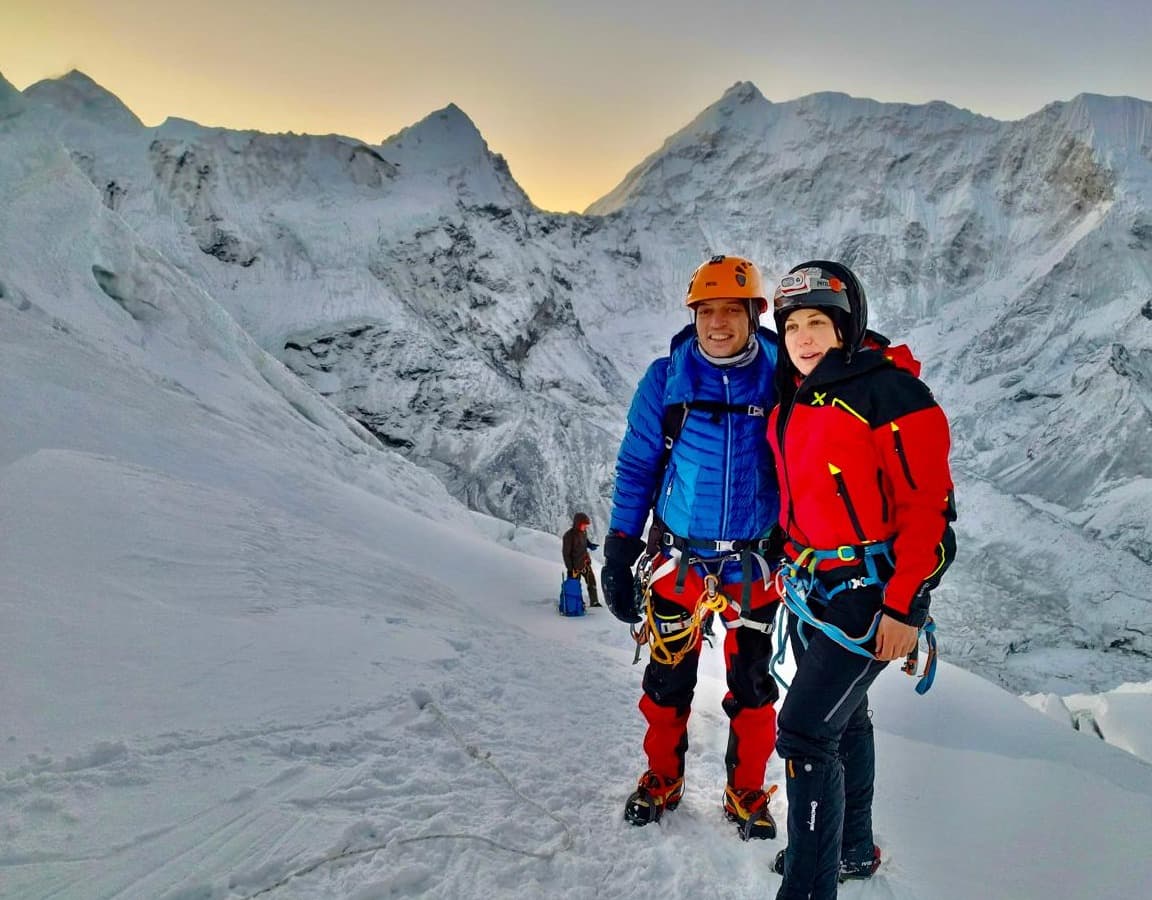
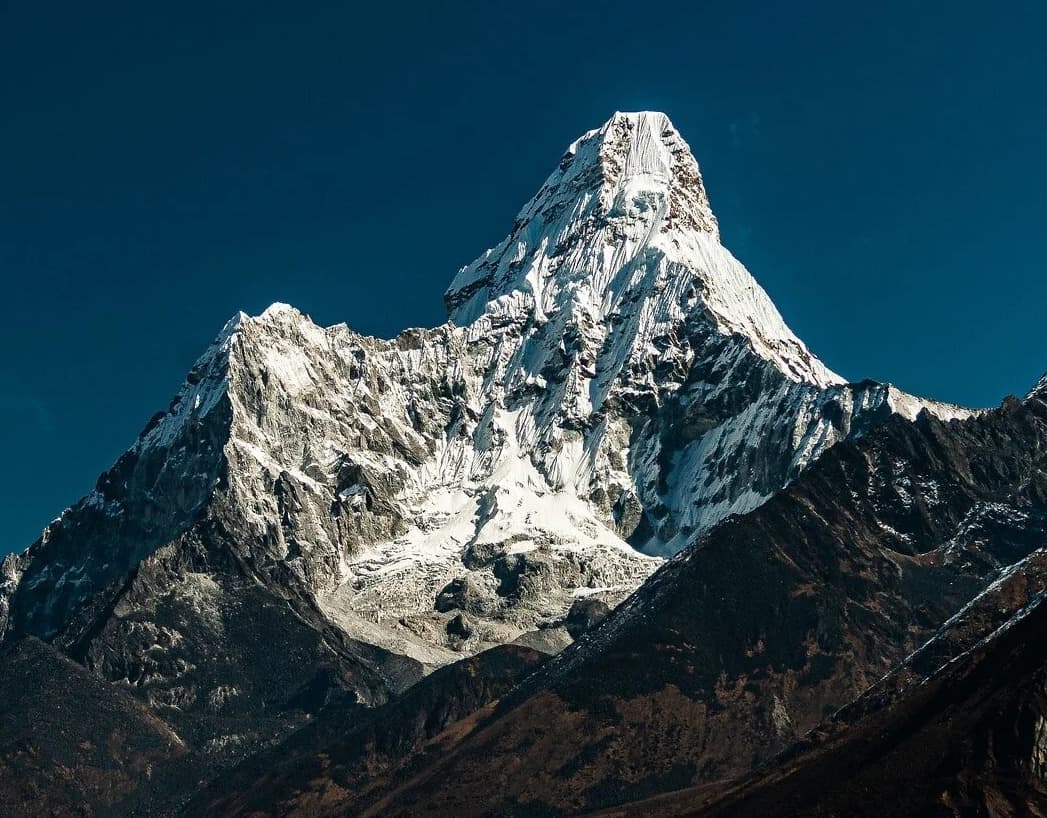
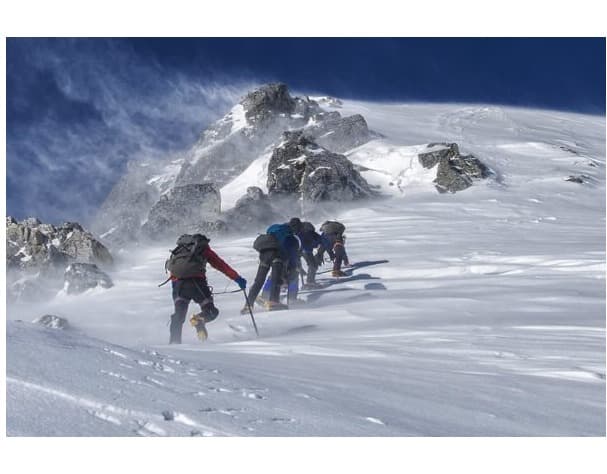
Climbing Mera Peak is considered one of the most magnificent adventure peaks in Nepal. The magnificent Mera Peak climbing boasts a remarkable elevation of 6,476m. It lies in the Mahalangur Range of the Khumbu area, and Mera Peak is the highest peak for climbing in Nepal. Given its height, there is not much difficulty, and hence it is the most climbed mountain in Nepal. The first ascent of the peak was made by an English expedition team in the 1950s. Upon reaching the summit of Mera Peak, we will witness amazing views of the entire Khumbu mountain range.
DestinationNepal
Duration17 days
GradeModerate to Adventurous
ActivitiesPeak and expedition
AccommodationTea-House and Lodge
Max. Elevation6461m.
Group SizeMin. 1 Pax
Vehicleprivate vehicles
MealsBreakfast, Lunch, and Dinner during The Trek
Overview
Climbing the majestic Mera Peak is undoubtedly the best adventure climbing experience available in Nepal. The great Mera Peak lies at a towering height of 6,476m above sea level. The Mera Peak stands in the Mahalangur Range in the Khumbu region and is one of the highest peaks in Nepal. Given the peak's height, it is not particularly technically challenging and is one of the most popular climbs in the country. The first ascent of Mera Peak was made by an English expedition team in the 1950s. After successfully ascending the peak of Mera Peak, we will be treated to the mesmerising views of the entire mountain range in the Khumbu region. The peaks visible from Mera Peak with elevations over 8,000m include Mount Everest, Mount Kanchenjunga, Mount Makalu, Mount Cho Oyu, and Mount Lhotse. Besides these high peaks, there are equally attractive small peaks as well. We start our Mera Peak climbing journey via a scenic half-hour flight to Lukla, located in the Solukhumbu region, from Kathmandu.
The itinerary for our Mera Peak Climbing trip has been created by a professional team, with a steady climb and acclimatisation in mind for the thin air and heavy snowfall at an altitude of 4,400m in Khare. It should be noted that the conventional way to reach the summit of Mera Peak is to cross the Zatra La Pass, whereas we at Team Himalaya will take the southern route from Lukla towards the Hinku Valley.
Trip Highlights
The high Khumbu and Hinku valleys in the Everest region offer stunning views.
A scenic, super-short flight to and from Lukla, with parallel mountains.
A unique experience of a lifetime with the highest trek and Mera Peak climbing.
Visiting the beautiful hidden valley of Hinku in the least trekked area of Khumbu.
In a country with rich Buddhist culture and traditions, and warm hospitality.
However, climbing Mera Peak will not be easy and will require taking it in stages with utmost caution. You are guaranteed maximum safety, as everything necessary will be handled by our highly experienced team of professionals. These include clearing the path for you as well as fixing ropes where necessary. Climbing to the summit will be an amazing experience, offering stunning views of the silver peaks. During our descent, we will descend through the Zatra-La Pass. There are many benefits of taking this trekking route. Firstly, apart from enjoying the beautiful wilderness of nature during the trek, we shall have the opportunity to visit hamlets inhabited by people of unique alpine civilisations. The longer the trek, the more time we have for acclimatisation and discovery. Though it is at such a high elevation, Mera Peak is actually quite easy to scale when compared to Island Peak and Lobuche Peak. Actually, it is considered a very easy peak to scale for mountaineers. As for climbers with some experience, the hardest thing about Mera Peak is proper acclimatisation to the high altitude. That is why Mera Peak is one of the most popular trekking peaks in the world, with many mountaineers, regardless of their skill level and previous experience, going there to climb it. It is therefore recommended that everyone undertaking the Mera Peak expedition should take part in preparation fitness and altitude acclimation training. We guarantee you that climbing Mera Peak with Team Himalaya will be the adventure of your life.
Itinerary of Mera peak climbing - 17 days
On reaching Kathmandu via respective airlines, our TH staff will receive with courtesy transfer to hotels in the center of Kathmandu around the Thamel area, an interesting to be with many shops, stores, and excellent world-class restaurants, with time for a short walk and to buy necessary items for the trip, in the hotel our guide will inform and brief regarding trek and climb and other important things.
Max. Elevation:1300 M
Duration:30 Mins
Morning after breakfast at a given time our city and cultural guide will guide you in and around Kathmandu at places of interest and importance, as Kathmandu Valley is full of World Heritage Sites the holy Pashupatinath temple, Bouddhanath (Little Tibet), Swayambhunath (Monkey Temple) & monasteries, ancient Kings Palaces and courtyard in Kathmandu; after an interesting sightseeing back to the hotel, preparation for the trip to Mera & Hinku Peak Trek and Climb.
Max. Elevation:1300 M
Duration:4 Hours
Morning transfer to the domestic airport for a sweeping scenic flight of 30 minutes to Lukla, at present named Tenzing–Hillary Airport. After leisure time here for an hour or more, our first-day walk of this adventure starts towards our first overnight camp at Chutanga, the trek passes several villages and farmlands with great scenery of hills and valleys, then finally reaches Chutanga, a summer pasture, and a grazing area surrounded by dense pine and rhododendron tree lines. The rest of the afternoon at leisure and for acclimatisation.
Note: Nepal Civil Aviation will not permit flights from KTM to LUA and back. The flight departs from Ramechap to Lukla and returns from Lukla to Ramechap, including an air ticket and airport transfer.
Max. Elevation:2800 M
Duration:30 Mins
Distance:135 Km
After a wonderful rest at Chutanga, our adventure continues with a morning climb to cross over the Kalo Himal Ridge, which surrounds the Nau Lekh rocky mountain range. This range separates the Khumbu area from Hinku Valley and the western Makalu region. The trek over the first pass leads to a steep climb and then reaches a top ridge which is decorated and festooned with many Buddhist prayer flags at the height of 4,450 meters, this pass is called Zatrwa Og, from here walk traverses over a boulder slope, then around a corner and to a climb once again to Zatrwa-La at 4,600 meters, with impressive stunning views across Dudh Kosi river valley and peaks of Karyolung and Lumding Himal, after marveling the awesome scenery an hour downhill reaches to Tuli Kharka for the overnight camp.
Max. Elevation:4300 M
Duration:6 hours
Distance:12.5 KM
From this small area of Tuli Kharka, today, a short morning walk leading downhill with an excellent view of Peak 43 and Kusum Kanguru peaks, then reaching a scenic valley at Hinku area, with stunning South Face views of Mera Peak and back into deep rhododendron and pine forest, with a nice gradual walk through serene forest, then reaching a summer pasture area at Mosum Kharka to set our overnight camp on a meadow near Hinku Drangka River.
Max. Elevation:3430 M
Duration:4 Hours
Distance:13 Km
After this nice, quiet spot at Mousum Kharka, the morning trek follows north, leaving the forest area behind. After a pleasant walk, reaching a wide open valley with pasture land and small Sheppard’s huts, the walk continues to a small bridge to reach Gondishung at 4,350 meters, which is near the Tagnag area. This place has small wooden huts and stone-walled shelters. Gondishung has an interesting 200-year-old Gompa (monastery shrine), from this nice place walk, continues for another hour to our overnight camp at Tagnag, which is a small yak herder’s temporary settlement, at present there are a few tea houses and small lodges to cater to the needs of travelers using this route, especially this place is important for staffs, guides, and porters for a tea break and to socialize.
Max. Elevation:4360 M
Duration:5 Hours
Distance:9 Km
At an altitude of over 4,360 meters, taking a rest for acclimatisation would be beneficial here at Tagnag, before heading to higher elevations and the climb of Mera Peak. An optional short hike to better viewpoints in this beautiful setting, surrounded by stunning mountains and offering a view of Peak 43 at 6,769 meters, is also available.
Max. Elevation:4360 M
Duration:2 Hours
From this nice camp at Tagnag with good rest, start the morning walk with a moderate day walk of about four hours with awesome scenery that surrounds this Hinku valley, the walk follows on a moderate trail up over moraine damming the Charpatti Tal (lake), leading to a high area lined with cairns overlooking the glacial lake, then climbing for a short while the path leads downhill to a large pasture at Dig Kharka, from here walking for an hour across the boulder-strewn hillside, to at Khare for the overnight camp.
Max. Elevation:5045 M
Duration:5 Hours
Distance:6 Km
Today, the journey leads to our destination for the climb of Mera Peak at its base camp, following the trail with a climb over Mera Glacier, leading straight on an ice section for a short while, then with a gentle descent reaching Mera Base Camp for the overnight camp with ample time for relaxation, short walks around and preparation for the climb to Mera Peak summit bid.
Max. Elevation:5300 M
Duration:4 Hours
Distance:5 Km
After a leisure day at Mera base camp, walking further up to set the High Camp to make it more approachable to the summit of Mera Peak, normally climbers make it from the base camp to Mera top, but it is always safe and better to add one more camp before the summit bid, the morning after leaving Mera base camp, trek heads across Mera La to reach Mera High Camp, after few hours of hard walking on this high altitude with few breaks and rest in between then reaching at Mera High Camp, for the last overnight camp before heading back to Lukla, afternoon our expert guides will scout the area of the route of climbing and will fix ropes where necessary, rest of the day preparation for Mera Peak climb, this high camp offers an outstanding vista of Mt. Everest, Mt. Makalu, Mt. Cho Oyu, Mt. Lhotse, Nuptse, Chamlang and Baruntse peaks.
Max. Elevation:5780 M
Duration:4 Hours
Distance:8 KM
A Big Day! Starting very early before the break of dawn for the summit bid, our route leads with a steep climb; where our guides have fixed ropes earlier on necessary sections, after a hard strenuous climb without any technical difficulty reaching the top summit of Mera Peak, a dream becomes a reality with overwhelming success, from the top of the summit overlooking striking panorama that surrounds you with world’s highest mountains lies before you with Mt. Everest, Mt. Lhotse, Mt. Makalu, Mt. Cho- Oyu in the eastern horizon Mt. Kanchenjunga including series of other snow-capped peaks. After a hard climb and in high spirits of success and enjoying the impressive panorama, descend with care on the longest trail to our base camp.
Max. Elevation:6461 M
Duration:8 Hours
Distance:3 KM
We have reserved an extra day as a contingency in case of unfavourable weather conditions in this high Himalayan range. The weather can be unpredictable, so an extra day on this type of adventure is very necessary. If all goes well, it can be used on the way back to Lukla with a short day walk, enjoying the great scenery along the way.
After a mesmerising moment and an experience of a lifetime, return journey to Lukla with a pleasant trek to Kothey through Tagnag, and then reach Kothey for an overnight stop after an enjoyable day’s walk.
Max. Elevation:3600 M
Duration:6 Hours
From Khotey, a morning walk leads back to a forested area with blue Himalayan pines and rhododendron tree lines, then passing several nice grazing areas and meadows with a gentle uphill climb with sensational views of Mera Peak and other high Himalayan range of mountains, then reaching Thuli–Kharka for the last camp before Lukla.
Max. Elevation:4200 M
Duration:6 Hours
Distance:4 Km
A long day of walks today and the last day of trekking, starting the day earlier to reach Lukla, retracing the journey with a climb over Naulekh or Kalo Himal ridges then Zatrwa Og and Zatrwa-La after the hard climb on the downhill trail with lush green vegetation and grand mountain scenery around, a long downhill bring you back at Lukla for the last overnight stop in Khumbu and Everest region, overnight in a nice and cozy lodge with a farewell dinner among the great helpers and supporters of Team Himalaya expert guides, staffs, and porters.
Max. Elevation:2830 M
Duration:7 Hour
Distance:6.7 KM
From Lukla, the flight to Kathmandu departs early in the morning. Sometimes flights can be delayed due to bad weather. As per the flight, board the small plane for a scenic flight back to Kathmandu. Upon arrival at the Kathmandu domestic terminal, your guide and staff will transfer you to your respective hotels in Kathmandu, located in and around Thamel.
Max. Elevation:1300 M
Duration:30 Mins
Distance:135 KM
After the most memorable experience of a lifetime with Team Himalaya, our staff will transfer you to the airport for your final departure at your scheduled flight time, to head home or to your respective country.
Max. Elevation:1300 M
If the provided schedule isn't suitable for you, we can create personalized travel arrangements.
A "standard package" for the Mera Peak climbing expedition is a comprehensive and all-inclusive option designed for trekkers who want to summit the highest trekking peak in Nepal. This package is an excellent blend of a remote trek and a non-technical climb, providing the necessary services for a safe and memorable journey.
Book your own private small group trip
**Discounts are determined exclusively by the size of your group. We do not add additional members to your group.
July 2026
Su
Mo
Tu
We
Th
Fr
Sa
28
29
30
1
2
3
4
5
6
7
8
9
10
11
12
13
14
15
16
17
18
19
20
21
22
23
24
25
26
27
28
29
30
31
1
Sold out dates
US $0US $0 per person (based on 1 people)
Cost Includes
All arrivals/departures, airport/hotel/airport cars, vans, and coaches for groups of all sizes, by private Transportation.
Kathmandu Valley sightseeing by private vehicles.
Twin-sharing accommodation in Kathmandu at 3-star category hotels on a bed/breakfast basis.
Kathmandu Valley Sightseeing tour, including a tour guide and entrance fee.
Full-board trek/climb on a lodge basis includes (B-L-D) with twin-sharing accommodation.
Full-board trekking on camping includes (B-L-D) with twin-sharing accommodation. Include a separate kitchen unit with cook-kitchen staff accompanied by guides and porters.
Applicable TIMS (Trekking Information Management Systems) and Makalu Barun National Park, including Climbing permits from NMA (Nepal Mountaineering Association).
Service of trekking and climbing guide, his equipment, peak incentive (bonus), daily medical insurance, meals, and transportation allowance.
Service of trekking and camping staff, of cooks-kitchen staff, porters, their daily medical insurance, meals, and transportation allowance.
Welcome and Farewell dinner in Kathmandu at an authentic Nepalese restaurant with cultural programs.
Down jackets, sleeping bags (with inner liner), and comprehensive medical kits.
All drinks (tea, coffee, drinking chocolate, and drinking water) are provided on camping trips.
Provide a pulse oximeter for monitoring blood oxygen saturation at high altitudes.
Domestic airfare as per the itinerary, Kathmandu / Lukla / Kathmandu, and a trip briefing with full information and reconfirmation of your international air tickets.
Water purification tablets for safe drinking water.
Seasonal fresh fruit every night after dinner.
Mera peak climbing Trip map
Recuse arrangement.
Cost Excludes
Nepal visa, international airfare, and personal travel / medical insurance.
Expenses of a personal nature and meals in Kathmandu, gratuity (tips), and hard/soft drinks throughout the trip.
Personal trekking gear and climbing equipment.
Emergency evacuation by any means of transportation, including helicopter services and a personal medical kit.
Early return from the trip due to a personal/medical problem; in this case, the client should bear his/her expenses on return from the trek and in Kathmandu, including those of the accompanying guide/porters.
Route Map
Loading map...
Know Before you Go
Best Time to Go:
Mera Peak is best climbed in the months of March to May or the autumn months of September to November, when the weather is calm, and the mountain views are at their clearest. In spring, you’ll find mild weather, blooming rhododendrons, and steady snow. Autumn brings clear skies, fresh air, and beautiful views. Winter is extremely cold and snowy, while the summer monsoon brings rain and low visibility. Choosing spring or autumn will give you the safest and most enjoyable trip. Tip: If you prefer fewer crowds, plan your climb in early spring or late autumn when the trails are quieter. You will still enjoy good weather, but with a more peaceful experience.
Difficulty:
Mera Peak is 6,476 meters high and is Nepal’s tallest trekking peak. The climb is moderately challenging and doesn’t require advanced mountaineering skills, but you should be physically fit and allow time to acclimate to the altitude. Summit day is the hardest, as you’ll walk on snow and ice with crampons and use ropes on steeper parts. You’ll face cold weather, long days, and thin air. With good training and help from experienced guides, even beginners can reach the top if they are prepared, motivated, and determined. Tip: Train your body by going on long hikes with a weighted backpack and incorporating cardio exercises. This will help you build both stamina and confidence for summit day.
Accommodation and Food:
On the way to Mera during your trek to Mera Peak, you’ll stay in both teahouses and tents. In the lower areas, teahouses provide simple rooms and basic services. As you go higher, the facilities become more basic, and you’ll sleep in tents set up by your team. Meals often include Nepali dishes like dal bhat, noodles, and potatoes, and your cook ensures you have warm, filling food at camp. Bringing snacks like chocolate, nuts, or energy bars can help boost energy on long days. Hot soup in the evenings to stay warm and hydrated. Carry your favourite snacks from home, as they may not be available on the trail.
Permits:
To climb Mera Peak, you will need several official permits. The primary permit is the Mera Peak Climbing Permit issued by the Nepal Mountaineering Association. Depending on the route you take, a permit for Sagarmatha National Park or Makalu Barun National Park is required, along with a TIMS card for safety and record-keeping. These permits not only regulate climbing activity but also help protect the environment and support local communities. At Team Himalaya, we handle all necessary permits for you, ensuring a smooth, hassle-free process. Tip: Always walk clockwise around monasteries and mani walls to show respect. Taking a moment to spin prayer wheels is also a meaningful cultural gesture.
Acclimatisation / Altitude Sickness:
Acclimatisation is a key part of reaching the summit safely. Our Team Himalaya itinerary includes rest days at Tagnag and Khare to help your body gradually adjust to lower oxygen levels. Gradual acclimatisation helps reduce the risk of altitude sickness, which can cause headaches, nausea, dizziness, and fatigue. Climbers are advised to ascend slowly, stay well hydrated, eat properly, and rest whenever needed. Avoiding alcohol and smoking is recommended, and carrying altitude medication such as Diamox under medical guidance is a smart precaution. Following these measures increases your chances of a safe and successful climb. Tip: Follow the principle of “climb high, sleep low” whenever possible. Drink plenty of water, ideally at least three litres a day, to help your body adapt to the thinner air.
Mera Peak Packing List:
Packing well is important for Mera Peak. Here’s what you should bring:
* Clothing: Thermal base layers, fleece jackets, an insulated down jacket, a waterproof and windproof shell jacket, trekking pants, insulated climbing pants, waterproof over pants, a warm hat, a balaclava, a buff or neck gaiter, thermal socks, and several pairs of trekking socks. * Footwear: Sturdy trekking boots for the lower trails, insulated mountaineering boots for climbing, crampon-compatible climbing boots, and lightweight camp shoes or sandals. * Climbing Gear: Climbing harness, helmet, ice axe, carabiners, ascenders, belay device, ropes (usually provided by the expedition team), gaiters, and climbing gloves. * Sleeping and Camping: A four-season sleeping bag, an insulated sleeping mat, a lightweight pillow, a duffle bag or backpack, dry bags to keep gear safe from moisture, and a headlamp with extra batteries. * Accessories and Essentials: Trekking poles, sunglasses with UV protection, sunscreen, lip balm, reusable water bottles or a hydration bladder, methods for purifying water such as tablets or a portable filter, a small personal medical kit, a multi-tool or knife, toiletries, and lightweight quick-dry towels. * Snacks and Extras: Energy bars, nuts, chocolates, rehydration salts, tea bags or coffee sachets, a camera, binoculars, and a journal for personal notes. * Electronics: Power bank, portable solar charger, and extra memory cards for cameras. Tip: Use waterproof dry bags to separate clothes, gadgets, and food. This will protect your gear and make it easier to access when needed.
Travel Insurance:
Having good travel insurance is a must for Mera Peak. The trek reaches high altitudes, and there are risks of illness or injury, so you might need a helicopter evacuation. Medical care is limited in the mountains, so your insurance should cover treatment, evacuation, and trip cancellations up to at least 6,500 meters. Without insurance, emergencies can be expensive and difficult to handle. Always check your policy carefully before your trip. Tip: Choose an insurance policy that clearly includes helicopter rescue. Always carry a copy of your policy number and emergency contact details in your backpack.
Transportation:
The most common way to reach Mera Peak is by flying from Kathmandu to Lukla, a famous mountain airstrip and the main entry point to the Khumbu. From Lukla, you’ll trek through remote valleys and villages to reach base camp. Bad weather can cause delays or cancellations, so be prepared for changes. Some climbers take a longer overland route to Salleri or Phaplu, then trek to the Mera trail, which takes longer but avoids flight delays. No matter how you get there, the journey is an adventure. Include in your itinerary for possible Lukla flight delays. This prevents last-minute stress with international flight schedules.
Electricity and Charging:
Electricity is available in lower villages along the Mera Peak trail, mostly from hydropower or solar panels. As the trek moves into higher, more remote regions, electricity becomes less reliable and eventually unavailable. Charging devices such as phones, cameras, or power banks at teahouses usually incurs an extra fee. During camping at higher altitudes, there is no electricity, so climbers must rely on personal power banks or portable solar chargers. Carefully planning power use is important, since batteries drain faster in cold weather. Tip: Carry a high-capacity power bank and keep it warm inside your sleeping bag at night. This will help your batteries last longer in freezing temperatures.
Water and Hydration:
Having access to safe drinking water is crucial during the climb. Bottled water is sold in some villages, but it gets pricier and harder to find as you go higher. Most people refill bottles from taps or streams and purify the water with tablets, filters, or UV devices. Staying hydrated helps prevent altitude sickness, so bring at least two reusable bottles or a hydration bladder. Using reusable bottles also helps protect the environment. Tip: Add rehydration salts or electrolyte powders to your water to maintain energy levels. Warm drinks like tea or soup can also help you stay hydrated in cold weather.
Guides and Porters:
Having experienced guides and porters makes your Mera Peak climb much safer and more comfortable. Guides handle the route, logistics, and health checks, and help with the technical parts of the climb. Porters handle your main luggage, allowing you to walk with a lighter load and focus on adjusting to the altitude. Hiring local staff also supports mountain communities. If you’re new to the region or climbing, it’s best to go with a professional guide team. Tip: Pack your duffel bag carefully and keep it within the porter’s weight limit. Always thank your guide and porter, as they play a big part in your success.
Communication:
Communication in the Mera region is limited due to the region's remoteness. You might get a mobile signal in some lower villages, but it’s weak or gone higher up. Some teahouses have satellite phones for a fee, and many teams bring their own satellite phones or radios for emergencies. You may purchase a local SIM card in Kathmandu, but coverage is unreliable in the higher mountain regions. Tip: Inform your family and friends that communication will be irregular. Use satellite devices only for essential updates to conserve battery and airtime.
Safety and Emergency:
Climbing Mera Peak comes with real risks, so safety is of the utmost importance. Always follow the acclimatisation plan, listen to your guides, and check the weather. If there’s an emergency, a helicopter rescue may be necessary, but only if the weather permits. A skilled team with first aid training and good equipment makes things much safer. Bring your own first aid kit and know how to use it. Tip: Always share your trekking plan with your guide and follow it closely. Carrying a whistle and a headlamp for emergencies can be lifesavers if you get separated.
Fitness and Training:
Being fit is essential for a successful Mera Peak climb. Begin training 2–3 months before your trip, focusing on cardiovascular exercise, leg strength, and stamina. Go on long hikes with a backpack, climb stairs, run, or cycle. Strengthen your core and upper body to handle climbing gear. Don’t forget to prepare mentally, as the trek is long and can be tough in cold weather. Tip: Train with your trekking boots and backpack before the trip. This will not only build strength but also get your body accustomed to the gear you will actually use in the field.
Booking Terms and Conditions
Dear Guests and Travellers to Nepal and other Himalayan destinations, please make sure you have understood our Terms and Conditions after carefully reading the mutual contract and legal process, which will help maintain our long-term friendly relationship.
After selecting the trip of your choice from our varied programs and itineraries, the first step in the booking procedure is to complete our booking form and send it, along with a 20% non-refundable deposit for the entire Nepal Trip.
Along with the completed form, you are required to email us a copy of your passport and flight Ticket with all details to the Kathmandu office at Team Himalaya ([email protected]).
Upon receiving your passport copy and details, along with your completed booking form and non-refundable deposit, we will send you a final confirmation receipt with an acknowledgement.
All deposits are required for selected and chosen trips on a per-person basis. We will email you with details about the direct deposit procedure.
As per the booking and Trip money transfer, service charges of the respective banks may apply and should be paid at the time of deposit.
We will email you the details for making credit card payments once you have filled out the Booking form.
We accept Visa or MasterCard only, with a 4% processing fee applied to credit card payments. Wire transfers are charged by the Bank as a service.
The Condition for clearing the remaining balance as per the trip booked is as follows:
The remaining balance for all Nepal Trips should be paid upon arrival.
The remaining balance for other Himalayan countries, such as Bhutan and Tibet, as well as for all multi-country tours, must be cleared within 35 days of your trip departure dates.
Team Himalaya Treks & Expeditions (P) Ltd reserves the right to cancel your trip if the full amount is not paid on time.
In certain circumstances, we will accept your last-minute booking at least a week before the tour departure date for all trips; in this case, full payment is required.
02: How to pay your selected trip deposit:
Credit Card (Visa & Mastercard):
Please call us at 00977-9841824281 to pay over the phone.
Payment:
Please deposit by wire Transfer to Team Himalaya (P) Ltd and post it to the address below:
Company Address: Team Himalaya (P) Ltd
Bank Transfer:
Bank Address: Himalayan Bank Limited.
Bank address: Tridevi Marg, Thamel, Kathmandu
Account No:01908416120019.
Account Type: Foreign Currency (USD)
Bank SWIFT code: HIMANPKA.
03: Refund & Cancellation:
No refund will be made by the company for the 20% deposit in the event of cancellation of your trip for any reason.
After paying the full amount for any selected trip, you are entitled to a refund if you cancel by informing us as early as possible, provided the charge is reasonable under the company's rules and regulations.
Still, the cancellation charge is invoiced to you. Written notification of your cancellation is required to cancel any trip. Nevertheless, you have imposed a cancellation charge as advised below:-
60 days or more deposit retained
45 – 50 days before departure 50%
30 – 40 days before departure,75%
20 days before departure,100%
04: Extra Supplement Charge:
Team Himalaya Treks & Expeditions (P) Ltd tour/trek packages, rooms, or tents are provided on a twin-sharing basis. Thus, a single-room supplement will be charged for a client who does not have another tour participant to share a room/tent with. It also applies to clients who need a single supplement in hotel or lodge tents/rooms.
05: Early return from any Tours or Treks:
No refunds will be issued to clients who return early from our trips due to personal, domestic/or medical problems, regardless of any unused portions of the itinerary.
06: Amendment in Trip Cost:
Team Himalaya Treks & Expeditions (P) Ltd. reserves the right to revise or change the trip costing rate posted on our website, under any circumstances, or on the pressure of various external factors beyond our control, for instance, changes in exchange rate, government action, etc. inflation, however assuring that we will put our effort as much possible to keep the present cost rate as it is.
07: Unforeseen Circumstances:
If the company has to cancel the trip due to unforeseen circumstances such as natural disasters, political conflict, unfavourable weather, or road closures, we will refer you to an alternative trip of a similar type and standard.
Even if this doesn’t suit your preferences and interests, all trip prices you pay to our company will be refunded, with an administration and trip arrangement charge of 15-20%, depending on the trip chosen.
Please note that any other expenses incurred by you as a result of this booking are entirely your responsibility.
08: Travel / Medical Insurance:
We strongly recommend that all booking Clients acquire Travel and Medical Insurance as a compulsory requirement for all our tours, trekking, and climbing trips. It should include adequate protection for tour/trekking/climbing/rafting or any other adventure sports, covering personal injury, death, medical expenses, and repatriation/emergency evacuation expenses by any means of transportation, such as helicopter rescue or air ambulance, as well as adequate baggage cover.
09: Health & Fitness:
All our Treks and Tours require good health and a level of fitness before booking with us. The client should always check with their local Doctor or Physician regarding their health and fitness before departing for Himalayan destinations.
It’s solely the client’s responsibility to inform Team Himalaya Treks & Expeditions of any pre-existing medical condition or disability that might reasonably be expected to increase the risk of your required medical attention, which may affect your capability to travel on the trips booked with us.
Children and Elderly people:
An authorised guardian by the parents must accompany all travellers under the age of sixteen.
A person of more than 70 years of age, although in good health, still needs a partner, family member, or friend to accompany him/her.
If you have any queries regarding age and suitability, please contact us for further information.
10: Nepal / Tibet Visas & Passport Conditions:
All clients must have a valid passport with at least 6 months' validity from the return date of travel.
Nepal visas can be obtained from the Nepal Consulate or Embassy in your country or upon arrival at Kathmandu Tribhuvan International Airport. The costs of Nepalese visas are the sole responsibility of clients. All clients must have a valid passport with at least 6 months of validity from the return date. As you are unable to obtain visas for Tibet, you need to send your passport details to Team Himalaya Treks & Expeditions for visa applications to travel there. We require this information at least three weeks before departure.
11: Risk and Liabilities:
Team Himalaya's main concern is your safety and satisfaction, as well as the welfare of our staff. We carry out all our assignments sincerely & honestly to ensure your holiday is hassle-free and problem-free.
Nevertheless, unless stated otherwise, the trip may be changed due to uncertain or inherent circumstances, such as landslides, roadblocks, floods, heavy snow, political unrest, flight cancellations, delayed arrivals, sickness, or accidents. Any extra cost incurred there is your responsibility and should be borne on the spot.
Flight Delay/Cancellation:
Possibility of domestic flight delay or postponement due to bad weather in the Himalayan regions, which sometimes happens, in particular around the Everest region, Lukla, Phaplu, Annapurna / Mustang / Manang region, Humde, Jomsom, and on the Far West Dolpa, Simikot, and Jumla region, and on the Far East sector, Tumlingtar, and Taplejung area.
Trekking in remote areas or in the manner described above, especially during the off-season, you are highly advised to reserve extra days to prepare for some delays and avoid frustrating consequences.
In the event of a flight cancellation for the pre- or post-tour, you will need to cover the accommodation and food costs yourself.
12: Our Responsible Adventure Policy:
Our entire tour/trekking guide representing Team Himalaya Treks & Expeditions deserves all authority during tours, trekking/rafting, and climbs.
Team Himalaya Treks & Expeditions will make every effort to ensure all our trips are comfortable and satisfactory, but one must understand that the Himalayan region, Third World and Developing Countries like Nepal, cannot afford many Western and highly developed facilities, sometimes depending on the area of travel. However, we will do our best to make your travel enjoyable and memorable with us.
Weather is another factor that directly impacts some trips; hence, patience, enthusiasm, and proper preparation before heading out are a must.
Your personal belongings:
On any account, we’re not responsible for any loss or damage to your baggage/luggage or property, even when it is shouldered by our porters, ponies, or vehicles. Our trip escorts and guides will provide the necessary safety precautions to ensure this does not occur while you are with us.
Papers & Documents:
All necessary papers and documents should be presented in sequence, for example, to obtain visas and permits. We’re not accountable if any trip formalities aren't completed in time before the trip departs due to missing essential documents.
We had a very successful EBC trek in October 2024 because of Team Himalaya! Our guide, Raj, was very knowledgeable in all things Everest. He set us up in the best lodges where we had great service all along. He provided us with a superb porter, who also went above and beyond in taking care of us. Raj was very patient with us and was always looking out for our best interests. We would highly recommend Team Himalaya for any trek!
AAlec S1st Apr, 2024
Everest Base Camp Team Himalaya March 2024
We have just returned from a 14 day, 11 day hike with Raj and Durga from Team Himalaya to Everest Base Camp. From the minute we landed to our departure we were properly looked after and cared for by Team Himalaya. The trek to and from Everest Base Camp was wonderful, our guides and porters really looked after us and were incredibly knowledgeable. In Nepal things can go wrong especially with flights to and from Lukla but Team responded magnificently and found alternative solutions. If this is on your bucket list as ours and you are looking for a company to organise this with I would 100% recommend Raj.
JJourney379926937861st Apr, 2024
Reaching Everest Base Camp with TEAM HIMALAYA
If you are looking for an adventure of a lifetime, don’t hesitate! Choose TEAM HIMALAYA for your Everest Base Camp trek! We completed the EBC trek early November 2023 . My husband and I chose to do a private trek with Team Himalaya. Everything went smoothly with our guide Raj. His team and organization is outstanding! We could not have done it without him. Raj took care of everything throughout the trek and made sure we were well at all times, even providing us fresh fruits every night after dinner! We felt safe at all times , his experience and knowledge of the Himalayas helped us achieve our goal in reaching the EBC! His professionalism went beyond our expectations from our first contact with him for information until the very end. We will forever remember this expedition and gained a friend in our guide Raj!
eevanhH6577DL13th May, 2023
Incredible Experience by evan
It was an incredible experience being surrounded by the towering Annapurna Himalayas. This memorable trek through Nepal offered the best scenic views and stunning landscapes. Despite being surprised at how quickly the trek ended, the daily walks were filled with dramatic views that left a lasting impression.
I highly recommend this adventure, as it is one of the best base camp treks in the Himalayas with minimal risk of altitude sickness. Although there were steep ups and downs that were tiring on some days, the breathtaking views made it all worth it. This was easily the most exciting trek I have ever experienced.
I want to thank Team Himalayas and Raj for providing exceptional service with their expert guide and staff.
Frequently Asked Questions About the Mera peak climbing
What is the height of Mera Peak?
Mera Peak is 6,476 meters high, making it Nepal’s tallest trekking peak. The summit offers stunning views of Everest, Lhotse, Makalu, Cho Oyu, and other Himalayan giants.
How difficult is Mera Peak to climb?
It is moderately challenging, requiring good stamina and acclimatisation to the environment. The main difficulty is the summit climb on snow and ice, but technical skills are minimal.
When is the best time to climb Mera Peak?
Spring (March–May) and autumn (September–November) are ideal for stable weather, clear skies, and scenic mountain views. Monsoon and winter are less suitable due to rain, snow, and harsh conditions.
Do I need previous mountaineering experience?
No prior experience is required, but climbers should be physically fit and prepared for high-altitude trekking. Guides and porters provide support during technical sections.
How long is the Mera Peak expedition?
The typical itinerary is 17 days, including trekking, acclimatisation, summit attempt, and return to Kathmandu. Rest days are built in to adjust to altitude.
What type of accommodation is provided?
Trekkers stay in teahouses at lower villages and tents at base and high camps. Facilities are basic but comfortable, with warm meals and proper sleeping arrangements.
What meals are provided?
Trail meals include traditional Nepali dishes such as dal bhat, noodles, soups, and vegetables. Snacks like nuts, chocolate, and energy bars are recommended for long trekking days.
What permits are required?
Climbers need the Mera Peak Climbing Permit, a national park entry permit, and a TIMS card. Team Himalaya members arrange all permits to ensure a smooth process for you.
Is altitude sickness a concern?
Yes, altitude sickness can occur at high elevations. Proper acclimatisation, hydration, rest, and avoiding alcohol help reduce the risk of headaches, nausea, and fatigue.
What clothing is needed?
Essential items include thermal layers, fleece and down jackets, waterproof outer layers, trekking pants, hats, gloves, and sturdy boots suitable for snow and ice.
What climbing gear is required?
Climbing gear includes a harness, helmet, crampons, ice axe, ropes, gloves, and gaiters. Expedition teams may provide or rent heavier technical equipment.
Can I hire a guide and porter?
Yes, guides manage safety, route planning, and acclimatisation, while porters carry heavy gear. This allows climbers to conserve energy for trekking and the summit.
Is electricity available on the trail?
Electricity is limited; lower villages may have power, while higher camps rely on solar or generators. Power banks are recommended for charging devices.
How do I stay connected during the trek?
Mobile coverage is limited at high altitudes. Satellite phones or radios are used for emergencies, while family and friends should expect restricted connectivity.
Is travel insurance necessary?
Yes, insurance covering high-altitude trekking, medical emergencies, and helicopter evacuation is essential for safety and peace of mind.
How is drinking water managed?
Water should be purified using tablets or filters. Carry reusable bottles or hydration bladders and drink at least three litres daily. Warm drinks like tea or soup also help maintain hydration.
What cultural experiences can I expect?
The trek passes Sherpa villages, monasteries, prayer flags, chortens, and mani walls. Gondishung Monastery near Tagnag is a key spiritual stop along the route.
What is summit day like?
Summit day is long and challenging, starting before dawn. Climbers use crampons and ropes to reach the top, where panoramic Himalayan views reward the effort.
What should I do if the weather delays the climb?
Team Himalaya includes contingency days in the itinerary. Climbers should remain flexible and follow the guide's safety instructions during adverse weather conditions.
How do I prepare physically for Mera Peak?
To prepare for Mera Peak, focus on long-duration hikes with a weighted backpack to build stamina and muscle strength. Additionally, practice mental resilience and endurance exercises to handle the Challenges of high-altitude trekking and climbing.