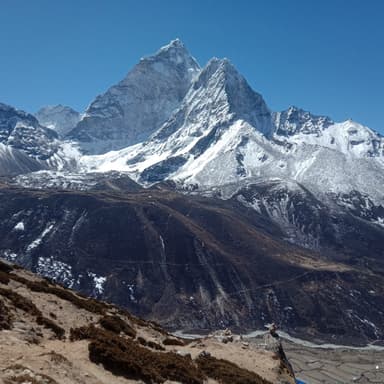
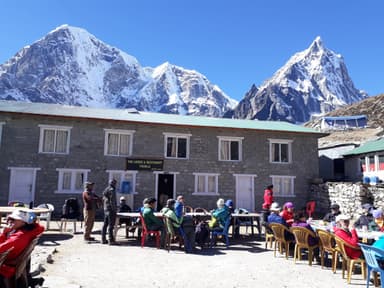
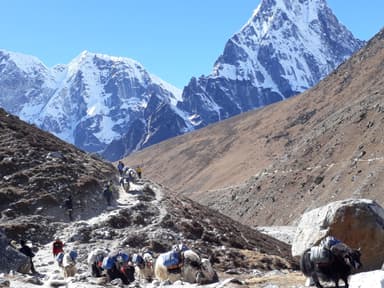
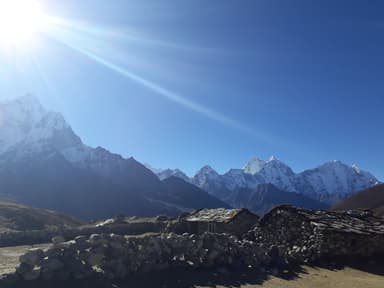
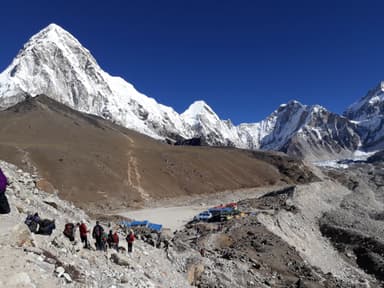
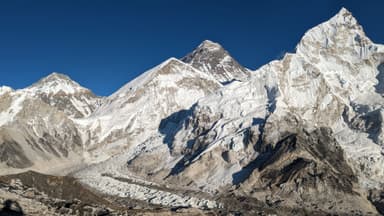
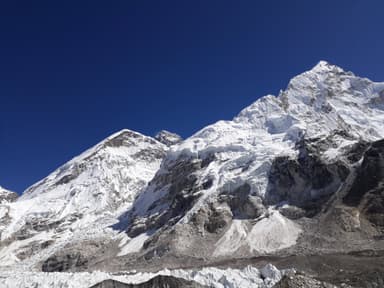
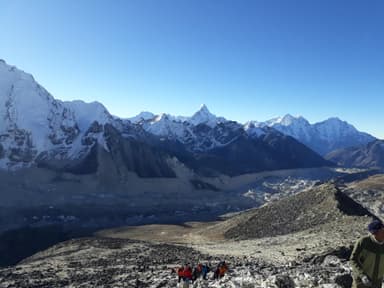
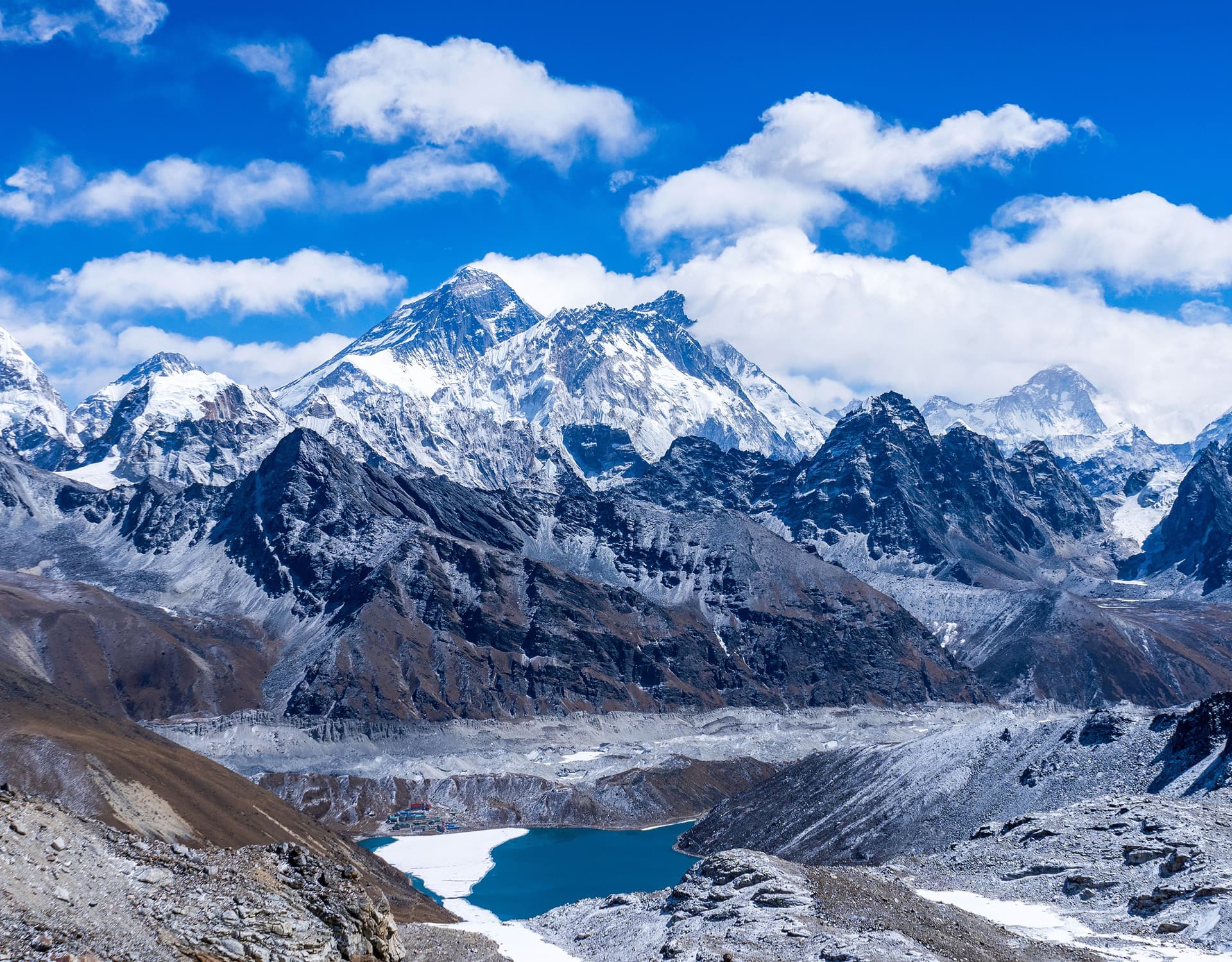
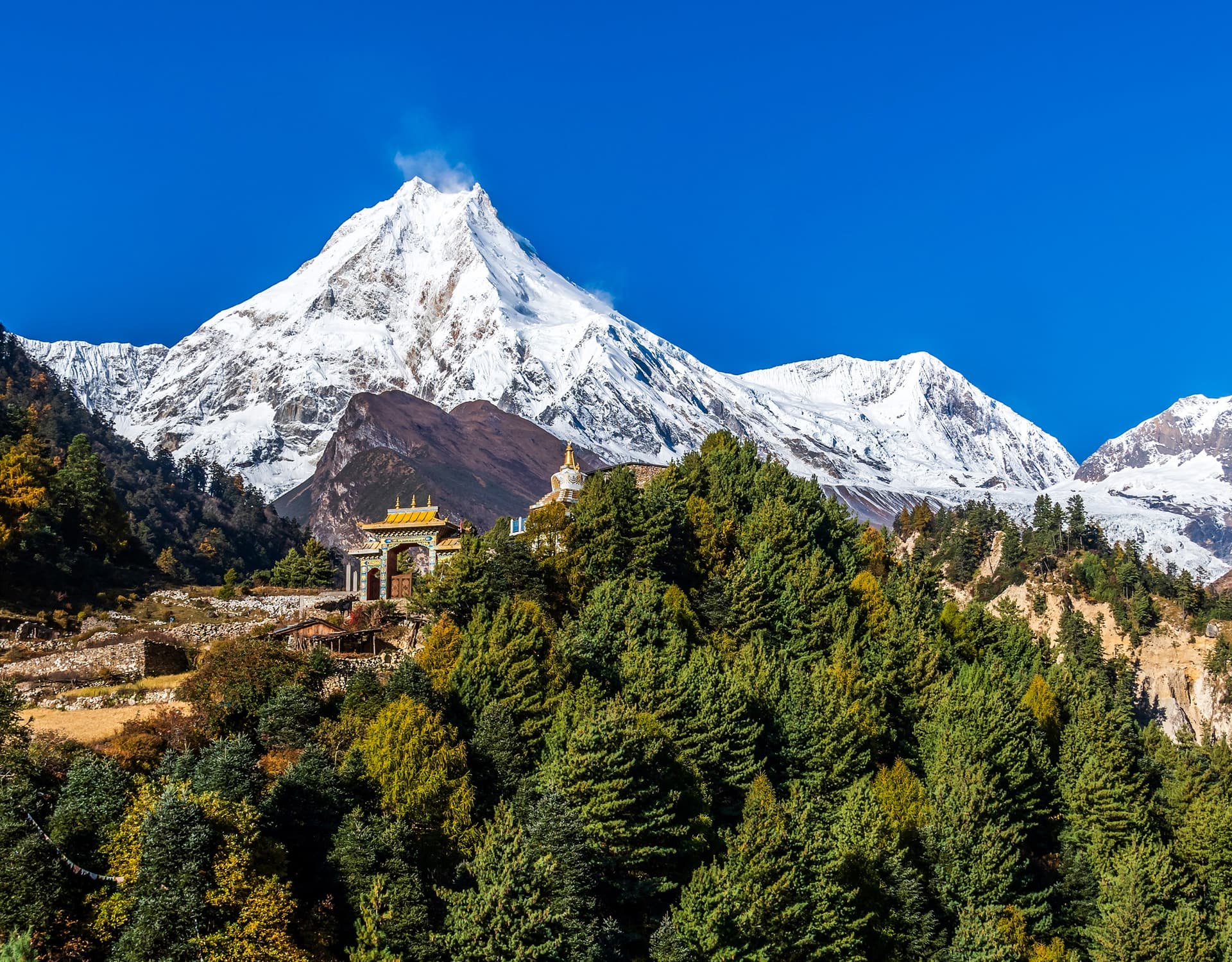
Embark on our 14-day Everest Base Camp Trek, a legendary journey through Nepal's Khumbu region. This package takes you through Sagarmatha National Park, past the Sherpa capital of Namche Bazaar and Tengboche Monastery, to the foot of Mount Everest at 5,364m. Experience stunning alpine landscapes and rich Sherpa culture with expert guides. This is the ultimate high-altitude adventure for moderately fit trekkers.
DestinationNepal
Duration14 days
GradeModerate to Adventurous
ActivitiesTrekking
AccommodationTea-House and Lodge
Max. Elevation5555m.
Group SizeMin. 1 Pax
Vehicleprivate vehicles
MealsBreakfast, Lunch, and Dinner during The Trek
Overview
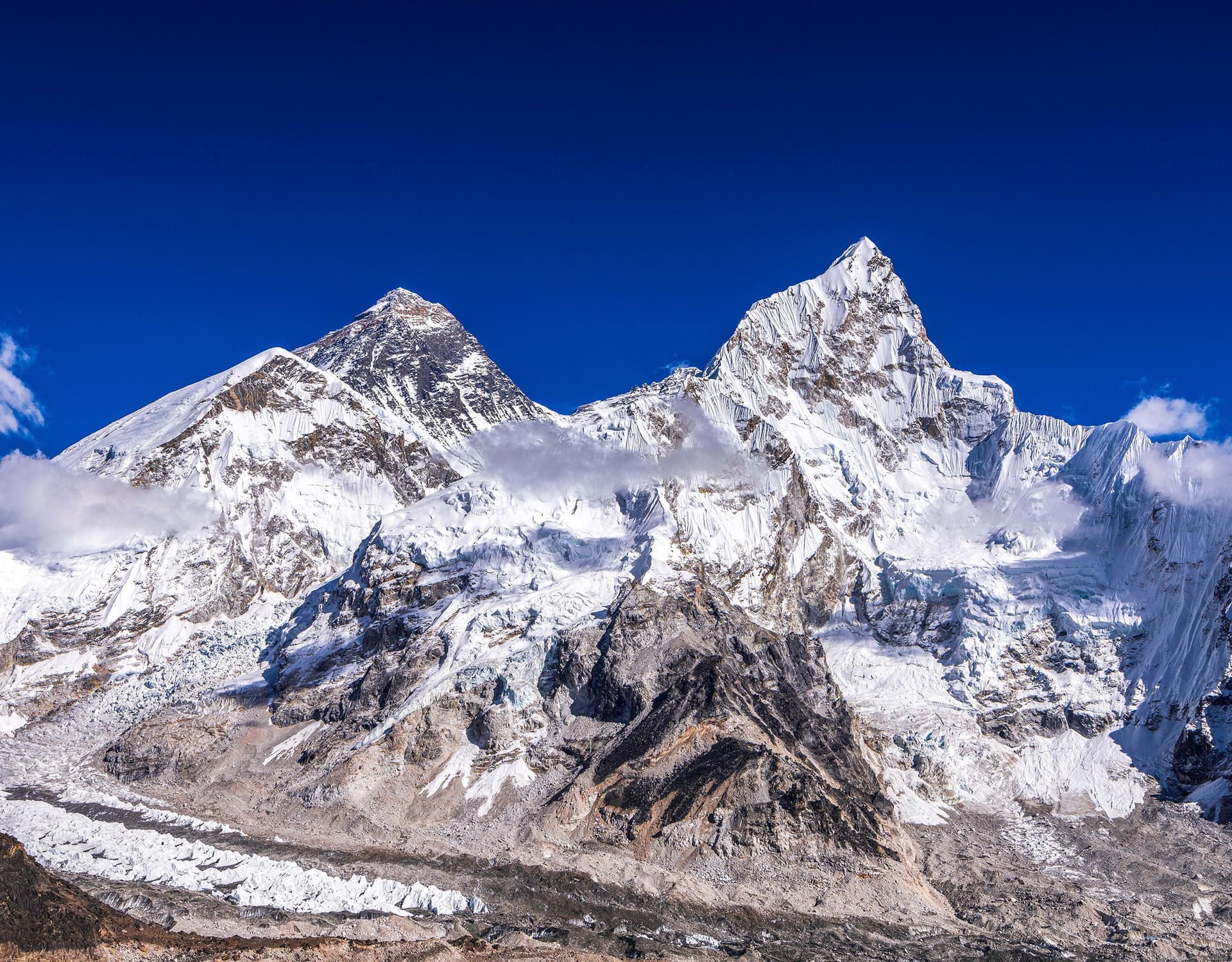
The Everest Base Camp (EBC) trek in Nepal is one of the world’s most iconic high-altitude adventures. This epic trip takes you deep into the Himalayas, following historic routes through the startling Khumbu Valley. The EBC hike takes 14 days and covers approximately 130 kilometres. The EBC trek offers an incredible opportunity to walk in the shadows of towering peaks, including Mount Everest (8,848 meters). It’s a bucket-list adventure that attracts thousands of trekkers from around the globe each year.
Your 14-day Everest Base Camp Trek winds through diverse landscapes that will leave you speechless. The EBC path passes through traditional Sherpa communities, including Namche Bazaar and Tengboche. These are great places to learn about the rich local culture firsthand. You’ll cross suspension bridges over rivers and walk through beautiful alpine forests. The path gradually climbs through dramatic terrain, including the famous Khumbu Glaciers. Each day brings new scenery, from lush green valleys to stark, rocky mountain terrain that feels like another planet.
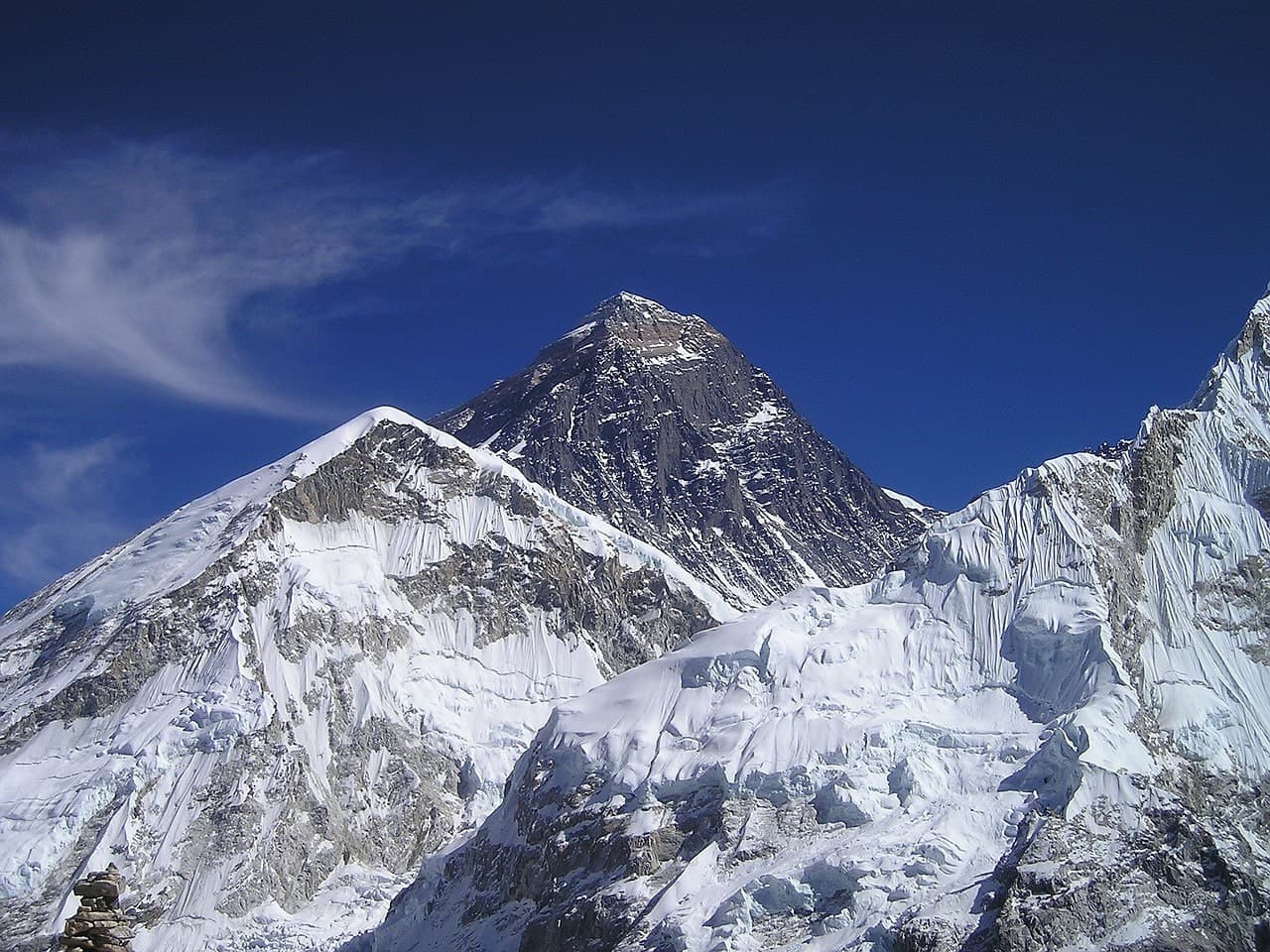
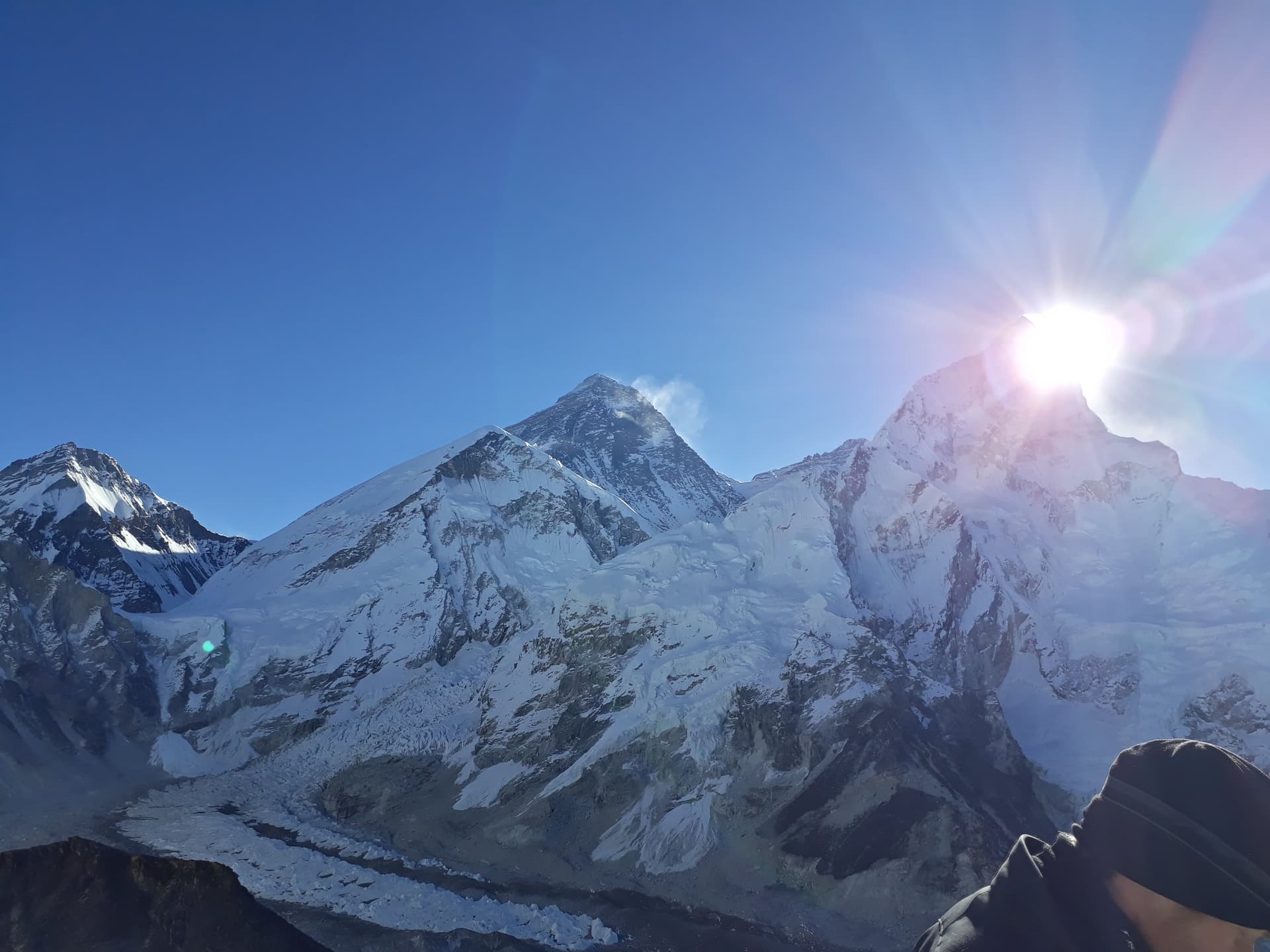
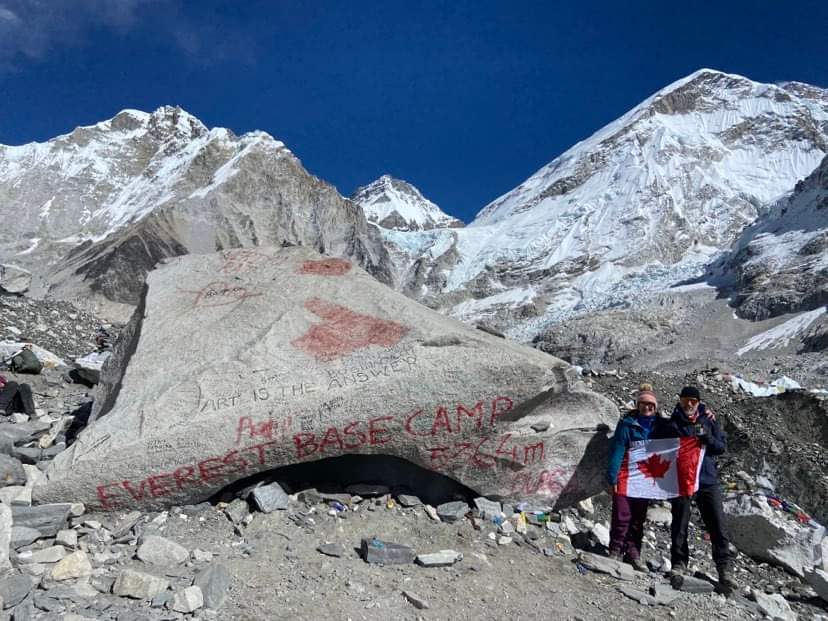
The main highlight of the Everest Base Camp trek is reaching the base camp at 5,364 meters above sea level. Standing at the foot of the world’s tallest mountain is an unforgettable moment that makes every challenging step worthwhile. The EBC trekking package includes stunning viewpoints, such as Kala Patthar (5,545 meters), where you can witness an incredible sunrise over Everest. You’ll also experience the warm hospitality of the Sherpa people and visit ancient Buddhist monasteries. The high-altitude adventure combines physical challenge with cultural immersion, making it famous worldwide among adventure seekers.
Significant Highlights of Everest Base Camp Trek
Standing at Everest Base Camp (5,364m), the legendary launching point for Mount Everest summit attempts. Spectacular sunrise views from Kala Patthar (5,545m), offering the best close-up photography of Everest’s peak.
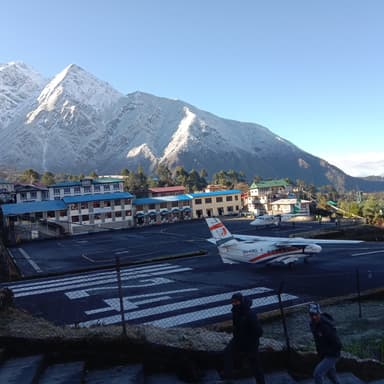
Flying into Lukla Airport, a gateway to the Everest region.
Exploring vibrant Namche Bazaar, the bustling commercial hub of Sherpa culture.
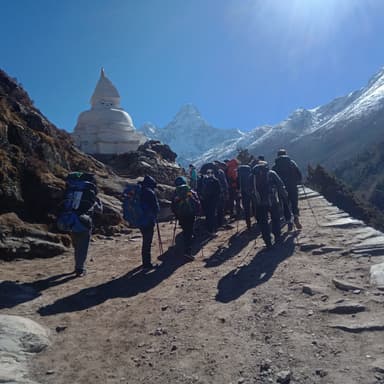
Visiting Tengboche Monastery, the spiritual heart of the Khumbu region.
Trekking through Sagarmatha National Park, a UNESCO World Heritage Site.
Experiencing authentic Sherpa hospitality and culture.
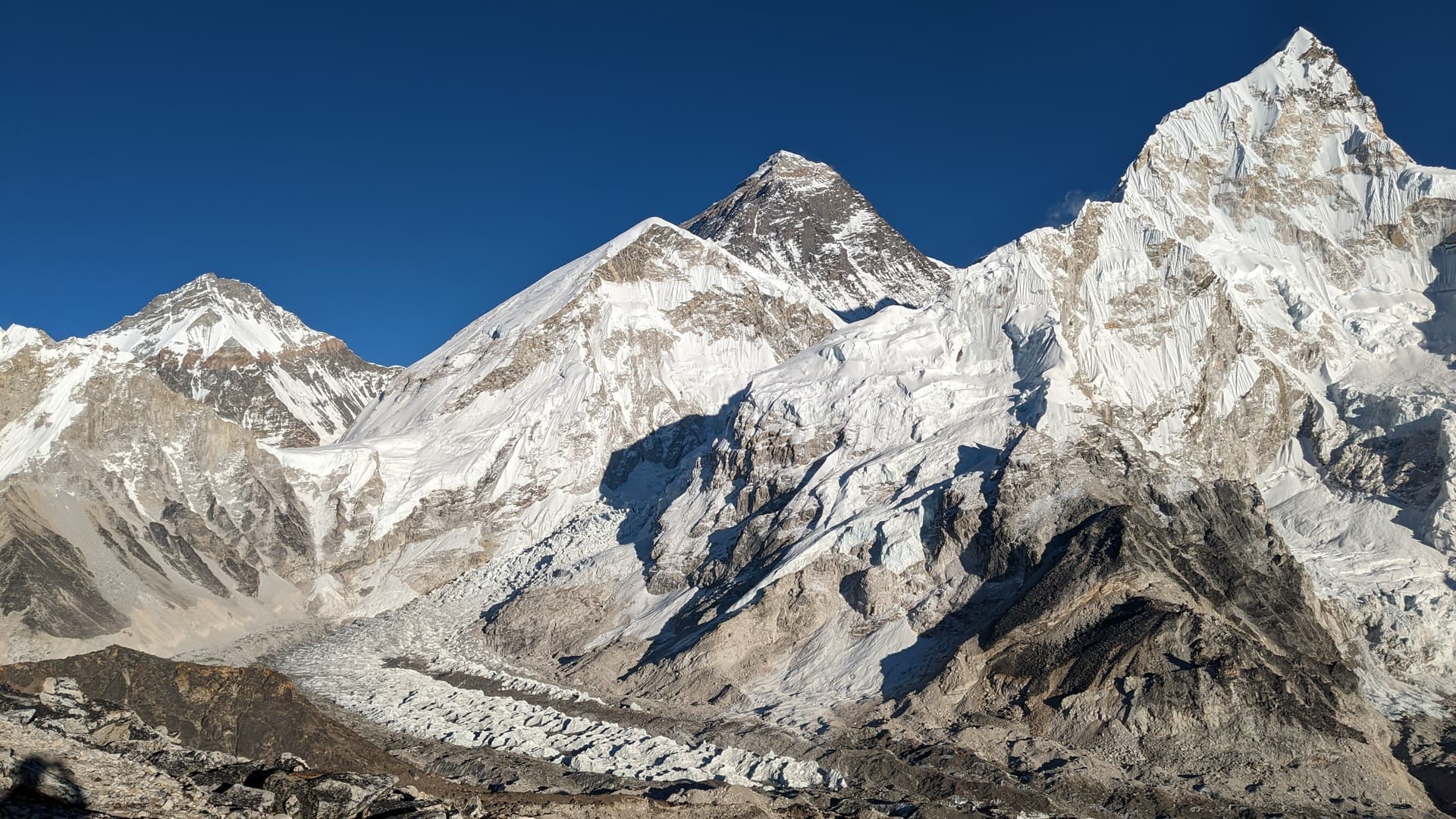
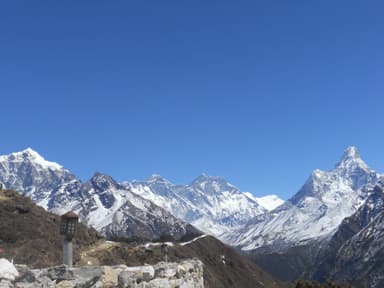
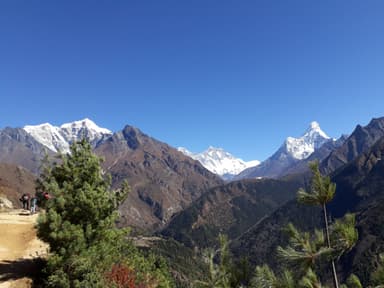
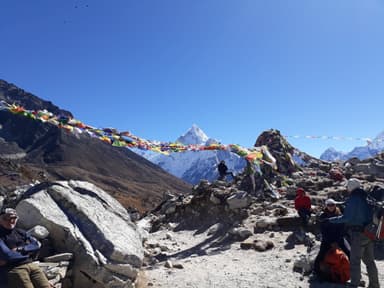
Witnessing breathtaking views of iconic peaks, including Ama Dablam, Lhotse, Nuptse, and Thamserku.
Walking alongside the mighty Khumbu Glacier and witnessing the dramatic Khumbu Icefall.
Exploring ancient Khumjung Monastery, home to the legendary yeti scalp.
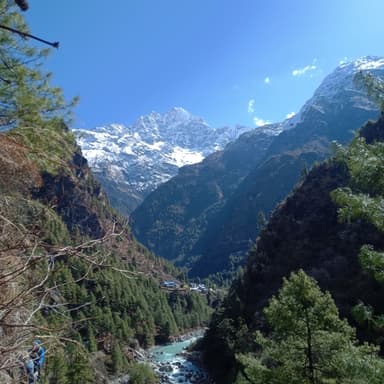
Enjoying the scenic beauty of the Dudh Koshi River Valley.
Route Overview
The cultural centre of Kathmandu Valley is where your Mount Everest base camp trek adventure begins. From here, you’ll take an exciting flight to Lukla, famous for its dramatic mountain airstrip that serves as the gateway to the Everest region. Your first day of trekking leads to Phakding. In this peaceful riverside village, you’ll enjoy scenic views of the rushing Dudh Koshi River. This serene spot marks your first night along the legendary EBC trek itinerary. The gentle introduction helps you ease into the rhythm of high-altitude trekking while soaking in the mountain atmosphere.
The next day brings your first real challenge as you trek to Namche Bazaar, the vibrant commercial centre of the Khumbu region. At Monjo, you’ll enter Sagarmatha National Park, a UNESCO World Heritage site that protects this incredible alpine ecosystem. The path goes over multiple suspension bridges, notably the Hillary Suspension Bridge. Then it gets steep as you go up from LarjaDobhan. Namche rewards your efforts with its bustling Sherpa culture, cosy bakeries, local markets, and striking sights of Kongde Ri and Thamserku peaks. For acclimatisation, you can hike to Hotel Everest View (13,000ft), one of the world’s highest luxury hotels, offering majestic panoramas of Ama Dablam, Everest, Lhotse, and Nuptse.
Your Everest Base Camp trek, 14 days, continues to Tengboche, home to the region’s spiritual heart— the famous Tengboche Monastery. This sacred site offers incredible mountain vistas and deep cultural significance, connecting you to the spiritual traditions of the Himalayas. From here, the trail leads to Dingboche, where the landscape becomes more rugged with less vegetation as you cross the tree line. You’ll pause at Pangboche village to explore its ancient monastery before reaching Dingboche. It is a picturesque farming village surrounded by stone-walled fields. The broad valley provides expansive Himalayan vistas of Lhotse, Island Peak, and the magnificent Ama Dablam.
The EBC trail approaches Lobuche, a small windswept settlement near the Khumbu Glacier. The journey involves crossing the emotionally significant Thukla Pass. There are memorials to climbers who died while trying to reach the top of Everest. From Lobuche, you reach Gorak Shep, the final settlement before Everest Base Camp and your base for the ultimate highlight. This historic high-altitude outpost sits next to the Khumbu Glacier. It is the launching point for both the EBC and Kala Patthar hikes. The anticipation builds as you prepare for the final push to your dream destination.
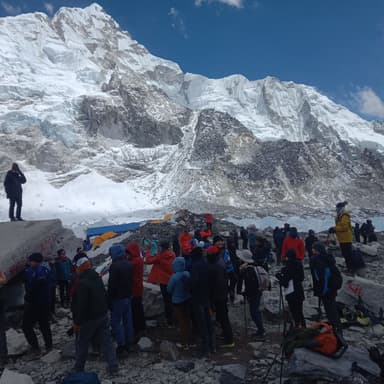
The climax of your EBC trek package comes when you reach Mount Everest Base Camp. On this iconic site, climbers begin their summit attempts. You’ll stand surrounded by the imposing Khumbu Icefall and towering peaks of the Eastern Himalayas, feeling the incredible achievement of this bucket-list moment. The early-morning Kala Patthar hike offers the best sunrise views and the most photogenic close-up shots of Everest’s peak, making it the highest trekking point for most EBC adventures. After soaking in these unforgettable moments, you’ll retrace your steps through the picturesque villages back to Lukla, then fly to Kathmandu to conclude your incredible Everest base camp trekking journey with memories that will last a lifetime.
Itinerary of Everest Base Camp Trek - 14 days
Kathmandu has air connectivity with almost all major hubs in Asia and the Middle East. You can catch a direct flight to Kathmandu from any major city in Asia or the Middle East. Please share your arrival details so one of our staff members can pick you up at the airport. He will be there at the exit or the airport’s terminal holding a signboard with your name and Team Himalaya written on it. After greeting you, he will take you to your hotel in a private vehicle. Once you reach your hotel, a welcome drink will be served. You can check into your room and relax. After resting for some hours, you will meet your trekking guide. You can clear any doubts you have about your trek during the meeting. You can also check your packing list with him and rent or buy any gear or equipment you may need for your trek. If you need his help navigating and finding the right shops, he will. Pack up and have an early night, as you need to catch one of the first flights bound for Lukla. Overnight in Kathmandu.
Max. Elevation:1355 M
Duration:30 Mins
Distance:6.2 Km
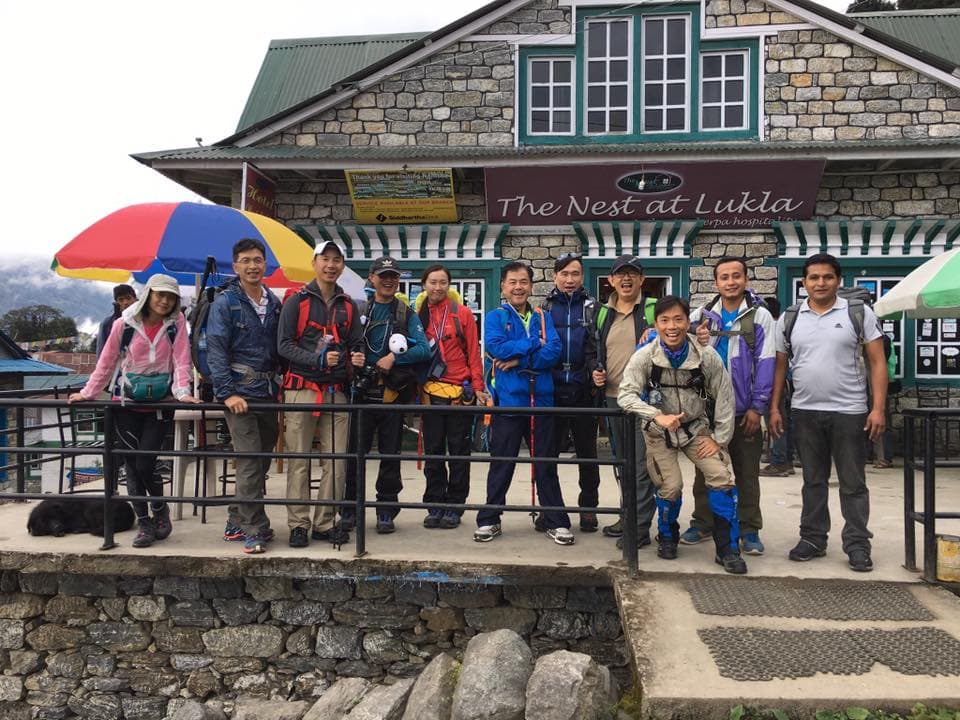
The day has finally dawned when you will be starting your awesome walk to the world’s highest trail. After waking up early, get ready to head to the domestic airport. From the airport, you will catch a tiny aircraft bound for Lukla. The flight to Lukla is considered one of the most extreme in the world, so you can look forward to a memorable flying experience. During your flight, you will be able to enjoy glimpses of some of the highest mountains in the world. The airport in Lukla sits on a tiny strip of land high above a rocky cliff. The landing is sure to give you goosebumps and a racing heart. Once you land at the Tenzing Hillary Airport, you will be greeted by the trekking crew (porters and assistant guide). The porters will carry your heavier luggage, and you will have a light daypack with your essentials. Once done, you will start your trek. Follow the stone pathway that leads out of the bustling market and takes you down to the riverside. The path is well-maintained and easy to navigate. However, mind the mule trains, as this is a busy route used by tourists, porters, locals, and pack animals as well. The path gradually rises and falls. But there are no steep sections. Enjoy the beautiful scenery and fresh air. The Dudh Koshi River valley is one of the most picturesque sections of the trail, covered with conifer forests, cute stone cottages, and the pristine Dudh Koshi River.
After walking for some hours, you will reach Phakding. Cross a metal bridge to reach the lodge where you will spend the night. Enjoy a nourishing, tasty meal upon arrival at the lodge. Soak in the beauty of the mountain scenery before calling it a night. Overnight in Phakding.
Max. Elevation:2830 M
Duration:30 Mins
Distance:138 Km
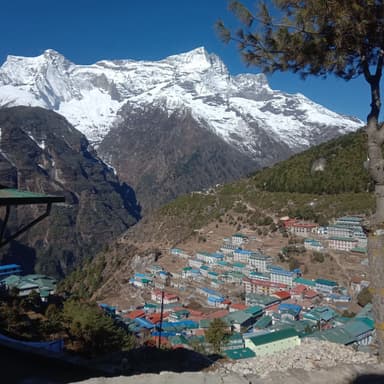
You will continue your trek, walking past Sherpa villages and inspiring scenery. The trail meanders past waterfalls and a lush forest of pine and rhododendrons. From Monjo, you will formally enter Sagarmatha National Park, a natural World Heritage Site. Along the way, you will come across Buddhist structures like mani stones, prayer wheels, chortens, and mani walls. Prayer flags can be seen fluttering at bridges and hillsides. The trail climbs steeply, and there are many switchbacks. You will cross the river several times via swaying suspension bridges. Once you reach the Hillary Bridge, you will know that Namche Bazaar is close by. A bend on the trail brings you to a viewpoint from where you can get a view of Mount Everest. A short walk ahead lies the beautiful Sherpa settlement of Namche Bazaar.
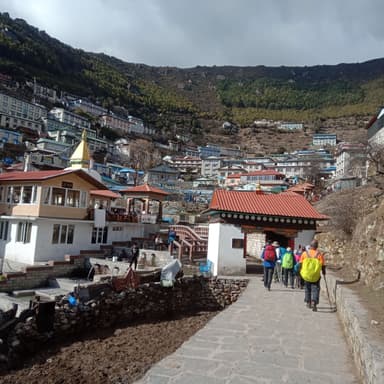
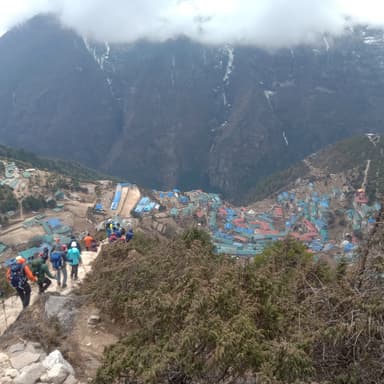
Known as the Sherpa capital, Namche Bazaar sits at the foot of a steep mountainside, creating an amphitheatre-like vibe. For a settlement at an altitude above 3000 meters with no motorable roads, Namche surprises many visitors with its modern amenities. There are shops, cafes, pubs, bakeries, banks, ATM kiosks, spas, museums, art galleries, lodges, teahouses, and restaurants galore. It is a bustling town and the economic heart of the Khumbu Region.
You will climb up the steep staircase leading into the centre of the town and head to a teahouse or lodge where a room has been booked for you. Overnight in Namche Bazaar.
Max. Elevation:3440 M
Duration:5 Hours
Distance:11 Km
Since you need to acclimate to the thin air at high altitudes, you will spend this day in Namche, resting and hiking to the popular attractions around town. After breakfast, your guide will take you on an invigorating hike to Hotel Everest View, one of the highest luxury hotels in the world and a vantage point for views of the Himalayan peaks.
You will make your way out of the town and climb a winding staircase to the top of the town. Follow a gradual incline past a grassy meadow known as Shyangboche. After taking a gradual ascent, you will finally reach the hotel’s premises. Sit on the hotel deck and enjoy stunning views of Ama Dablam, Thamserku, Kantega, Mount Everest, Lhotse, Nuptse, and more. Later return to Namche Bazaar. On the way, you can stop by the Sherpa Museum and Sagarmatha Nextt (an art gallery) to enjoy old pictures of Mount Everest expeditions, exhibits, and art pieces created from the waste collected from Mount Everest.
After an insightful tour, head down to Namche and relax at the lodge or one of the cafes. If you wish, you can also hike to the village of Khumjung, where you can visit the first school in the Khumbu Region established by Sir Edmund Hillary in 1961. Overnight in Namche Bazaar.
Max. Elevation:3440 M
If you are curious about the wildlife in the Everest Region, you will see plenty on your walk today. The thick forests of Tengboche and Debuche are home to the Himalayan Tahr, musk deer, red pandas, wild yaks, snow leopards, and a host of gayly feathered birds.
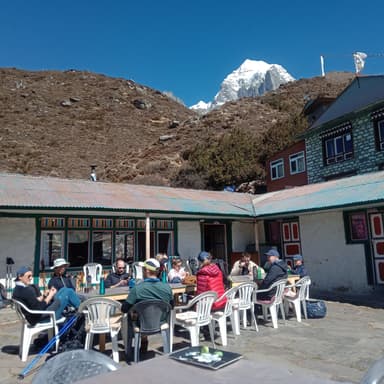
Leaving Namche Bazaar, you will ascend a gradual incline and thereafter walk on an even path on the side of a hill with gorgeous views of Ama Dablam and other mountains. From Sanasa, the route branches out—one leads to Gokyo Valley while the other one takes you to Everest Base Camp. You will take the lower EBC trail. The route goes down to the riverside settlement of PhunkiTenga. Here you will stop for lunch and a brief rest. Later, you will continue your trek and make a steep ascent to Tengboche. The hike to and from Tengboche could be the most gruelling part of your journey. The steep descent and ascent leave you breathless and tired. The grand Tengboche Monastery greets you as you enter the village. This is one of the most important Buddhist monasteries in Khumbu. The houses and lodges are scattered around the monastery, and you will head to a teahouse with comfortable rooms and good food.
Later in the evening, you can explore the village and visit the monastery. Please follow the rules set for visitors while at the monastery. Overnight in Tengboche.
Max. Elevation:3867 M
Duration:5 Hours
Distance:10.7 Km
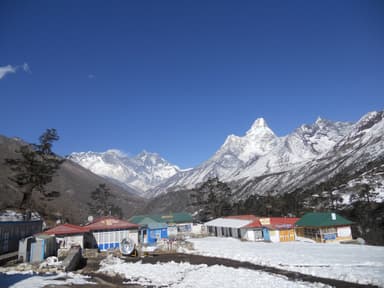
Tengboche offers jaw-dropping views of mountains, including Ama Dablam. As you rise early, you can catch the golden sunlight hitting the whitened summits of the mountains. It’s a sight to be cherished, and you can capture it on your camera.
After breakfast, you will start your trek and head towards Dingboche via Debuche. The trail leads you down a path surrounded by dense foliage. The path descends to the river, then climbs up after crossing a metal bridge. Soon you will reach the village of Pangboche. You will continue your trek, walking through the village of Pangboche. Lunch will be at the village of Somare. The vegetation gets sparser as you walk onward. After leaving Somare, you will walk down a steep staircase and then reach the river. Cross it and take a gentle ascent. After covering a distance of nearly two kilometres, you will finally reach your destination for the day, Dingboche. The village, like other Sherpa villages on the trail, has lodges, teahouses, and cafes.
Overnight in Dingboche.
Max. Elevation:4410 M
Duration:5 Hours
Distance:10 Km
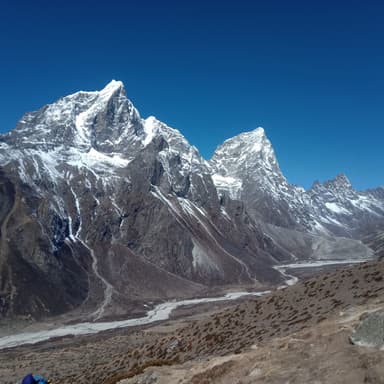
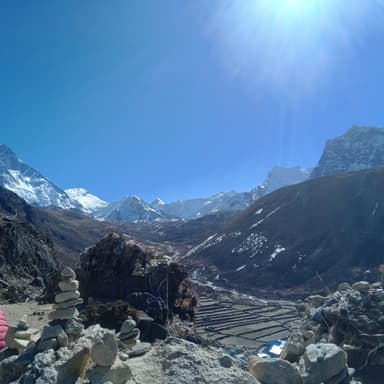
This is your second acclimatisation day. After leaving Dingboche, you will be hiking at elevations above 5000 meters, so you need to acclimate to the lower oxygen levels. You can take a hike to Nangkarthang Hill, which lies close to the village. The hill, also known as Nagarjun Hill, is a popular vantage point and hiking spot among trekkers. The trail gradually ascends in a zigzag to the viewpoint. From the vantage point, you get 360-degree views of Lhotse and Lhotse Shar, Island Peak, Cho Oyu, Makalu, Barun Tse, Lobuche, Ama Dablam, and Kangtega.
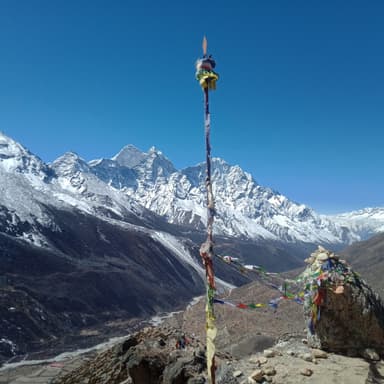
Taboche and Cholatse Himal tower directly above the trail. You can hike almost to the top or walk to the halfway point, where there’s a small chorten and prayer flags. From both points, you get amazing views of the mountains. After taking pictures and soaking in the views, you will slowly walk down to the village. It will take you around four hours to climb the hill and walk back. Overnight in Dingboche.
Max. Elevation:5063 m
Duration:3 hours
Distance:2.8 Km
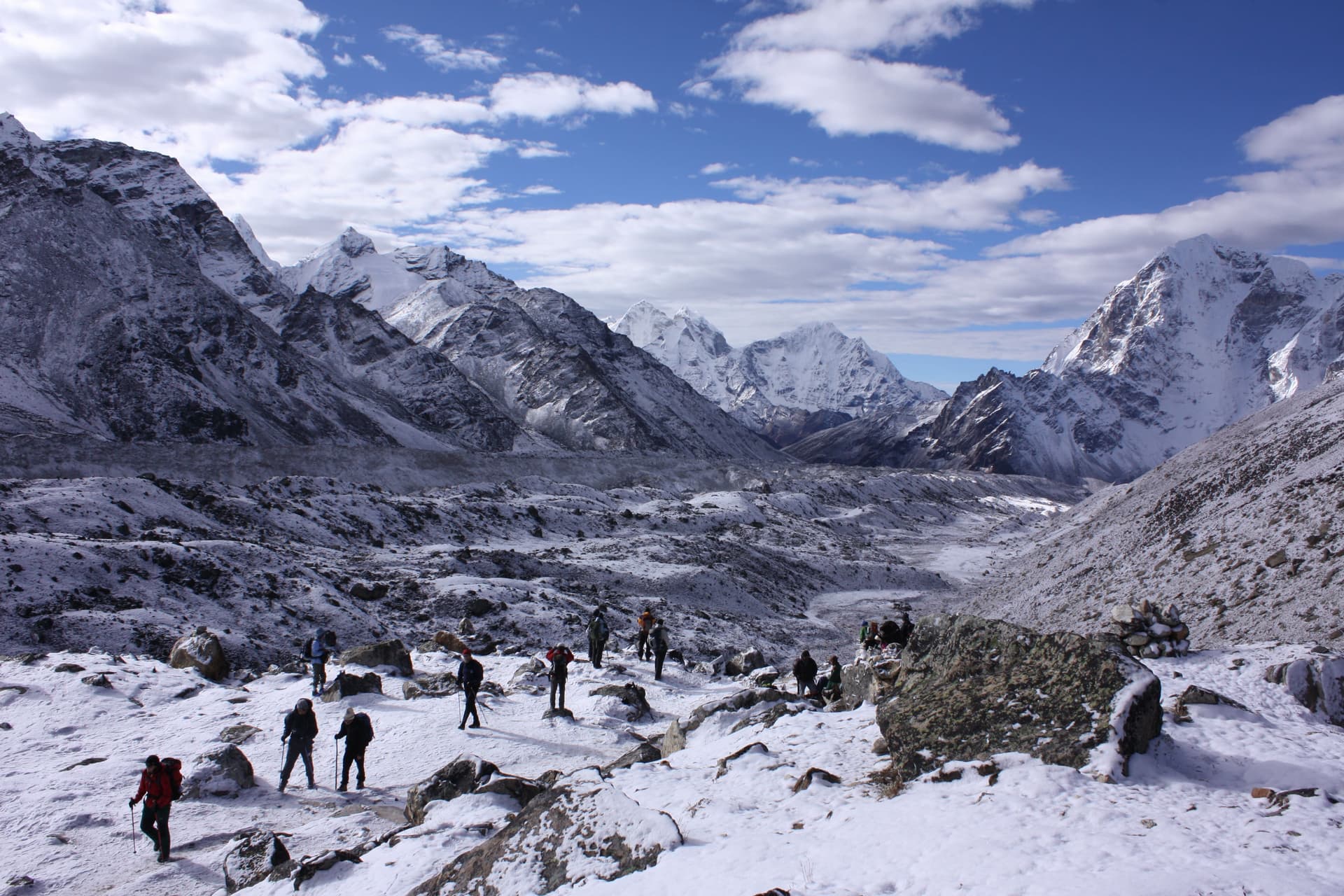
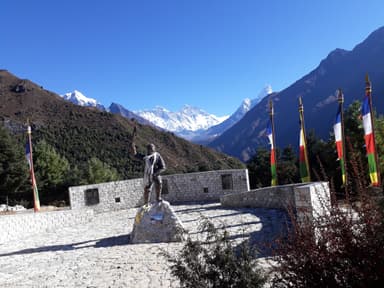
Leaving Dingboche, you will steadily make your way to Lobuche. The landscape becomes more desert-like as you head up. On the way, you will cross the Thukla Pass, which has memorials dedicated to deceased climbers and Sherpa guides who lost their lives on Mount Everest. The trek includes an uphill ascent that will leave you breathless. Thus, go slowly, taking micro-breaks in between. You will make a brief stop at the Sherpa village of Thukla for lunch. Beyond Thukla, there are no villages, only stops with teahouses. As you leave Thukla, the trail opens up, and you will see great snowy mountains and glaciers towering next to the trail. The green vegetation and forest cover are completely gone, and the trail is filled with dirt, rocks, and boulders.
After a slow hike, you will finally reach Lobuche, which has only a few teahouses. You will check in at the teahouse, where a room has been booked for you. Overnight in Lobuche.
Max. Elevation:4930 M
Duration:5 hours
Distance:8.5 KM
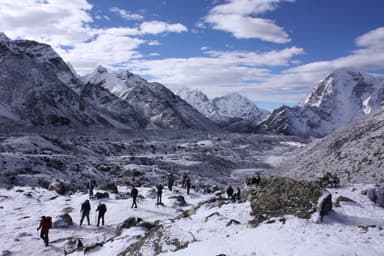
You will hike to Everest Base Camp today, so you need to start your trek early. You will walk alongside the Khumbu Glacier on a trail filled with loose earth, pebbles, and rocks. There’s no sign of greenery, except tall, imposing mountains covered with snow and glacier moraine. After walking for a couple of hours, you will reach Gorakshep, a small rest stop with a few teahouses scattered across the dried, sandy lake bed. Many people are curious to find the ground sand in Gorakshep. The ground is sandy because Gorakshep sits on a dried lakebed.
After a brief rest and refreshment, you will continue your hike to Everest Base Camp. Keep your pace slow but steady, resting at intervals to take long breaths. You may struggle with your breathing over here, as the atmosphere contains only 50% oxygen. The trail follows the Khumbu Glacier, offering stark, stunning scenery. Surrounded by towering mountains, the landscape is bare yet strikingly beautiful. Rocks, ice seracs, and water-filled craters can be seen along the trail. You need to be careful with your footing and maintain your balance, as the path is covered in loose scree and glacial moraine that can be slippery.
On reaching Everest Base Camp, you can take pictures and celebrate the success of your trek. You have made it, and you are finally standing on the EBC rock. If you have time and energy, you can walk to the actual Everest Base Camp, where mountaineers set up camp. From this point, you can get close-up views of Nuptse, the Khumbu Icefall, and Mount Everest peeking behind Lhotse. Later, walk back to Gorakshep. Overnight in Gorakshep.
Max. Elevation:5170 M
Duration:4 Hours
Distance:4.5 Km
Your guide will wake you up early in the morning before daybreak. Get ready and grab something to eat before heading out and taking the trail to Kala Patthar. Kala Patthar means black rock. However, it is not a Black Rock but a treeless brown mound or hill from where you can enjoy a 360-degree view of some of the tallest mountains in the world.
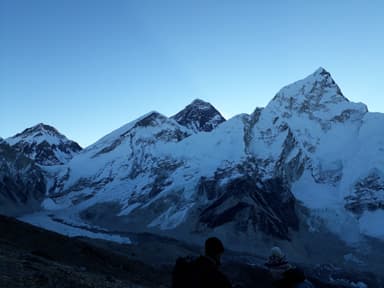
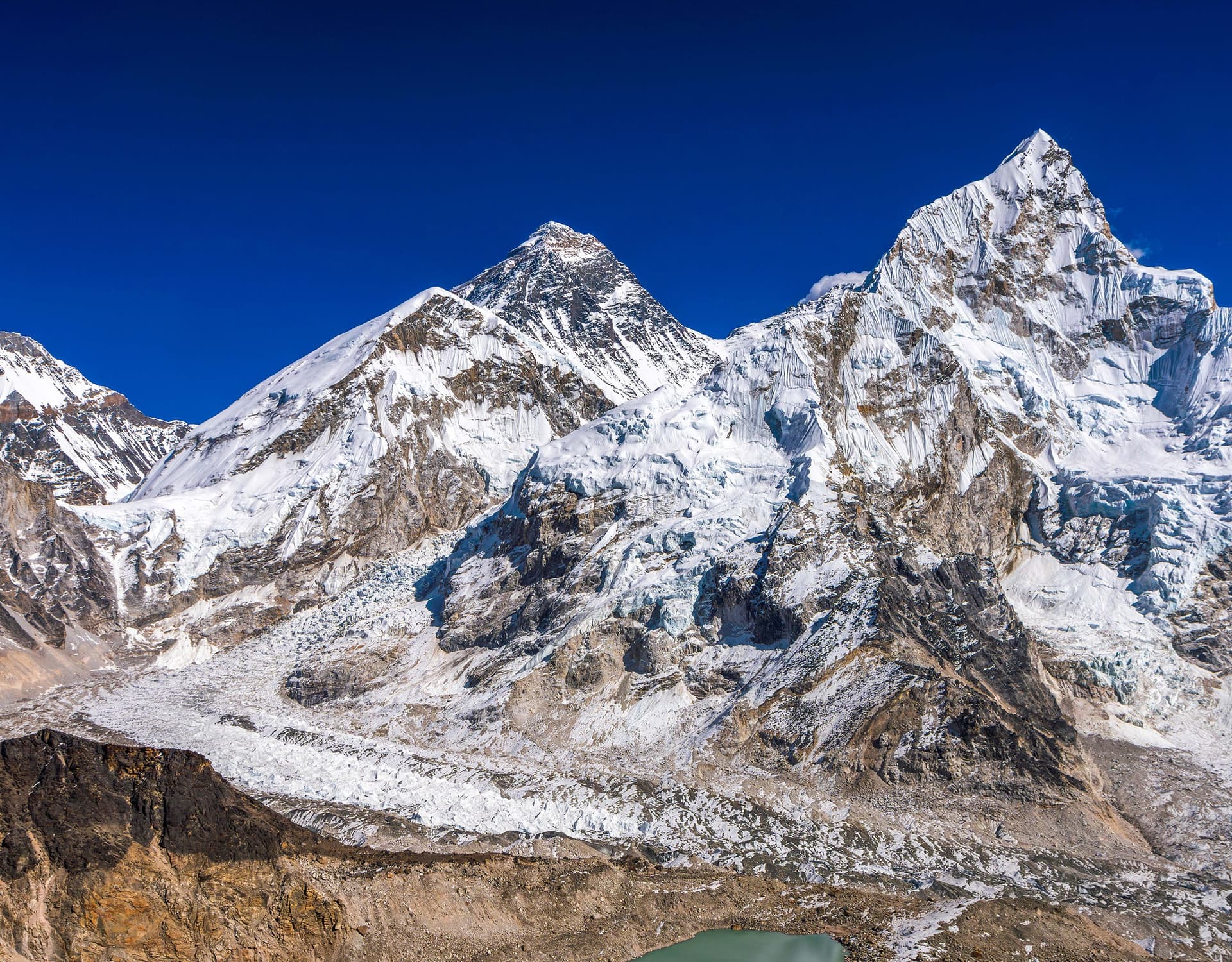
You will make your way out of the teahouse and walk on the path leading to the viewpoint. It is a steep climb and can be tough due to the low oxygen levels. So go slowly and stop to take long breaths frequently. Once you reach the top of Kala Patthar, you will be greeted with a jaw-dropping panorama of tall, snowcapped mountains rising in a chain, stretching as far as your eyes can see. Pumori, Mount Everest, Nuptse, Lhotse, Changtse, Ama Dablam, Thamserku, Kantega, Lobuche, etc.
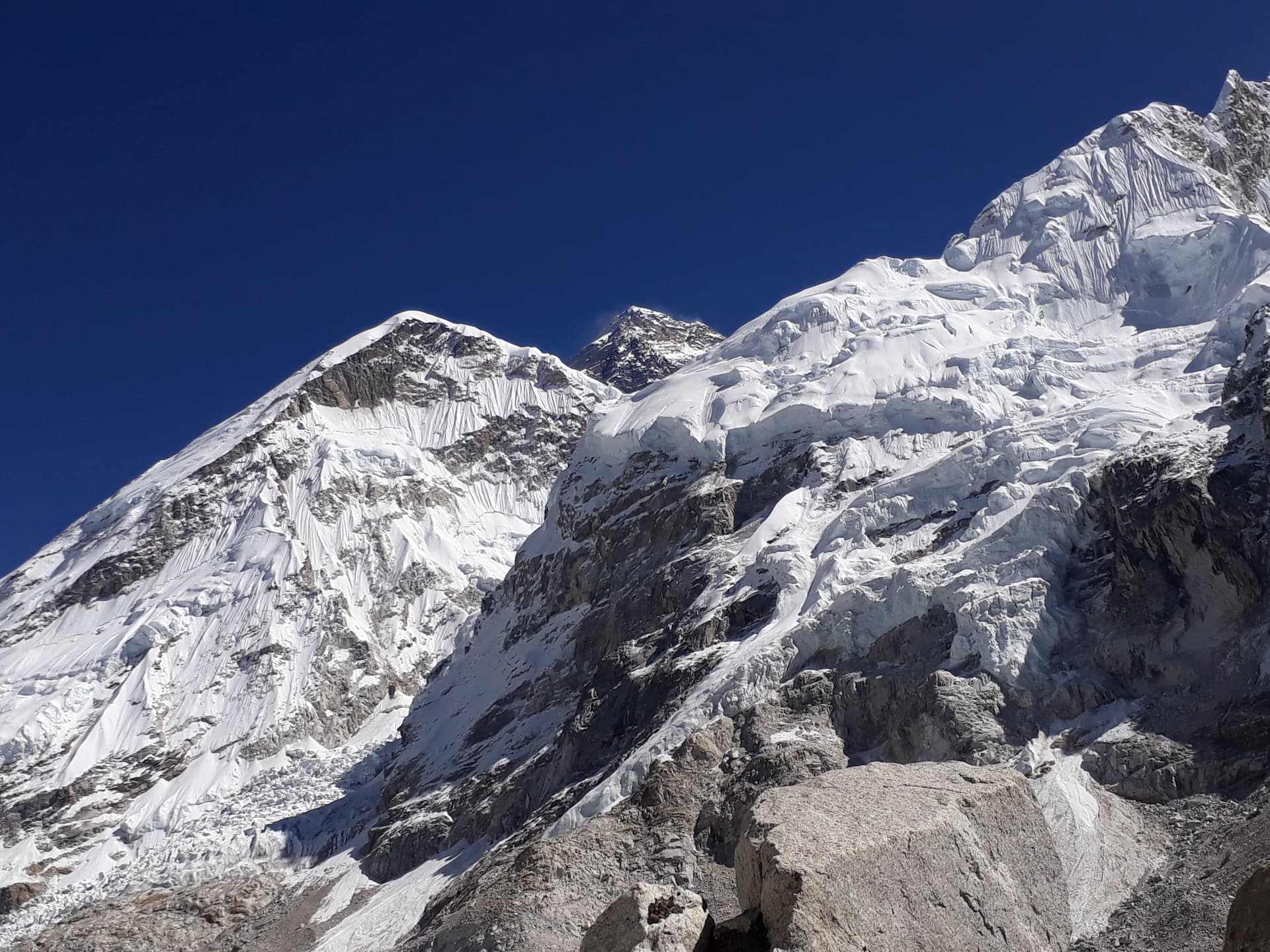
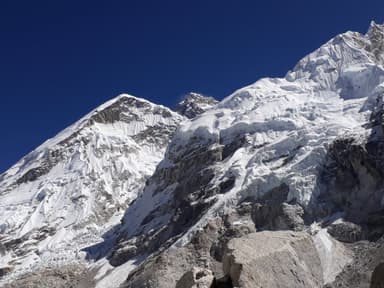
You will be able to view the Western Cwm and the Khumbu Icefall, which look stunning. The summit of Mount Everest is not seen from Everest Base Camp due to its grandiose proportions, but you can enjoy the magnificent view of this great mountain from Kala Patthar.
After taking pictures and enjoying the view, you will head down to the teahouse in Gorakshep. Pack your bags, have a hearty breakfast, and walk towards Pangboche. The path descends gradually and ascends, passing through isolated settlements and windswept valleys. At Thughla, you can stop for lunch before carrying on to Pheriche, one of the highest Sherpa settlements. As you steadily descend, you will see signs of greenery. There’s more oxygen here, and you can feel the difference in the air. You will be able to breathe more comfortably. After a long and tiring hike, you will finally reach Pangboche, an ancient Sherpa village. Overnight in Pangboche.
Max. Elevation:3900 M
Duration:6 Hours
Distance:14.6 Km
Today, you will walk through some great scenery again. Today's trek to Namche is gruelling, too, with steep ascents and descents along the trail. However, since your body has gone through a transformation from spending so many days at high altitude, you will find the hike less tiring than when you walked the same route on your way to EBC. The ascent and descent from Debuche, Tengboche, and Phunki Tenga can prove to be a bit hard on your knees. After this patch, the trail will get easier and even. If the weather is clear, you can enjoy the beautiful vistas of Ama Dablam, Nuptse, Lhotse, and Everest.
A long descent will finally bring you once again to a lodge in Namche, where you will spend the night. Enjoy a warm shower and have your favourite food. Overnight in Namche Bazaar.
Max. Elevation:3440M
Duration:6 Hours
Distance:9.1 km
Walk on the same path that you took at the start of the trek. After being in the rarefied air, you can enjoy the rich, oxygen-filled air again. Walk slowly at a relaxed pace, taking in the beautiful views. On reaching Lukla, you will head to a lodge where you can enjoy a warm shower and a delicious meal. In the evening, you can celebrate the success of your trek with the local crew who helped you reach the base of the world’s tallest peak and brought you back safely. The last night of the trek is usually merry, filled with songs and dances by the local crew. There will be plenty of chyang, the local alcohol, and you can have a good time with the local crew one last time.
Before retiring for the night, it is customary to thank and tip the porters and guides for supporting you on your memorable journey. Overnight in Lukla
Max. Elevation:2860 M
Duration:6 hours
Distance:13.5 km
Everest Base Camp Trek finally comes to an end. You will catch one of the morning flights from Lukla to Kathmandu. The flight is thrilling and hair-raising as the small plane taxis down the narrow, steep runway. Enjoy the fascinating views of the mountains and hills for one last time as you fly into Kathmandu Valley. Once your plane lands in Kathmandu, you will be escorted back to your hotel. You can rest and chill at your hotel or spend the day exploring the city and shopping for souvenirs by yourself. Overnight in Kathmandu.
Max. Elevation:1355 M
Duration:30 mins
Distance:138 Km
After an amazing adventure, it’s finally time to bid goodbye to Kathmandu and Nepal. Our staff will drive you to the airport at least three hours before your flight departs. But if you feel like spending more time in Nepal and discovering more destinations, feel free to get in touch with us. We have many more tours and outdoor adventures that might interest you.
Max. Elevation:1355 M
If the provided schedule isn't suitable for you, we can create personalized travel arrangements.
This is the quintessential EBC trek, perfect for adventurers who want an authentic, no-frills experience and are comfortable with a more rustic way of life on the trail. This package focuses on the core trekking experience and the natural beauty of the Himalayas, without the added comforts and amenities.
Book your own private small group trip
**Discounts are determined exclusively by the size of your group. We do not add additional members to your group.
June 2026
Su
Mo
Tu
We
Th
Fr
Sa
31
1
2
3
4
5
6
7
8
9
10
11
12
13
14
15
16
17
18
19
20
21
22
23
24
25
26
27
28
29
30
1
2
3
4
Sold out dates
US $0US $0 per person (based on 1 people)
Cost Includes
All arrival and departure transportation from the airport to/hotel/airport by private vehicle.
Twin-sharing accommodation in Kathmandu at 2-night 3-star category hotels on a bed/breakfast basis.
Full board trek on lodge basis includes (Breakfast-Lunch-Dinner) on twin sharing accommodation.
Applicable TIMS (Trekking Information Management Systems) and National Park, including permits and Local government entrance fees.
Service of experience, English-speaking trekking guides and their equipment, daily wages, medical insurance, meals, accommodation, and transportation allowance, etc.
Service of trekking strong and intelligent porters and their daily wage, medical insurance, meals, accommodations, and transportation allowance.
Farewell dinner in Kathmandu at an authentic Nepalese restaurant with cultural programs.
Down jackets, sleeping bags (with inner liner) (which need to be returned after finishing the trek), and comprehensive group medical kits are available.
Domestic airfare as per the itinerary Kathmandu / Lukla / Kathmandu with departure taxes (allowed to carry a maximum of 15 kg luggage altogether with a backpack and day pack) and trip briefing with full information and reconfirmation of your international air tickets.
Provide a pulse oximeter for monitoring blood oxygen saturation at high altitudes.
Trip achievement, appreciation certificate.
Water purification tablets for safe drinking water.
Fresh fruit is seasonal during the trip, after dinner.
All our government taxes, tourist VAT, and official service charges.
Everest base camp trek map and a Company t-shirt provided by the company.
Travel rescue arrangement facility in case of an emergency.
Local SIM cards.
Cost Excludes
Nepal Visa-International airfare-personal travel / medical insurance.
Expenses of a personal nature and meals in Kathmandu, gratuity (tips), and hard/soft drinks throughout the trip.
Personal trekking gear and climbing equipment.
Emergency evacuation by any means of transportation, including helicopter services and a personal medical kit.
Early return from the trip due to a personal/medical problem; in this case, the client should bear his/her expenses on return from the trek and in Kathmandu, including those of the accompanying guide/porters.
Route Map
Loading map...
Know Before you Go
Equipment List
Hiking boots with good grip and ankle support
Trekking poles
A large rucksack or duffel bag and a small knapsack
Before you book this Trek, you should be aware of these facts
Altered physical state at high altitude. You will be walking at an elevation above 5,000 meters, so it is essential to understand altitude sickness and how to prevent it. While we have provided some basic information, we encourage you to research altitude sickness and its preventive measures to better prepare yourself. The flights to Lukla are weather-dependent. You can expect delays and cancellations during bad weather. Accommodations on the trail can be basic. Carry important medicines such as Diamox, paracetamol, throat lozenges, anti-diarrheal medicine, and a pain-relieving balm.
Lukla Flights
As Lukla lies at a high altitude, most flights to Lukla are scheduled in the morning hours before the clouds roll in and the wind picks up. One can expect some delays, as this is a mountain flight and is weather-dependent. During busier months, the Lukla flights are diverted to Manthali Airport in Ramechhap. Ramechhap is a small mountain town located about 132 kilometres from Kathmandu. It takes around 4 to 5 hours to reach the airport in Ramechhap by road.
From Kathmandu, it takes around 30 minutes to fly to Lukla, while from Ramechhap, the flight time is approximately 20 minutes or less. The Tenzing-Hillary Airport in Lukla is situated on a mountainous plateau. The runway is a small strip on the plateau, and the flight to Lukla is deemed one of the most extreme and thrilling in the world.
Best Time
The weather remains great in spring and autumn; thus, these are the best seasons for trekking in Nepal. However, leaving the monsoon season and midwinter, you can hike to Everest Base Camp at any time of the year. Spring and autumn are the trekking seasons, so you can expect a lot of people on the trail. The lodges remain generally full, and the trail remains crowded. If you want to avoid the crowds, you can trek during the shoulder seasons (the beginning or the tail end of the trekking season). If you can endure extreme cold, December is also a great month to trek to Everest Base Camp. The trail remains nearly empty, and you will get to enjoy snow-capped views of the mountains.
Insurance
You must get travel insurance before embarking on this trek. Since this is a high-altitude walking adventure, there’s always a risk of injury or high-altitude ailments, such as acute mountain sickness, which could become life-threatening if not treated promptly. Bad weather may also spoil your plans. So, to save yourself from all these emergencies, it’s important to get a good travel insurance policy. We suggest you buy one that offers coverage for air rescue and evacuation above 5000 meters.
Meals/Accommodation
The Everest Base Camp trail is one of the best-developed trails in Nepal. Teahouse owners and small entrepreneurs have been serving foreigners since the late sixties. Thus, you will find a good number of restaurants and cafes serving Western and continental dishes. Please check the include and exclude sections to see which meals are included in this package.
During the trek, you will be accommodated at teahouses or lodges. In Kathmandu, you will be staying at a Four-star hotel.
Trip Difficulty/Physical Fitness for EBC Trek
The Team Himalaya Everest Base Camp Trek is considered moderately difficult. While the trail is in good condition and no technical climbing is required, the high altitude makes walking difficult. AMS, or acute mountain sickness, is the main issue during this trek. Drinking plenty of fluids and keeping your body well-hydrated at all times does help on the trail. However, you also need to be in good shape. You need to be in top physical condition to complete this trek. If you have a heart condition or respiratory disorder, please consult your doctor before booking this trip.
You can prepare your body for this high-altitude trek by exercising and training at least four months before your Everest adventure. You can go hill hiking carrying a heavy backpack. Include exercises that build muscle and improve your endurance. Jogging, swimming, cycling, stair climbing, and high-intensity aerobic exercise can help you build stamina and endurance. Lifting weights, yoga, and Pilates will also help you tone your muscles and maintain flexibility.
Also, eat right while training for your trek. A well-balanced, nutritious diet will boost your immunity and help you stay healthy while on the trail.
We had a very successful EBC trek in October 2024 because of Team Himalaya! Our guide, Raj, was very knowledgeable in all things Everest. He set us up in the best lodges where we had great service all along. He provided us with a superb porter, who also went above and beyond in taking care of us. Raj was very patient with us and was always looking out for our best interests. We would highly recommend Team Himalaya for any trek!
AAlec S1st Apr, 2024
Everest Base Camp Team Himalaya March 2024
We have just returned from a 14 day, 11 day hike with Raj and Durga from Team Himalaya to Everest Base Camp. From the minute we landed to our departure we were properly looked after and cared for by Team Himalaya. The trek to and from Everest Base Camp was wonderful, our guides and porters really looked after us and were incredibly knowledgeable. In Nepal things can go wrong especially with flights to and from Lukla but Team responded magnificently and found alternative solutions. If this is on your bucket list as ours and you are looking for a company to organise this with I would 100% recommend Raj.
JJourney379926937861st Apr, 2024
Reaching Everest Base Camp with TEAM HIMALAYA
If you are looking for an adventure of a lifetime, don’t hesitate! Choose TEAM HIMALAYA for your Everest Base Camp trek! We completed the EBC trek early November 2023 . My husband and I chose to do a private trek with Team Himalaya. Everything went smoothly with our guide Raj. His team and organization is outstanding! We could not have done it without him. Raj took care of everything throughout the trek and made sure we were well at all times, even providing us fresh fruits every night after dinner! We felt safe at all times , his experience and knowledge of the Himalayas helped us achieve our goal in reaching the EBC! His professionalism went beyond our expectations from our first contact with him for information until the very end. We will forever remember this expedition and gained a friend in our guide Raj!
Frequently Asked Questions About the Everest Base Camp Trek
How difficult is the Everest Base Camp trek?
The Everest Base Camp trek requires no mountaineering expertise, as it is just a long hike. People of all ages and shapes have completed this trek over the years, and you can do it too.
Everest Region trek worth it?
The awe-inspiring landscape, vibrant prayer wheels, suspension bridges, dining by a fireplace, warm smiles from the locals, etc., tend to make the trek worth it.
What permits are needed to do this trek?
You will need two permits to trek to EBC -
Khambu Pasang Lhamu Municipality Permit
Sagarmatha National Park Entry Permit
Both these permits will be arranged by the Team Himalaya staff, so you won’t have to face any hassle.
When is the best time to do the Everest Region trek?
The best season for the Everest Region trek is from September to early December, when the weather is clear. Also, during March and May, the flowers are out, and visibility is clear.
Is the Everest Region trek dangerous?
The route is relatively danger-free as the path has been widened in many places, making it easier for the trekkers. The main problem is when people get Altitude sickness. Other than that, common injuries people may face include sprained ankles and sprains. To cope with that, we hire experienced guides and experts to join your journey.
Can I use the mobile on the Everest Region trek?
Of course, now the Everest Region trek has cell coverage. For charging the mobile, you'd better pack some Power Banks. Some tea houses also have charging ports.
How should I prepare for the Everest Region trek?
You should pack the necessary gear for the trek and consider how much weight you can lift. You can also read blogs about the trek and learn about the experiences of other people before you go on the trek. We at Team Himalaya will make sure you are well-prepared as well.
Can I do the Everest Region trek with my Kids?
Many people with families and children have completed this trek. But it is unwise to take children who don’t obey their parents or cannot talk properly about the early symptoms of altitude sickness.
Should I pack some food?
Yes, it would be wise to bring some dry foods and power snack bars with you, since buying snacks on the trail can be available but pretty expensive.
What is the Accommodation Like on the Everest Region trek?
The accommodations are quite nice considering the elevation. During peak time, our guide will help you pre-book your rooms.
Do tea houses have electricity so I can charge my mobile?
In the lower villages, you can find tea houses with 24/7 power. But as elevation increases, teahouses rely solely on solar, so you might not have the chance to charge your mobile. So, we suggest you carry lightweight solar power banks.
Can I drink the Water on the Everest Region trek?
Drinking at least 4 litres of water a day is a must for this trek. So, you should purify all your drinking water with purifying tablets. And it is better to carry a thermos flask for boiling water, which is available at tea houses.
Is it normal for me to get altitude headaches at that altitude?
Yes, it can be normal to get altitude headaches. So, to be on the safe side, our guide will be there 24/7, giving full advice and care for you.
What kinds of clothes and gear are needed?
Clothes and gear are must-haves for this wonderful journey. You should get clothes and gear such as trekking poles, socks, boots, gloves, scarves, hats, sunglasses, and so on. We have a separate section for all the necessary clothes and gear you will need.
What are the best months to trek to the Everest Region?
The best months for this awesome trek are February, March, April, and October-November. During these months, the skies are clear, and you can have a splendid panoramic view of the mountains. If you are a snow lover, this might be your chance to experience it firsthand.
Do you offer travel insurance?
We can provide you with travel insurance, but it would be better for you to obtain it in your own country. We provide full insurance to our guides and other staff.
Can I extend my trek if necessary?
Yes, you should let us know in advance, as we need to adjust the itinerary to suit your needs. Most of our packages are flexible, so you should not worry about extending the trek.
Is the internet available on the trail?
What happens if you get seriously ill or suffer from an injury on the trail?
Your travel insurance will be used to call for an emergency air rescue operation. You will be evacuated by helicopter and flown to an advanced medical facility in Kathmandu, where you will get treatment from specialists and healthcare professionals. You need to have an insurance policy that covers high-altitude (above 5000m) rescue operations.
Can a solo woman traveller take the Everest Region trek with your company?
We have provided many services to solo women travellers, and none of them has ever made any complaints about our services. Our company respects women and prioritises their safety, helping them have a wonderful travel experience.
Do teahouses accept credit card payment?
No. Only cash payments in local currency are accepted on the trail. So, make sure you carry enough local currency with you.