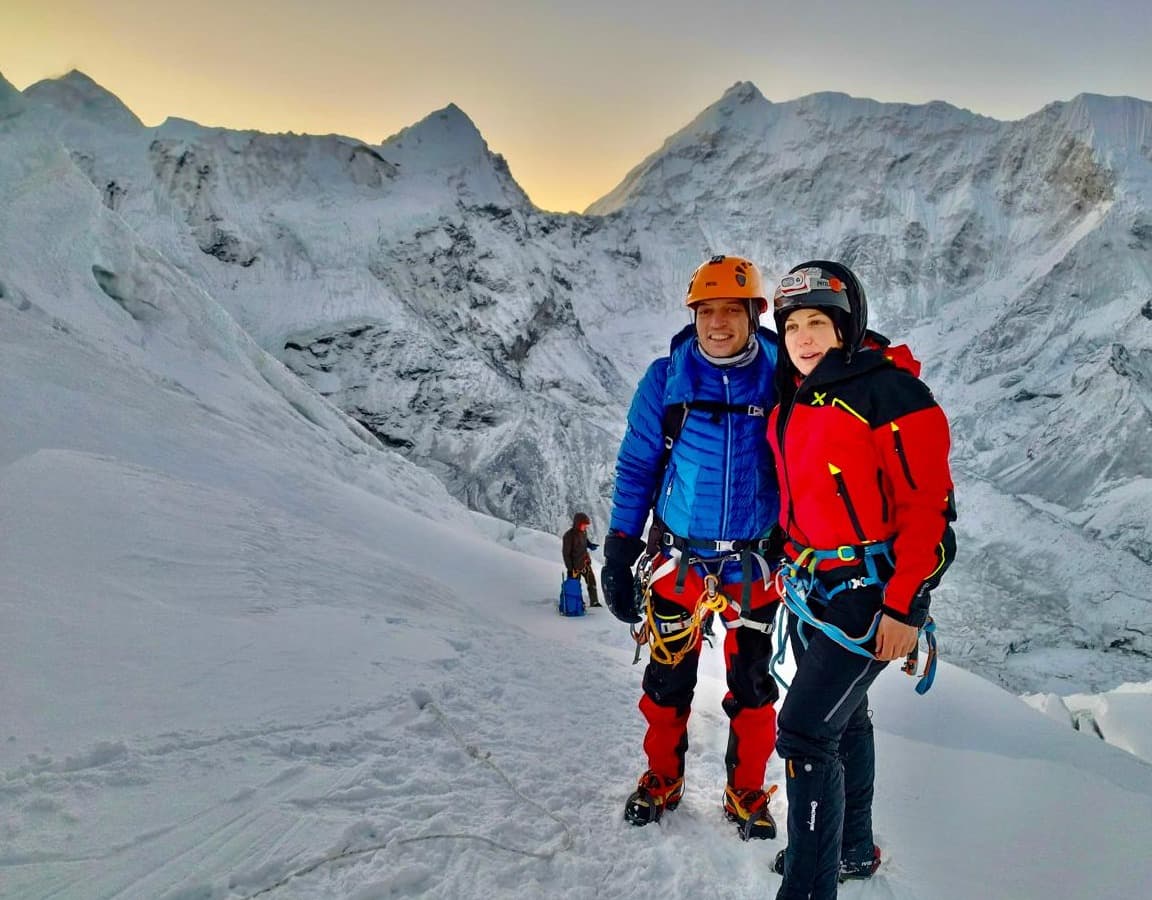
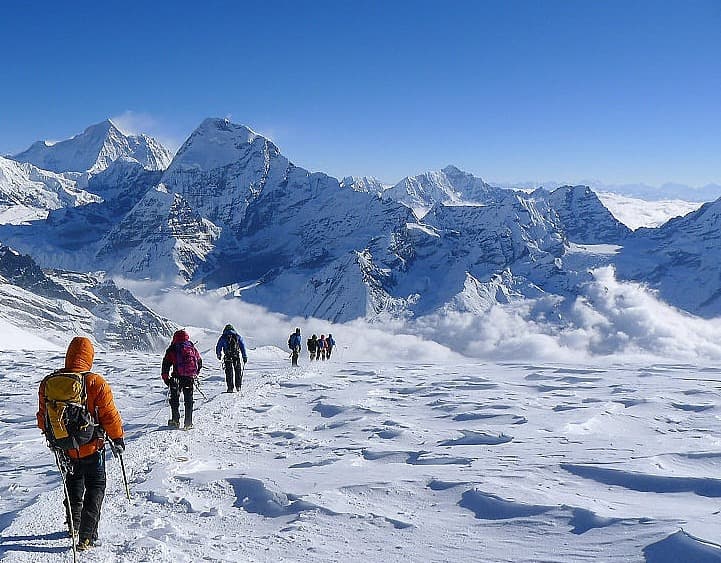
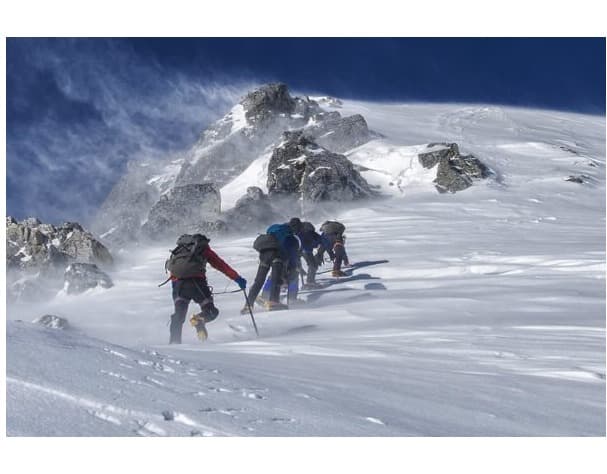
Team Himalaya and the fantastic climb of Yala Peak will take you on the most amazing hike in Picturesque Langtang Valley, an adventure for people of all kinds, because we start this trek with a relaxed hike and climb up, followed by some acclimatisation at Kyanjin Gompa, our destination being the peak altitude of 3,870 meters in the wonderful Picturesque Langtang Valley.
DestinationNepal
Duration18 days
GradeModerate to Adventurous
ActivitiesPeak and expedition
AccommodationTent camp
Max. Elevation5732m.
Group SizeMin. 1 Pax
Vehicleprivate vehicles
MealsBreakfast, Lunch, and Dinner during The Trek
Overview
Team Himalaya and climb of excellent Yala Peak climbing in the most picturesque walking journey to picturesque Langtang Valley, a trek and climb for all types of people, as this trip starts with a moderate walk with an uphill climb at your own pace, leisurely pace, with rest and acclimatisation at Kyanjin Gompa, with 3,870 meters, the highest point of this beautiful Picturesque Langtang Valley.
Starting with an interesting drive North of Kathmandu on the mountain road to Dhunche town at 1,965 meters high, the headquarters and main village of Rasuwa district and Langtang / Ganesh Himal region and down to Syabrubesi, a friendly Tamang country-type village, where Yala Peak & Langtang Valley Trek and climb begins, walking up high hills into pristine forested area of rhododendron, magnolia, pines and oaks tree lines. Around spring and summer, the region will be a natural garden of hills and valleys, with colourful wildflowers in bloom. In this forest, rare species such as the Red Panda, Snow Leopard, and other wildlife coexist with many bird species.
Trip Highlights
Trekking in the north of Kathmandu in the magnificent Langtang Valley
Country of elusive, rare red panda, snow leopard, and mountain wildlife
Amazing country with views of a high snow-capped mountain panorama
Into an enchanting, pristine rhododendron, pine, fir, oak, and magnolia forest
Trekking in the Tamang village trail, with rich culture and traditions.
Trek and climb the stunning peak of Yala around the beautiful Langtang Valley.
Langtang area, Nepal’s 3rd most popular trekking area after the Annapurna and Everest regions, is protected by Langtang National Park, the first park established in the Himalayan region in 1976 AD, covering an area of 1,710 sq. km. The walk continues with views of stunning waterfalls flowing over high mountain rock cliffs, excellent views of the massif mountains of Langtang Lirung at 7,200 m / 23,622 ft, this whole Langtang range surrounded by Nepal’s second largest Langtang National Park, and visiting impressive villages of Tamang and Bhotias with their old religion, culture, tradition, language, custom are similar of Tibetan origin. Tamang villages are famous for their warm hospitality and fascinating culture, rituals, traditional woodcraft, and customs.
After days of lovely walks reaching the beautiful Langtang Valley at Kyanjin Gompa with time here to marvel at the beauty of high snow-capped peaks and then heading towards the isolated area for the climb of awesome Yala peak soaring high at 5,732 m /18, 790ft one of the least technical and straight forward climb to the summit top offering superb views of Langtang Lirung 7,246 m, Lenpo Gang 7,083m, Dorje Lakpa 6,990 m and massif Mt. Shishapangma 8,027m on Tibetan side.
The climb is done after ample acclimatization and a nice rest with practice in using climbing equipment, although less technical, however, our Team Himalaya expert guide will fix the route with ropes and make ledges on the path where necessary and will support the group all the way to the top summit and descending safely back to base camp after enjoying the overwhelming panorama of all the snow-capped peaks that dominate the Langtang Valley over the crystal blue skyline.
After a glorious moment and feeling high return journey via Shing Gompa another destination of Langtang area on the scenic trail, this marvelous trekking allows you to observe the local and village life as it was for many centuries back, from here this remarkable journey completes with a drive back to hustle bustle city life of Kathmandu city after a most enjoyable and fantastic time and climb of Yala Peak climbing with best guidance and excellent service of Team Himalaya.
Itinerary of Yala Peak climbing - 18 days
On reaching Kathmandu via respective airlines, our TH staff will receive with courtesy transfer to hotels in the center of Kathmandu around the Thamel area, an interesting to be with many shops, stores, and excellent world-class restaurants, with time for a short walk and to buy necessary items for the trip, in the hotel our guide will inform and brief regarding trek and climb and other vital things.
Max. Elevation:1300 M
Duration:30 Mins
The morning after breakfast at a given time our city and cultural guide will guide you in and around Kathmandu at places of interest and importance, as Kathmandu Valley is full of World Heritage Sites the holy Pashupatinath temple, Bouddhanath (Little Tibet), Swayambhunath (Monkey Temple) & monasteries, ancient Kings Palaces and courtyard in Kathmandu; after an interesting sightseeing back to the hotel, preparation for the trip to Yala Peak & Langtang Valley Trek and Climb.
Max. Elevation:1300 M
Duration:4 Hours
This fabulous journey starts with an interesting scenic drive through the Kathmandu Valley's Northwestern Region, past the pleasant Kakani, and to the warm Trisuli Bazaar for refreshment and lunch. After a nice rest, the drive continues through high hills along a narrow, winding road, offering impressive views of the surrounding landscape and the distant peaks of Ganesh and Manaslu Himal. After a few hours of good driving, reaching Dunche town, 1,965 meters high, the headquarters and central area of Rasuwa and Langtang region, and the entrance of Langtang National Park. After a brief stop here, the drive descends a winding downhill road for a few hours and arrives in Syabrubesi for an overnight stop. This is an interesting Tamang village, the gateway to many Langtang and Ganesh Himal trekking routes as well as to Tibet's Northern frontier.
Max. Elevation:1460 M
Duration:7 hours
Distance:122 KM
The first walk of this adventure with a slow walk towards a bridge over the upper Trisuli or Bhot Kosi River, and then the trail climbs into a steep hillside after an hour of uphill haul and then on a gentle trail for few hours passing many scattered farm houses wheat’s, barley, millet, and corns terraces, then walking around the bend reaching at Riverside where the trail from Thulo or upper Syabru joins near Bamboo with few teahouses and lodges, after a stop here for a while walk continues with a gradual climb into serene forest of rhododendron, oaks and pines tree lines and entering a river gorge following upstream Trisuli River fed from the glacier of Langtang mountain range, and then after a good walk reaching at overnight stop at Lama Hotel a small place situated in the middle of pristine forest with 6-8 small lodges around.
Max. Elevation:2430 M
Duration:6 Hours
Distance:11.4 KM
From Lama Hotel, start the morning walk on the same trail for an hour and then after Riverside place our route diverts walking through a small settlement at Bamboo place with few teahouses and simple lodges surrounded by bamboo thickets, might be the right place to see Red Panda by chance, starts as the place is in cooler area hidden in a river gorge with dense woodland; walk passes few small settlements and farms, then reaching at Ghoretabla a small settlement with Nepal Army stations as Park wardens, this place located in the middle of beautiful forested area with few lodges around. Stopping here for lunch as the altitude gains slowly and the air gets cooler. After lunch, the walk continues overnight, stopping at Langtang village, a lovely, moderate-sized village with Tamang and Bhotia people, with similar customs and a culture rooted in Tibetan Buddhism.
Max. Elevation:2430 M
Duration:6 Hours
Distance:10 To 11 Km
Today a walk for a few hours as the morning heads with a short climb and towards a wider country as the gorge opens into a lovely valley with snow-clad peaks on both sides of the hills encountering few prayer walls and enjoying the views of mountains as the walk progress leading to Kyanjin Gompa area with more than 15 lodges and guest houses to stay with an old cheese factory, where’s the name Gompa is about to disappear which is a small wooden chapel rather than monastery located on top of Kynajin and Langtang Valley on moraine rocks and boulders on route to Lantang Lirung glacier. A great place, Kyanjin in the Langtang Valley, is the first highlight of this trip. Langtang Valley and Kyanjin Gompa are surrounded by green hills and snow-capped mountains, including Dori Lakpa, Langtang Lirung, Tsego Ri, Langshisa, and Naya Kanga (Ganja La Peak).
Max. Elevation:3850 m
Duration:4 Hours
Rest day at Kyanjin for energetic people: a hike up to a hilltop near Tsergo Ri at 5,033m. The climb to Tsergo Ri is quite steep and requires good physical fitness, but offers incredible views of the highest mountains of the central Himalayas. Afternoon at leisure to marvel at the splendid panorama of Chimsedang Lekh, and the Kangjal Himal, a ridge of peaks bordering the valley to the south, Naya Kanga 5,844m. stunning views of the great mountains flanking the Langtang valley, including Ganchenpo 6,387m, Dorje Lakpa 6,990 m, Pemthang Karpo Ri 6,830m, Langtang Lirung 7,245m, and across the northern boundary in Tibet rises the huge, massive Shishapangma 8,046 m, the last 14th-highest mountain in the world.
Max. Elevation:3850 m
Duration:4 Hours
On leaving Kyanjin Gompa for the highlights of this trip, walking along the rocky glacier and then to a steep climb through the icy trail to reach a flat camping area of Yala Peak base camp at 4,400m. Walking to base camp offers outstanding views of Ganchenpo, Naya Kang, Tserko Ri, Yala Peak, and other peaks, until Yala base camp is reached for the first camp of this trip. After being in the comfort of a lodge, the base camp offers a marvellous view of the surrounding high massif.
Max. Elevation:4400 M
Duration:6 Hours
Starting early before dawn for the big day of this adventure, the walk leads to a climb to the summit, depending on weather conditions. This peak is less technical, but it takes nearly eight hours to reach the summit and back to base camp. After a strenuous climb to the summit at 5,732 meters (18,806 feet), reaching the top makes the dream a reality, with an overwhelming sense of success as you take in the striking panorama surrounding you, including the world’s highest mountains. Yala summit offers breathtaking views of Shishapangma, Dorje Lakpa, Ganchenpo, Naya Kang, Tserko Ri, Langtang Lirung, and many other peaks on the Tibetan side. After enjoying a magnificent moment at the top, descend back to base camp.
Max. Elevation:5732 M
Duration:7 Hours
We have reserved an extra day as a contingency in case of unfavourable weather conditions in this high Himalayan range. The weather can be unpredictable, so an extra day on this type of adventure is essential, if all goes well can used on the way back en route to Dhunche, adding a short-day walk enjoying the incredible scenery along the way.
Max. Elevation:4400 M
Leaving Naya Khang base camp, trek to Kyanjin Gompa along the icy trail that steeply descends, offering marvellous views of the massif Himalaya, passing through rhododendron forests, and crossing the Langtang River. Gently ascend to reach the village of Kyanjin Gompa.
Max. Elevation:3860 M
Duration:5 Hours
After a wonderful time at Kyanjin Gompa in Langtang Valley, we headed back to the forested area and Lama Hotel for an overnight stop, retracing the same route for about six hours. It was an interesting and enjoyable walk along a downhill path with a few short ups.
Max. Elevation:2460 m
Duration:6 Hours
From Lama Hotel our journey continues with lovely views along the walk on the downhill path to a place called Bamboo with few teahouses and lodges, after a pleasant morning walk, from here walk through farm terraces of millets, corn, and wheat depending upon the time of the seasons, on leaving the farm area the path leads uphill on the old landslide sections, the on the winding up a hill path to Upper or Thulo Syabru for an overnight stop in of the good lodge around this friendly interesting village, where the houses are joined in a long as a locomotive, Thulo Syabru has an old monastery above the town.
Max. Elevation:2110 m
Duration:5 Hours
Distance:8 Km
After Thulo Syabru today, the walk is short for 4-5 hours with mind-blowing scenery of hills, valleys, and of snow-capped peaks looking back as the climb leads up through a pristine forest of rhododendron, magnolia, many types of firs and pines trees, including various species of rhododendron plants and flowers with views of Annapurna, Ganesh, and Langtang Himal range towards North West, after a good climb of few hours reaching at a hilltop with grazing pasture and few teahouses around. From here on, the gradual winding path into the pleasant, cool shade of the forest and Shing Gompa is reached. This place is also called Chandanbari (Rose Wood), and it has a small cheese-processing factory and a monastery.
Max. Elevation:3300 m
Duration:5 Hours
The last day walk of this wonderful trip ends today, starting this morning's walk with a long descent through beautiful rhododendron and pine forest along the walk with fabulous views of surrounding landscapes and mountains, the walk carries on downhill for about three hours, then reaches the bottom nearby the river after crossing the bridge, reaching the motorable road after being in the trekking trail for a week, the good road winds up for an hour to the large town at Dhunche for overnight stop, the last day in the mid hills of high Langtang Himalaya.
Max. Elevation:1965 m
Duration:5 Hours
The morning after breakfast, an interesting drive back to Kathmandu. The journey continues with great views of the Himalayan landscape, rolling hills, and valleys, then passes through numerous villages and towns on the downhill drive to Kathmandu. After a fascinating journey of more than six hours to Kathmandu and a great, memorable time up in the mountains, transfer to respective hotels.
Max. Elevation:1300 M
Duration:6 hours
We have reserved this day to relax and enjoy your last day in Kathmandu with another sightseeing tour in and around Kathmandu, visiting places of interest and importance, such as the Kathmandu Valley, and to book the Everest or Mountain Flight with us.
Max. Elevation:1300 M
Duration:4 Hours
Last day in Nepal with a wonderful, memorable time in the Himalayas around Yala Peak
Max. Elevation:1300 M
If the provided schedule isn't suitable for you, we can create personalized travel arrangements.
A "standard package" for the Yala Peak climbing expedition is a comprehensive and all-inclusive option designed for trekkers who want to combine the classic Langtang Valley trek with the summit of this relatively non-technical peak. The package provides all the necessary permits, logistics, and professional support for a safe and successful climb.
Book your own private small group trip
**Discounts are determined exclusively by the size of your group. We do not add additional members to your group.
June 2026
Su
Mo
Tu
We
Th
Fr
Sa
31
1
2
3
4
5
6
7
8
9
10
11
12
13
14
15
16
17
18
19
20
21
22
23
24
25
26
27
28
29
30
1
2
3
4
Sold out dates
US $0US $0 per person (based on 1 people)
Cost Includes
All arrival and departure transportation from the airport to/hotel/the airport.
Twin-sharing accommodation in Kathmandu at tourist standard hotels on a bed/breakfast basis.
Sightseeing tour (if mentioned and added in the itinerary) or as an option.
Whole board trek/climb on lodge basis includes (B-L-D) on twin-sharing accommodation.
Full-board trekking on camping includes (B-L-D) and twin-sharing accommodation. Include a separate kitchen unit with cook-kitchen staff accompanied by guides and porters.
Applicable TIMS (Trekking Information Management Systems) and National Park, including Yala Peak Climbing permits from NMA (Nepal Mountaineering Association)
Service of trekking and climbing guides, their equipment, peak incentive (bonus), daily medical insurance, meals, and transportation allowance.
Service of trekking and camping staff, of cooks-kitchen staff, porters, their daily medical insurance, meals, and transportation allowance.
Farewell dinner in Kathmandu at an authentic Nepalese restaurant with cultural programs.
Down jackets, sleeping bags (with inner liner), and comprehensive medical kits.
All drinks (tea, coffee, drinking chocolate, and drinking water) are provided on camping trips.
All transport is by private vehicle and a Trip map.
Recuse arrangement.
Cost Excludes
Nepal visa, international airfare, and personal travel / medical insurance.
Expenses of a personal nature and meals in Kathmandu, gratuity (tips).
Hard/soft drinks throughout the trip.
Personal trekking gear and climbing equipment.
Emergency evacuation by any means of transportation, including helicopter services and a personal medical kit.
Early return from the trip due to a personal/medical problem; in this case, the client should bear their own expenses on return from the trek and in Kathmandu, including those of the accompanying guide/porters.
Know Before you Go
Equipment Checklist
Team Himalaya's list of outdoor equipment requirements is as follows, depending on the type of holiday chosen: leisure tours, moderate, adventurous, challenging trekking, and climbs.
Gear requirements depend on the season of travel and the trek grade, as Nepal is suitable for all seasons except the wet months of July to mid-September, when few travelers visit.
For Simple Sightseeing Tours in Kathmandu and beyond:
Personal Toiletries: a small day pack or bag to carry your personal belongings, such as water bottles, cameras, wallets, maps, journey/notebooks, cell phones, light jackets or fleece, and insect repellent cream, as per the season.
Running/sports shoes or comfortable shoes for short walks; walking poles; personal medication; binoculars (optional); T-shirts; long-sleeve shirts; trousers (for entering temples and monasteries); and sunscreen.
For long drives, a soft inflatable cushion/pillow is advisable, along with a rainproof or umbrella.
For Moderate Hikes and Treks:
Personal Toiletries, a moderate-sized daypack to carry your personal belongings, such as water bottles, cameras, wallets, maps, journey/notebooks, cell phones, light jackets or fleece, and insect repellent as per the season.
Running/sports shoes, for elderly people; walking poles; personal medication; binoculars (optional); T-shirts; long-sleeve shirts; trousers (for entering temples and monasteries); sunscreens; and torch/flashlights.
Sun Hats, Sunglasses, and water bottles are necessary (try to avoid plastic bottled water, as it creates litter that is hard to recycle in Nepal). Use the same waterfalls to refill your bottle where available, and a rainproof umbrella—a scarf or mask to avoid dust and smoke.
For long Trekking for a week or more above 3,000 meters:
Personal Toiletries, a moderate-sized day pack or rucksack to carry your personal belongings, including travel documents, water bottles, cameras, wallets, maps, journey/notebooks, cell phones, light jackets or fleece, and insect repellent as per the season.
Running/sports shoes, a good pair of boots, warm woolen/cotton socks, snow gaiters, rain/windproof gear, walking poles (an option), personal medication, binoculars (an option), T-shirts, long-sleeve shirts, trousers (for entering temples and monasteries), sunscreens, torch/flashlights.
Gloves, Woolen Beni (camp), Sun Hats, Sun/snow glasses, and water bottles are necessary (try to avoid plastic bottled water, as it creates litter that is hard to recycle in Nepal). Use the same waterfalls for refills where available—a scarf or mask to avoid dust and smoke.
On trekking, larger kit/duffel bags are carried by porters/pack animals (yaks, mules, or ponies), which include your heavy personal gear, such as sleeping bags, down/duvet jackets, and items you require during daytime walks to designated campsites/lodges.
Challenging Treks and Trekking Peak Climb:
Personal Toiletries, a moderate-sized day pack or rucksack to carry your personal belongings, such as travel documents, water bottles, cameras, wallets, maps, journey/notebooks, cell phones, light jackets, or fleece as per the season and altitude.
Running/sports shoes, a good pair of boots, warm woolen/cotton socks, snow gaiters, rain / windproof gear, walking poles an option, personal medication, binoculars an option, T-shirts, long sleeve shirts, trousers (while entering temples and monasteries), sunscreens, torch/flashlights, and spare batteries.
Gloves, Woolen Beni (camp), Sun Hats, Sun/snow glasses, and water bottles are necessary (try to avoid plastic bottled water, as it creates litter that is hard to recycle in Nepal). Use the same waterfalls for refills where available—a scarf or mask to avoid dust and smoke.
On trekking, larger kit/duffel bags are carried by porters/pack animals (yaks, mules, or ponies), which include your heavy personal gear, such as sleeping bags, down/duvet jackets, and items you require during daytime walks to designated campsites/lodges.
For Trekking Peak Climb:
Plastic Boot
a pair
Crampons
a pair
Ice Axe
one
Harness
one
Carabiner or Karabiner
two each
Snow Gaiters
a pair
Snow/ Sun Glass
one each
Warm Gloves
a pair
Windproof Jacket & Trouser
a set each
Down Jacket
one each
Down Sleeping Bags
one ech with an inner liner
Main Ropes
200m (50m per person) as per the peak is chosen
Snow Bar
2/4 pieces depending upon group size
Ski Pole (optional)
one each
The following items can be bought or hired in Kathmandu. The above list is standard equipment required for all climbs; however, upon booking, we will provide more details on the equipment needed, depending on the type of peaks you choose. Ropes, a jumar, and an ice screw are also required for most of the climbs.
We had a very successful EBC trek in October 2024 because of Team Himalaya! Our guide, Raj, was very knowledgeable in all things Everest. He set us up in the best lodges where we had great service all along. He provided us with a superb porter, who also went above and beyond in taking care of us. Raj was very patient with us and was always looking out for our best interests. We would highly recommend Team Himalaya for any trek!
AAlec S1st Apr, 2024
Everest Base Camp Team Himalaya March 2024
We have just returned from a 14 day, 11 day hike with Raj and Durga from Team Himalaya to Everest Base Camp. From the minute we landed to our departure we were properly looked after and cared for by Team Himalaya. The trek to and from Everest Base Camp was wonderful, our guides and porters really looked after us and were incredibly knowledgeable. In Nepal things can go wrong especially with flights to and from Lukla but Team responded magnificently and found alternative solutions. If this is on your bucket list as ours and you are looking for a company to organise this with I would 100% recommend Raj.
JJourney379926937861st Apr, 2024
Reaching Everest Base Camp with TEAM HIMALAYA
If you are looking for an adventure of a lifetime, don’t hesitate! Choose TEAM HIMALAYA for your Everest Base Camp trek! We completed the EBC trek early November 2023 . My husband and I chose to do a private trek with Team Himalaya. Everything went smoothly with our guide Raj. His team and organization is outstanding! We could not have done it without him. Raj took care of everything throughout the trek and made sure we were well at all times, even providing us fresh fruits every night after dinner! We felt safe at all times , his experience and knowledge of the Himalayas helped us achieve our goal in reaching the EBC! His professionalism went beyond our expectations from our first contact with him for information until the very end. We will forever remember this expedition and gained a friend in our guide Raj!
eevanhH6577DL13th May, 2023
Incredible Experience by evan
It was an incredible experience being surrounded by the towering Annapurna Himalayas. This memorable trek through Nepal offered the best scenic views and stunning landscapes. Despite being surprised at how quickly the trek ended, the daily walks were filled with dramatic views that left a lasting impression.
I highly recommend this adventure, as it is one of the best base camp treks in the Himalayas with minimal risk of altitude sickness. Although there were steep ups and downs that were tiring on some days, the breathtaking views made it all worth it. This was easily the most exciting trek I have ever experienced.
I want to thank Team Himalayas and Raj for providing exceptional service with their expert guide and staff.
Frequently Asked Questions About the Yala Peak climbing
Can I climb a Peak?
A fit person with little or no climbing experience can attempt a non-technical climb. For the technical climb, one needs to be fit and trained, or have prior experience climbing peaks. The difficulty of the climb varies from mountain to mountain.
What are the peak climbing trips you provide?
Currently, we provide the Island, Mera, and Lobuche Peak Climb.
Do I need travel Insurance?
Travel insurance is essential for peak climbing. We recommend that you ensure you have adequate travel insurance in your country. This insurance will help to cover your uncertain medical expenses or helicopter evacuation fees.
What is the best time for mountaineering?
The spring and autumn seasons are the best times for mountaineering activities in Nepal. This includes the August-November and March-May periods.
Who will be my guide for this adventure?
Experienced, well-trained, and licensed Sherpa guides will lead throughout the trek and climb.
Do I need a climbing permit?
You are required to get a permit from the Nepal Mountaineering Association. They will issue the legal document, and then you will be all set for the expedition.
What are the provisions for food and accommodation?
Your accommodation will be in small hotels and tea houses until the base camp. Once your climb commences from the base camp, all your climbing gear and food will be carried by the porters. A spacious tent will be assigned to you, and Sherpas will feed you warm, high-altitude food during the climb.
What should I do about drinking water?
Your primary source of drinking water is bottled water. Apart from that, purified, filtered, and boiled water is available in the teahouses and lodges. What problems may arise at altitude? The oxygen level is low, so many climbers have a hard time breathing and are prone to AMS. Apart from that, your skin can get sunburned if you don’t apply sunblock or wear protective clothing.
How much time is required to reach the summit?
It depends on the peak that you choose and also the weather conditions. Generally, it requires one or two days to summit the peak. Other factors, such as peak elevation and location, may also affect the time to reach the summit.
I have never seen a mountain before. Can I climb it?
There is always a first time for everything, and climbing a mountain can be one of the best things to try for the first time. There are various non-technical peaks that novice climbers can attempt. Our guides will lead you and, if necessary, train you to reach the summit.
How challenging is the mountain expedition?
The uncertain weather and the mountainous terrain make the climb difficult. This means some peaks require high technical skills, whereas others require none.
What kind of meals will be there?
In teahouses and lodges, you will find a variety of dishes, including soups and continental dishes. In remote regions, Nepali Dal Bhat and noodle soups are available. And on the base camps and during the summit, a Sherpa guide will prepare dry meals for you.
What is the cost of peak climbing?
The cost depends solely on which peak you wish to climb and how many fellow climbers you have in your group. The total price will include your trekking, transportation, permit, and guide costs. For more information, contact us.
What kind of boots should I pack?
For a comfortable journey, shoes with thick soles will help you a lot. Given the many rocky, steep trails, getting a specific trekking shoe would be a wise idea. However, on snow routes, you will need crampons, an ice ax, and another climbing harness.
Is there a way to communicate during the trip?
Most popular trails have local VHF Phones, but in remote, isolated regions, communication is limited or unavailable. So, in these cases, a satellite phone is required for communication.
![Island+Peak+[2013 03 30+ +0508]](/_next/image?url=https%3A%2F%2Ffis-api.teamhimalaya.com%2Fmedia%2Ftrip-gallery%2Fmedia-fb1da565-1748424946.jpg&w=1920&q=75)