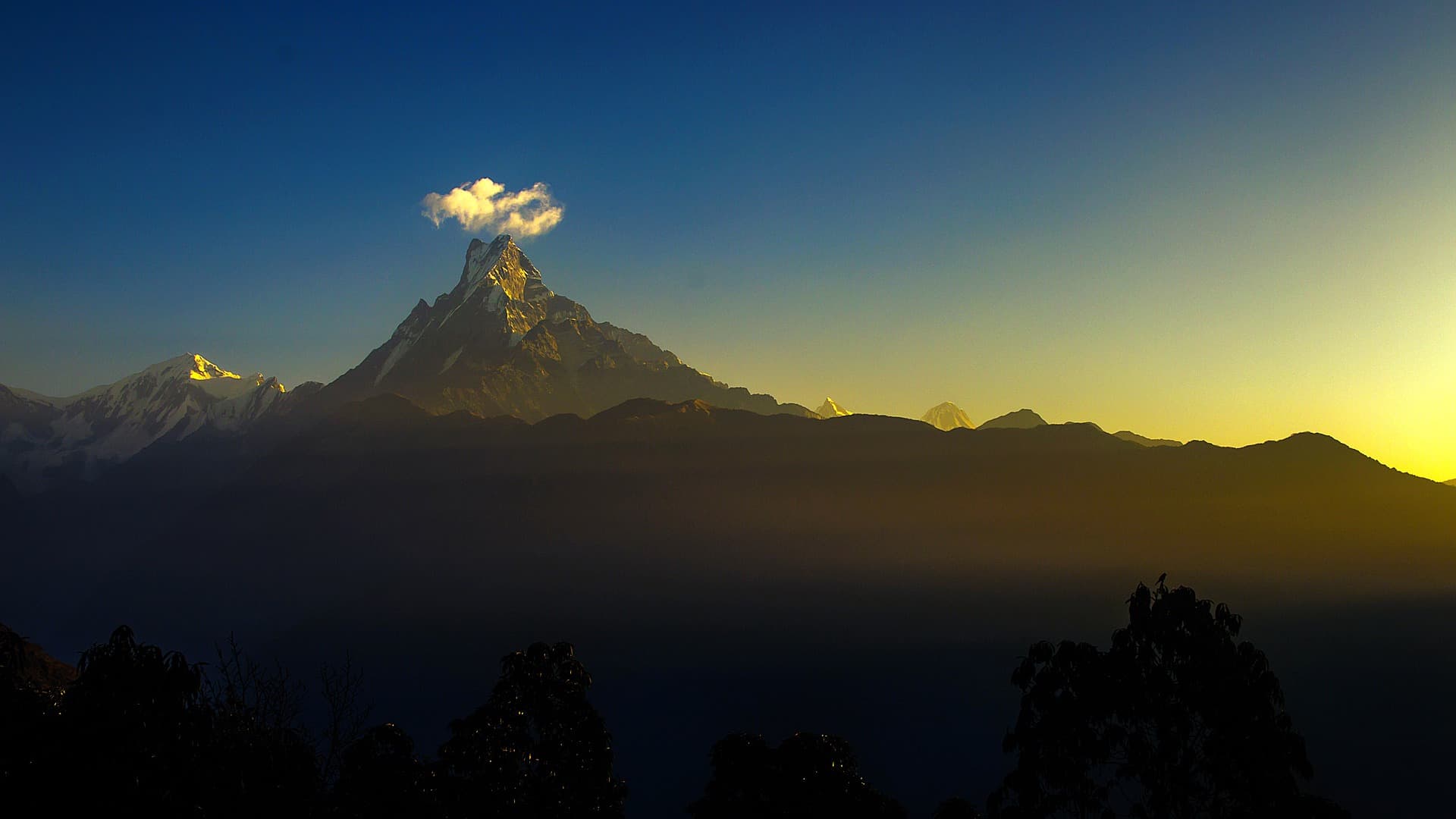
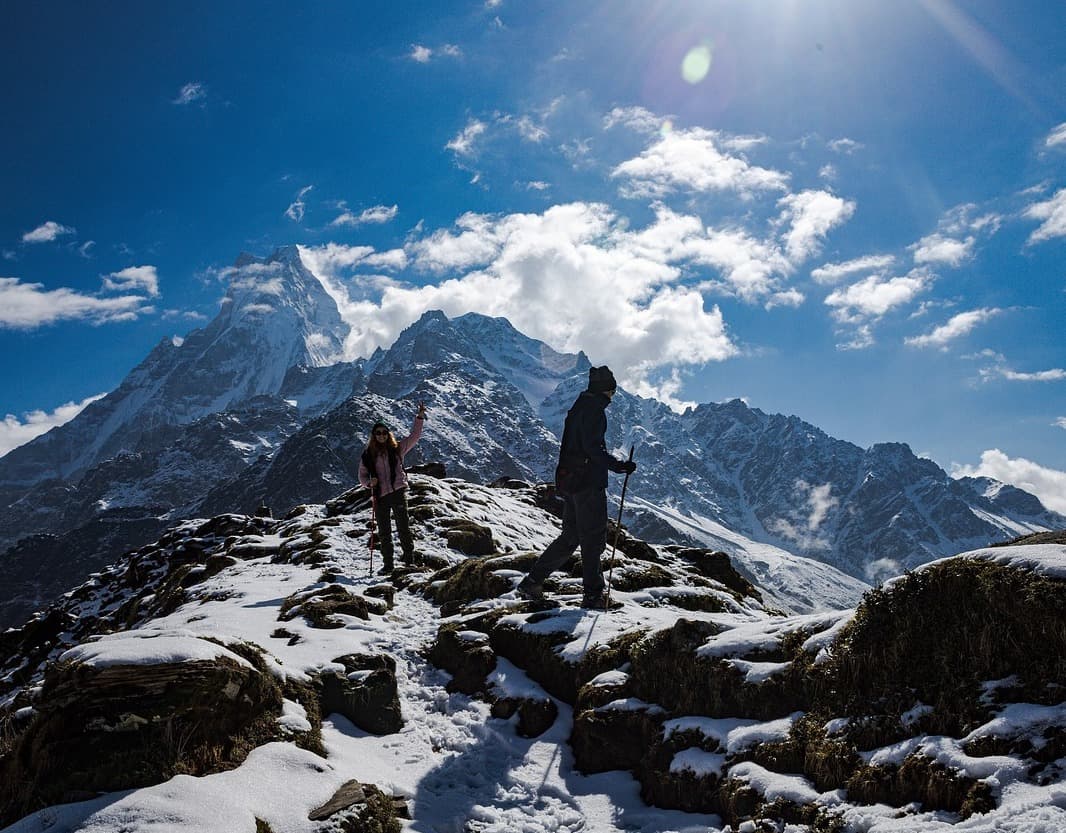
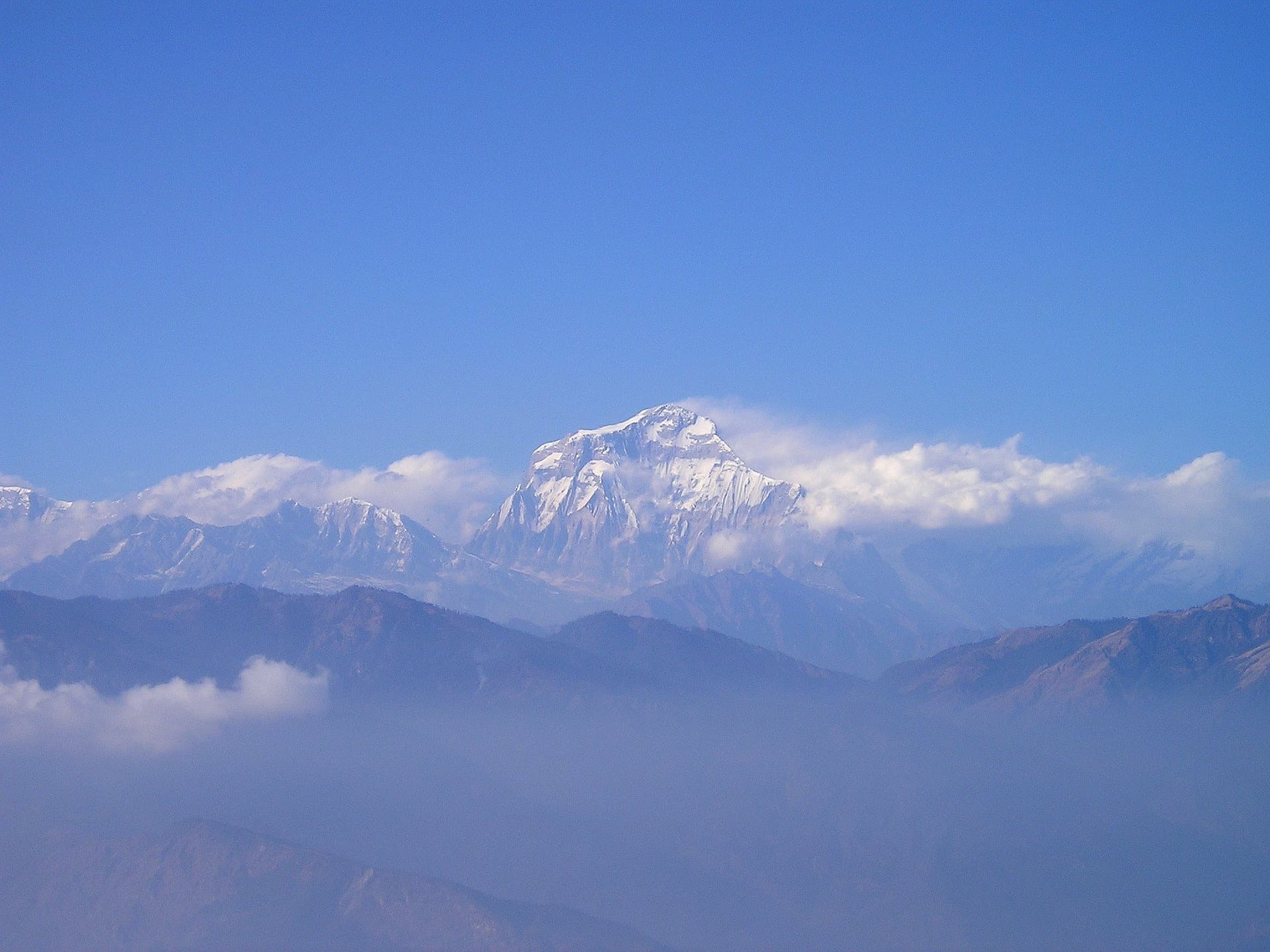
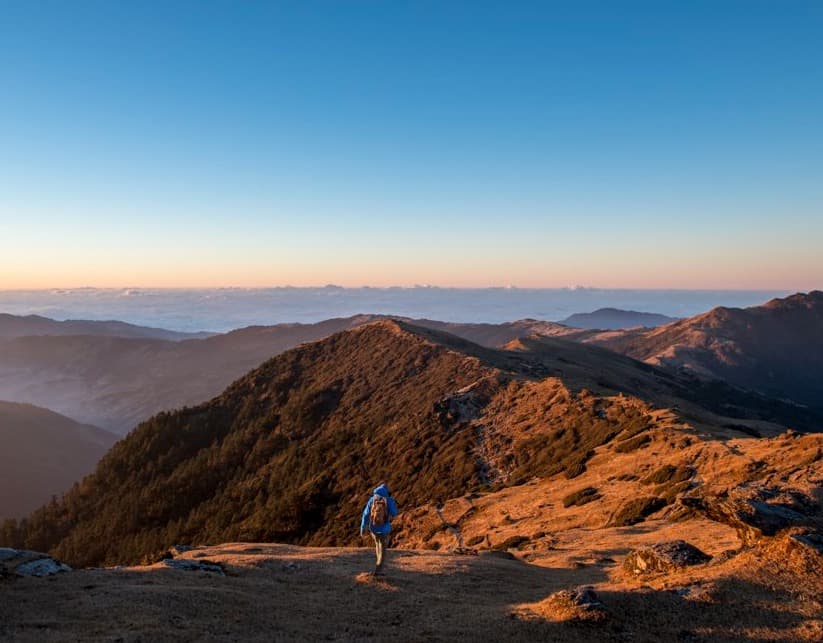
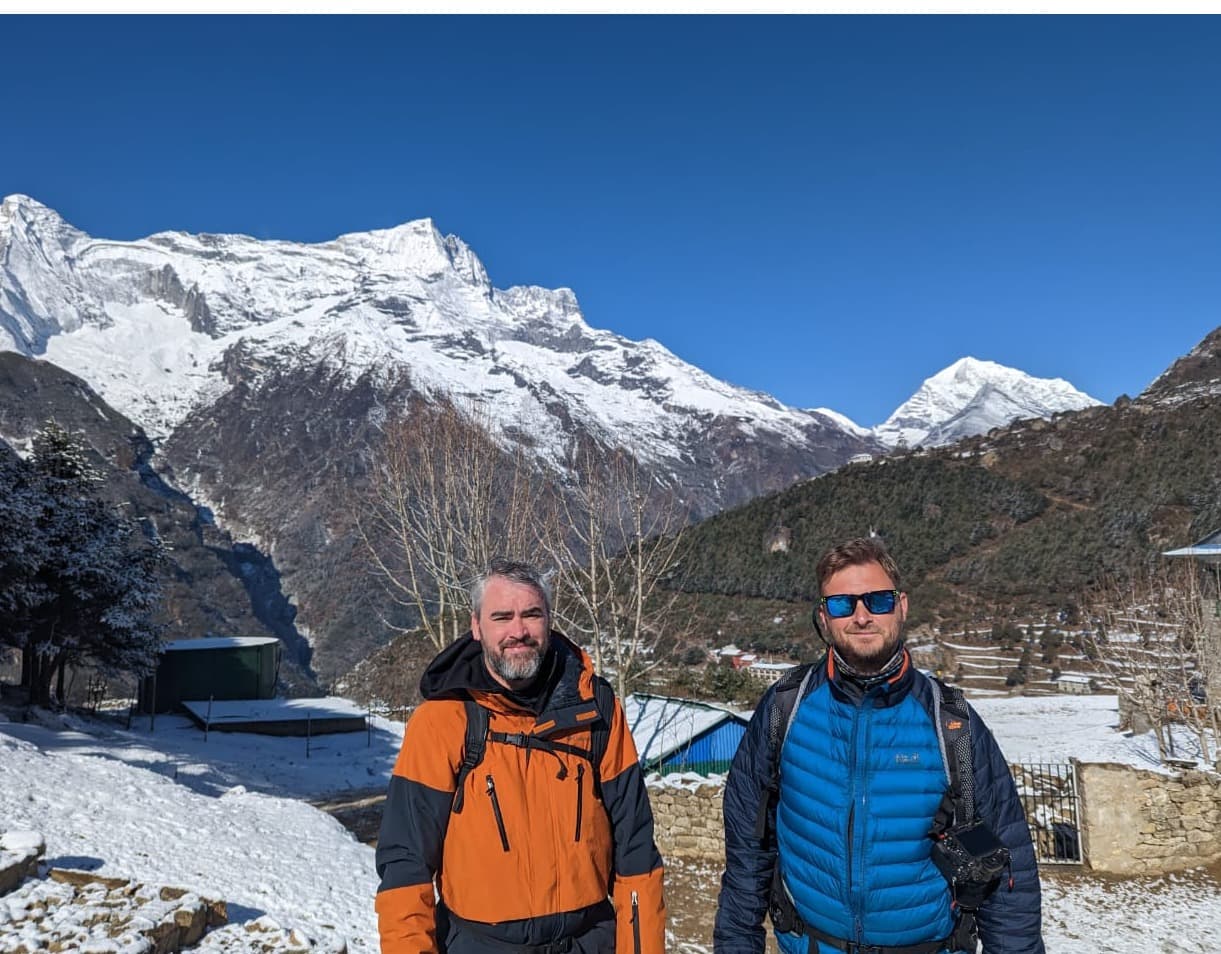
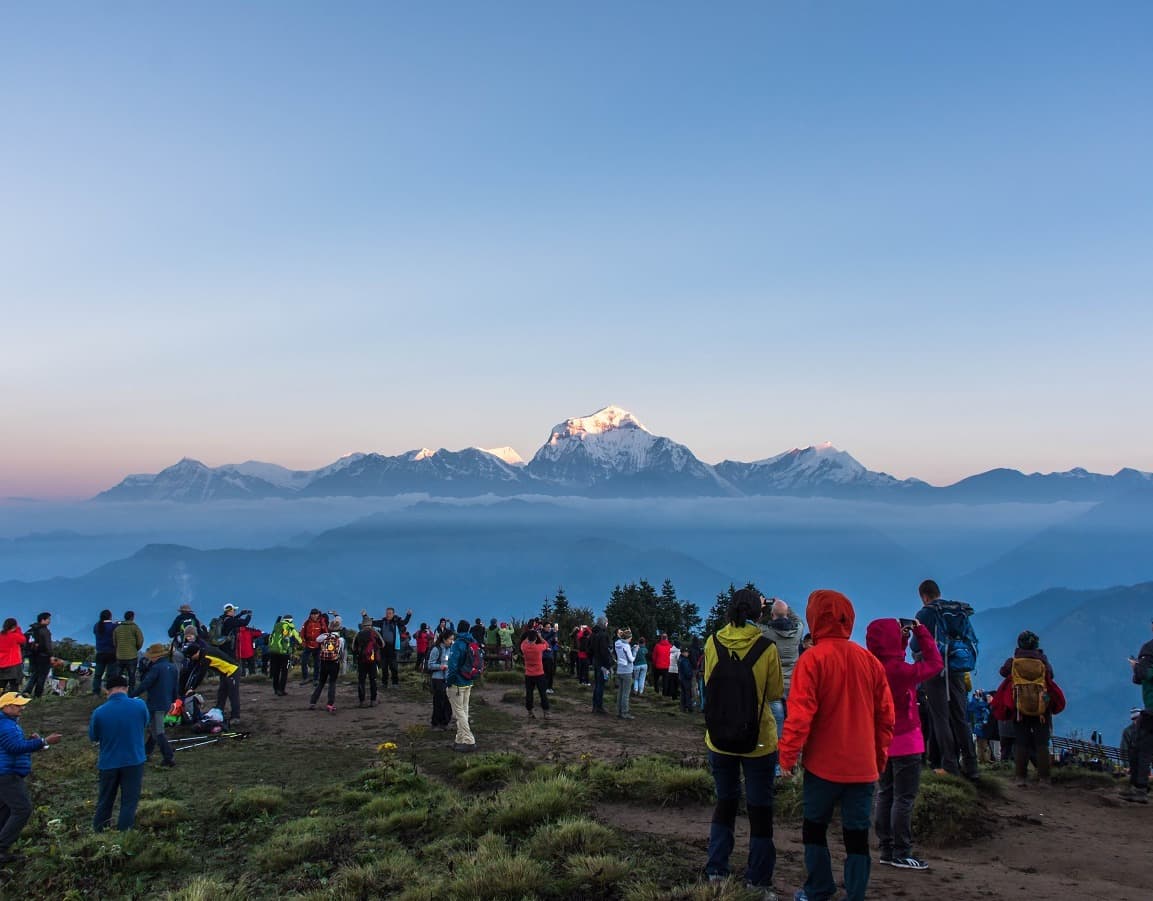
Mardi Himal Trekking is a new, less crowded trek in Nepal. This path is seen as a hidden gem in the Annapurna Region. Hikers can enjoy stunning rhododendron forests that bloom beautifully in March and April. Plus, they get to see exotic plants and animals, as well as local villages. Also, there are gorgeous waterfalls. Best of all, trekkers get breathtaking mountain views of Mardi Himal, Machhapuchhre, Annapurna, and Himchuli. So, it's no wonder people think this trek is one of the most rewarding in Nepal.
DestinationNepal
Duration11 days
GradeModerate
ActivitiesTrekking
AccommodationTea-House and Lodge
Max. Elevation4500m.
Group SizeMin. 1 Pax
Vehicleprivate vehicles
MealsBreakfast, Lunch, and Dinner during The Trek
Overview
Mardi Himal Trekking is a newly opened, less crowded wilderness trekking trail in Nepal. The stunning Mardi Himal Trek is considered a hidden gem in the Annapurna Region. It is one of the most rewarding and exotic treks in Nepal's Annapurna region. It is the trek to experience the lush, deep rhododendron forests, which tend to be more beautiful in April and March; remoteness; exotic flora and fauna; picturesque settlements of ethnic groups and their way of life; and the natural falls cascading down the hill. The most striking, astonishing mountain views include the beautiful Mardi Himal, Machhapuchhre (Fishtail), Annapurna, and Himchuli.
Trip Highlights
Spectacular views of Mardi Himal, Machhapuchhre (Fishtail), Annapurna, and Himchuli.
Mardi Himal Base Camp, High Camp, and Low Camp.
Less crowded wilderness Trekking in Nepal.
Scenic landscape and beautiful rhododendron forests.
Sunrise and sunset mountain views.
Breathtaking panorama of the Annapurna Himalaya ranges.
Local lifestyle and cultural trekking in Nepal.
Beautiful terraced fields and a homestay.
Friendly and hospitable people of the mountain region.
Wonderful experiences in the Annapurna region.
Mardi Himal Trekking, a short and spectacular trek in the Annapurna region, begins with a hike through magical rhododendron forests, while the latter part of the trail is dominated by rugged terrain and challenging rock formations. The final portion of the trek is really tiring, especially the climb to High Camp and Mardi Himal Base Camp. Mardi Himal is a popular vantage point to witness alluring mountain peaks. Alluring Machhapuchhre and Mardi Himal are considered dominant.
It is not only a spectacular Trekking trail for mountain views but also popular for local homestays and Tea Gardens. Trekkers will have the opportunity to stay with local people, exchange cultures, and experience organic local foods. The beautiful tea garden here attracts thousands of tourists every year.
We at Team Himalaya organise exciting Mardi Himal trek trips with an experienced, well-equipped team. We are also flexible and can tailor this trip to guests’ interests.
Itinerary of Mardi Himal Trekking - 11 days
We, Team Himalaya, extend a warm greeting to you upon your arrival at Tribhuvan International Airport (TIA) on your first day in this beautiful nation. A welcoming representative from Team Himalaya will be there waiting to drive you off to one of the magnificent hotels in town as soon as you land in Kathmandu. After checking in at the hotel, feel free to explore your lively surroundings or take a well-deserved nap. In the late afternoon, we will schedule a briefing on the trek at our office. So get ready to ask if you have any confusion.
After the Discussion, you can prepare the supplies that you will require for the upcoming trek. After finishing everything, you are free to explore around the city or chill in the hotel room. Overnight at the hotel in Kathmandu.
Max. Elevation:1300 M
Duration:30 Mins
Distance:6.2 Km
Today, we will depart Kathmandu for Pokhara after breakfast early in the morning. The adventure generally starts with a six-hour Tourist bus ride from Kathmandu to Pokhara, passing through the city's rolling hills. The environment, topography, and terrain start to change after you leave Kathmandu. On the route, you will be passing by a tiny village, several hills, and terraced farmland. When you arrive in the beautiful town of Pokhara, you will be greeted with a breathtaking view of the Dhaulagiri, Manaslu, and the famous Machhapuchhre and Annapurna massifs, which dominate the sky. After checking in at the hotel, you may spend the evening strolling around the lakeside and enjoying the live music and food.
Max. Elevation:800 M
Duration:6 Hours
Distance:200 KM
Finally, it's time to start your Mardi Himal Trek. First, you will board a vehicle in Pokhara after a leisurely breakfast and travel to the charming town of Phedi. After travelling to Phedi for about an hour by driving, you will trek through forested areas and tiny towns as you climb a series of stone steps. Ultimately, you arrive at Dhampus, a perfect location for a lunch break while admiring a captivating view of the Annapurna range. After lunch, you will continue hiking to Pothana, the day's primary stop. You'll discover a natural setting with beautiful mountain views here. Overnight at the lodge in Pothana.
Max. Elevation:1130 M
Duration:30 Mins
After an enjoyable first night at the teahouse in the mountain region. We continue walking towards the deep forest to Pitam Deaurali, and the walk leads to the pristine forest of oak, hemlock, maple, and rhododendron, with nice views of the mountain head of the valley. Forest camp is known as Kokar (2,480m) by locals, which is surrounded by deep, dense forests, where we can get basic mountain accommodation and food. Upon reaching the forest camp, we will check into our room at the teahouse and stay overnight.
Max. Elevation:2480 M
Duration:5 Hours
Distance:8 KM
Today's route continues with a climb that goes to the dense forest and ultimately to the low camp (2,970m). You will definitely like the rush of strolling through dense rhododendron and other tree-covered forests. At times, the thick greenery will part to reveal small openings through which you can catch glimpses of Hiunchuli and Annapurna South. Finally, as you approach the Low Camp, the vistas of Mt. Machhapuchhre (Fishtail) become magnificent, and you can relax in the region. Overnight at the lodge in Low Camp.
Max. Elevation:2970 M
Duration:4 Hours
Today, the trail continues to ascend along the ridge toward Mt. Fishtail and Mardi Himal. Following the trail, you will have amazing encounters with alpine plants and the climate. We will next leave the tree line after reaching Badal Danda and entering the shrubby alpine region. From here, the snow-capped peaks of Huinchuli, Fishtail, and Annapurna South emerge above the wide valleys on each side. The high camp is situated near the small pasture where we will spend the night.
Max. Elevation:3550 M
Duration:4 Hours
Distance:4/5 Km
As we must climb to the Mardi Himal Base Camp, we start our hike early today. When we get there, we'll enjoy the wonderful view of the enormous Himalayas and the sunrise. In the beginning, we shall travel routes that primarily involve ascending paths. After some time, the slow upward track narrows to a path that passes through meadows with yaks, goats, sheep, and cows. We then continue uphill along the ridge until we reach the 4,500 m-high Mardi Himal Base Camp, which offers stunning panoramic views of the surrounding mountains. Several of the notable peaks that can be viewed from here include Annapurna I, Mardi Himal, Annapurna South, Hiunchuli, Baraha Shikhar, Tent Peak, Singachuli, and Machhapuchhre. Finally, once we reach this point, we will enjoy it wholeheartedly before returning to high camp for the night.
Max. Elevation:4500 M
Duration:7 to 8 Hours
Distance:10 to 14 KM
After having an amazing day in base camp, we will descend towards the Siding village today. We will finish the circuit path through Siding Village rather than returning on the exact route to the forest camp and Potana. Trekking through less-visited areas with beautiful traditional villages will feel quite lovely for you. Finally, after passing through a couple of settlements, you will reach the traditional village of Siding. Here, you will meet very friendly people and have the chance to explore the village's culture. Moreover, today will be your first time staying at a homestay run by a local family.
Max. Elevation:1700 M
Duration:6 Hours
Distance:14 KM
After breakfast at the homestay, you will walk to Lumle village, which shouldn't take more than 2.5 hours. After you reach Lumle, you will drive to Pokhara through Kalimati and Ghalel villages, a 2-hour drive. We will drop you off at a wonderful hotel on Phewa Lake when we get to Pokhara. The night will be spent here, and the remainder of the day is up to you.
Max. Elevation:1738 M
Distance:5.16 KM
The travel back to Kathmandu is taking place today. You can either fly or drive back to Kathmandu. After breakfast, one of our guides will drive us to the bus stop for the tourist buses to Kathmandu. You will reach Kathmandu after you choose any of the alternatives. Once you arrive, we will take you to the hotel of your choice so you can relax and explore the town for the remainder of the day. Overnight at the hotel in Kathmandu.
Max. Elevation:1300 M
Duration:6 Hours
Distance:200 Km
The moment to say goodbye has finally arrived after several days of enjoyment and excitement. Today, one of our kind representatives will transport you to the terminal at Kathmandu International Airport three hours before your departure. We are confident that your trip to Nepal was a special occasion filled with great memories and experiences. We hope to see you again on another thrilling vacation in Nepal. Happy journey!
Max. Elevation:1300 M
If the provided schedule isn't suitable for you, we can create personalized travel arrangements.
A "standard package" for the Mardi Himal Trek is an all-inclusive option for trekkers who want a comprehensive experience of this popular route in the Annapurna region. This type of package is designed to provide essential services, covering all the basics for a safe and enjoyable trip.
Book your own private small group trip
**Discounts are determined exclusively by the size of your group. We do not add additional members to your group.
July 2026
Su
Mo
Tu
We
Th
Fr
Sa
28
29
30
1
2
3
4
5
6
7
8
9
10
11
12
13
14
15
16
17
18
19
20
21
22
23
24
25
26
27
28
29
30
31
1
Sold out dates
US $0US $0 per person (based on 1 people)
Cost Includes
All arrival and departure transportation from the airport /hotel /airport.
Two nights of twin-sharing accommodation in Kathmandu / Pokhara at tourist-standard hotels or similar, on a bed-and-breakfast basis.
Full board meals (B-L-D) and twin-sharing accommodation on the teahouse/lodge/homestay basis during the trek. (Single room supplement at extra cost if required, where available).
All necessary applicable TIMS card (Trekking Information Management Systems) and
Annapurna Area Conservation (ACAP) permits.
Service of an experienced English-speaking trekking guide with daily medical insurance, meals, transportation allowance, etc…
Service of porter and their daily wages, medical, insurance, meals, salary, transportation, and allowance. 2 trekkers: 1 porter, and the porter can carry your backpack during the trek.
Farewell dinner in Kathmandu at an authentic Nepalese restaurant with cultural programs.
Down jackets, sleeping bags, duffel bags by team Himalaya (which need to be returned after the trek), and comprehensive medical kits.
Transportation from Kathmandu to Pokhara by tourist bus, and from Pokhara to Phedi, Lumle, and back to Pokhara by private Vehicle, as per group size.
Trip map of the Mardi Himal trek.
Appreciation letter.
All government taxes and local charges.
Fresh fruit is seasonal during the trip.
Rescues arrangement.
Cost Excludes
Nepal Visa-International airfare-personal travel / medical insurance.
Expenses of a personal nature, meals in Kathmandu and Pokhara, gratuity (tips), hard/soft drinks, including tea/coffee, throughout the trip.
Personal trekking gear and medical kit.
Emergency evacuation by any means of transportation, including Heli services and a personal medical kit.
Early return from the trip due to a personal/medical problem. In this case, the client should bear his/her own expenses on return from the trek and in Kathmandu, including those of the accompanying guide/porters.
Route Map
Loading map...
Know Before you Go
Equipment Checklist
Team Himalaya's list of outdoor equipment requirements is as follows, depending on the type of holiday chosen: leisure tours, moderate, adventurous, challenging trekking, and climbs.
Gear required depends on the season of travel and the grade of trekking, as Nepal is suitable for all seasons except the wet months of July to mid-September, when few travellers visit Nepal.
For Simple Sightseeing Tours in Kathmandu and beyond:
Personal Toiletries: a small day pack or bag to carry your personal belongings, such as water bottles, cameras, wallets, maps, journey/notebooks, cell phones, light jackets or fleece, and insect repellent cream, as per the season. Running/sports shoes or comfortable shoes for short walks; walking poles; personal medication; binoculars (optional); T-shirts; long-sleeve shirts; trousers (for entering temples and monasteries); sunscreens. For long drives, a soft inflatable cushion/pillow is advisable, along with a rainproof or umbrella.
For Moderate Hikes and Treks:
Personal Toiletries, a moderate-sized daypack to carry your personal belongings, such as water bottles, cameras, wallets, maps, journey/notebooks, cell phones, light jackets or fleece, and insect repellent as per the season. Running/sports shoes, for elderly people; walking poles; personal medication; binoculars (optional); T-shirts; long-sleeve shirts; trousers (for entering temples and monasteries); sunscreens; and torch/flashlights. Sun Hats, Sunglasses, and water bottles are necessary (try to avoid plastic bottled water, as it creates litter that is hard to recycle in Nepal). Use the same waterfalls to refill your bottle where available, and a rainproof umbrella—a scarf or mask to avoid dust and smoke.
For long Trekking for a week or more above 3,000 meters:
Personal Toiletries, a moderate-sized day pack or rucksack to carry your personal belongings, including travel documents, water bottles, cameras, wallets, maps, journey/notebooks, cell phones, light jackets or fleece, and insect repellent as per the season. Running/sports shoes, a good pair of boots, warm woollen/cotton socks, snow gaiters, rain/windproof gear, walking poles (an option), personal medication, binoculars (an option), T-shirts, long-sleeve shirts, trousers (for entering temples and monasteries), sunscreens, torch/flashlights. Gloves, Woollen Beni (camp), Sun Hats, Sun/snow glasses, and water bottles are necessary (try to avoid plastic bottled water, as it creates litter that is hard to recycle in Nepal). Use the same waterfalls for refills where available—a scarf or mask to avoid dust and smoke. On trekking, larger kit/duffel bags are carried by porters/pack animals (yaks, mules, or ponies), including your heavy personal gear, such as sleeping bags, down/duvet jackets, and items you require during daytime walks to designated campsites/lodges.
We had a very successful EBC trek in October 2024 because of Team Himalaya! Our guide, Raj, was very knowledgeable in all things Everest. He set us up in the best lodges where we had great service all along. He provided us with a superb porter, who also went above and beyond in taking care of us. Raj was very patient with us and was always looking out for our best interests. We would highly recommend Team Himalaya for any trek!
AAlec S1st Apr, 2024
Everest Base Camp Team Himalaya March 2024
We have just returned from a 14 day, 11 day hike with Raj and Durga from Team Himalaya to Everest Base Camp. From the minute we landed to our departure we were properly looked after and cared for by Team Himalaya. The trek to and from Everest Base Camp was wonderful, our guides and porters really looked after us and were incredibly knowledgeable. In Nepal things can go wrong especially with flights to and from Lukla but Team responded magnificently and found alternative solutions. If this is on your bucket list as ours and you are looking for a company to organise this with I would 100% recommend Raj.
JJourney379926937861st Apr, 2024
Reaching Everest Base Camp with TEAM HIMALAYA
If you are looking for an adventure of a lifetime, don’t hesitate! Choose TEAM HIMALAYA for your Everest Base Camp trek! We completed the EBC trek early November 2023 . My husband and I chose to do a private trek with Team Himalaya. Everything went smoothly with our guide Raj. His team and organization is outstanding! We could not have done it without him. Raj took care of everything throughout the trek and made sure we were well at all times, even providing us fresh fruits every night after dinner! We felt safe at all times , his experience and knowledge of the Himalayas helped us achieve our goal in reaching the EBC! His professionalism went beyond our expectations from our first contact with him for information until the very end. We will forever remember this expedition and gained a friend in our guide Raj!
eevanhH6577DL13th May, 2023
Incredible Experience by evan
It was an incredible experience being surrounded by the towering Annapurna Himalayas. This memorable trek through Nepal offered the best scenic views and stunning landscapes. Despite being surprised at how quickly the trek ended, the daily walks were filled with dramatic views that left a lasting impression.
I highly recommend this adventure, as it is one of the best base camp treks in the Himalayas with minimal risk of altitude sickness. Although there were steep ups and downs that were tiring on some days, the breathtaking views made it all worth it. This was easily the most exciting trek I have ever experienced.
I want to thank Team Himalayas and Raj for providing exceptional service with their expert guide and staff.
Frequently Asked Questions About the Mardi Himal Trekking
What is the best time to do the Mardi Himal Trek?
The weather in the Himalayas is uncertain. But during spring and autumn, the weather doesn’t fluctuate much. To be on the safe side, the time from September to December is probably the best time to do the Mardi Himal Trek and most other treks in the Annapurna Region. If you want clear skies during the trek, then January to December is the answer. But then it can be cold during that time. You are also not generally advised to go trekking during the monsoon season from June to mid-September, as rainfall is heavy.
What kind of food will I get to have during the Trekking?
You might have heard of the typical term “Dal Bhat”, which is both fulfilling and healthy. Most of the foods you get are grown by local farmers. You might not have many items on the Menus in the upper regions. You will get food items such as pasta, pancakes, bread, eggs, coffee, and hot lemon.
Can a solo woman traveller go on the Annapurna Base Camp trek?
Travelling alone can sometimes be the best thing you can do for yourself. But with our guide, you will be well taken care of during the trek. Our company prioritises the safety of women travellers.
Should I need a porter for my trek?
Well, it depends on which trek you choose. Some treks involve many difficult paths and routes, so it will be hard for you to carry heavy bags on your own. Hiring a porter can be beneficial, as you can fully enjoy the trek without having a backache.
Will I be able to use my phone during the trek?
The mobile phone signal has reached most of the Annapurna Region. So, if you miss someone at home, you can quickly check on them. There are also many phone services, such as charging and recharge cards, available in almost every part of the Annapurna Region if you need them.
Is there an ATM on the trek?
Unfortunately, there aren’t such facilities for ATMs. So, you need to use the service before and after the trek in Pokhara.
What if I get sick or injured during the trek?
Firstly, our guides will sort out the things for you. However, if there is an emergency, the evacuation can be done by helicopter. For this reason, travel insurance is really important for you, as it will help cover the costs of the helicopter rescue.
What if I left the gears at my home?
You can easily get gear in Kathmandu and rent what you need, so you shouldn't worry about forgetting anything.
What kind of Guides will I get?
The guides you will be getting are all Nepalese. Each of our guides is experienced, knowledgeable, flexible, and licensed. They are all highly skilled professionals and know how to care for our valuable guests.
What kind of accommodation will I get during my trek?
You will be resting in tea houses and lodges. These small but comfortable hotels and lodges provide pillows, sheets, and mattresses; you can ask for spare blankets if needed. Bringing your pillow would be a great idea, though. Some of you might not be comfortable sleeping without a hot shower. For that, you can get a hot shower at a certain cost.