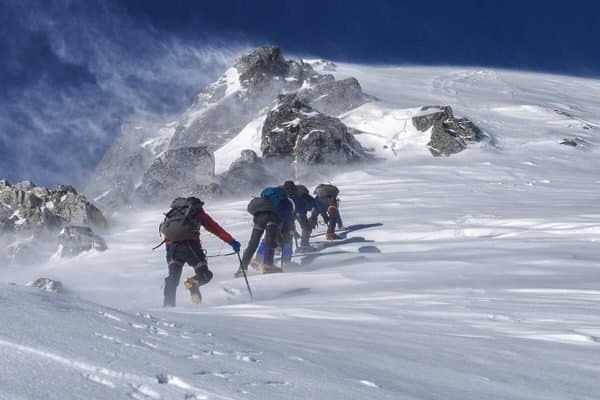
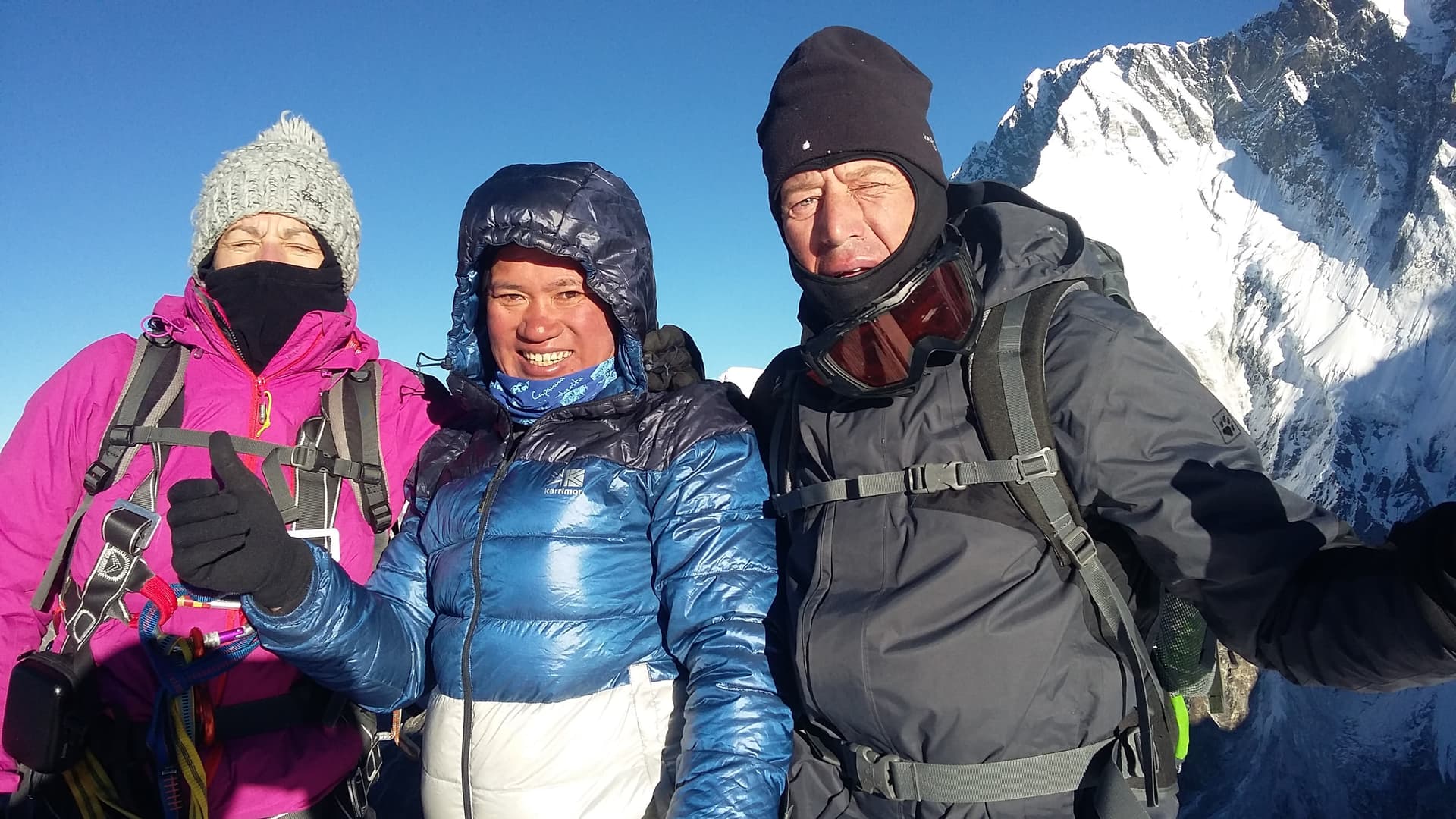
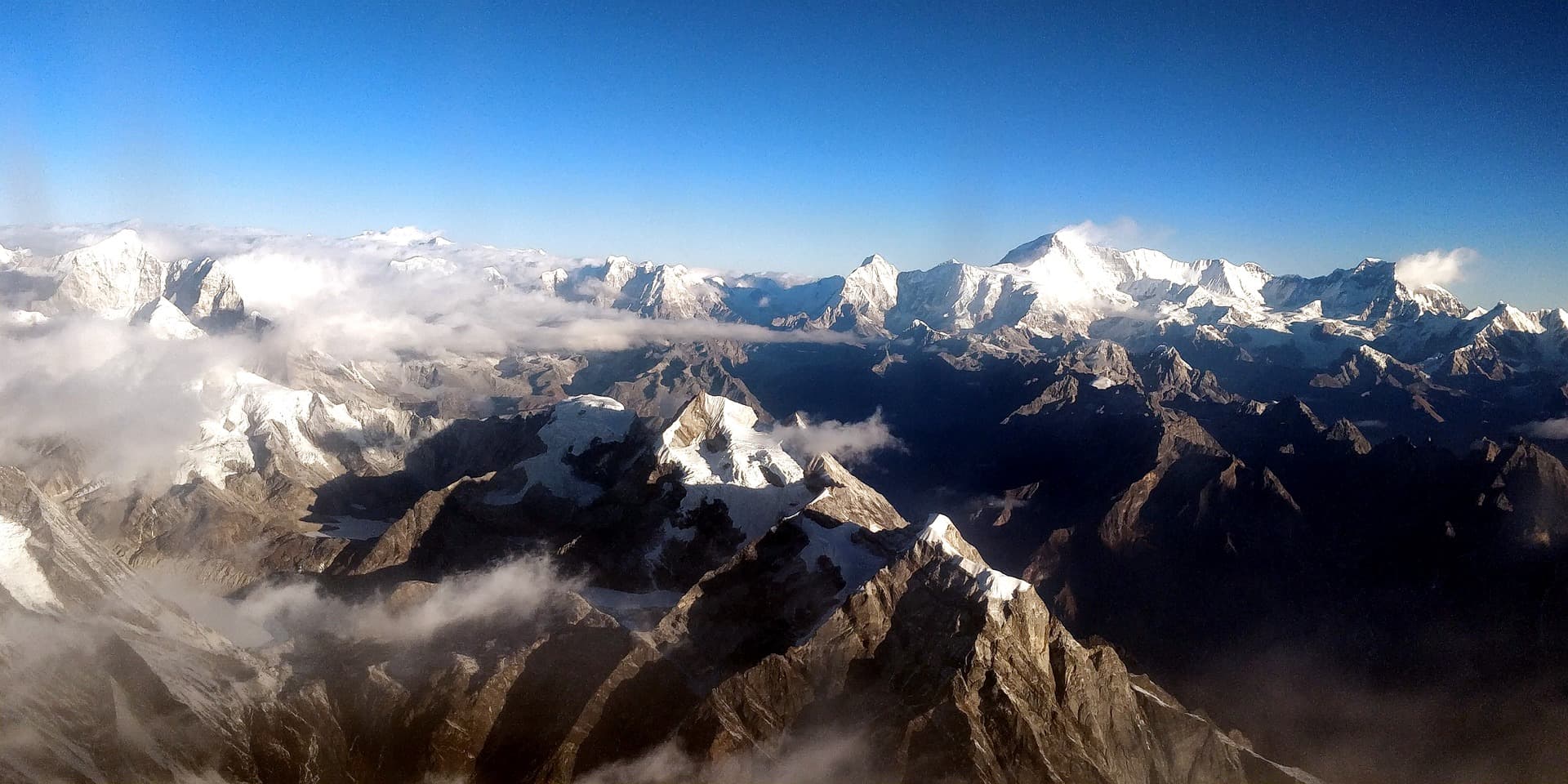
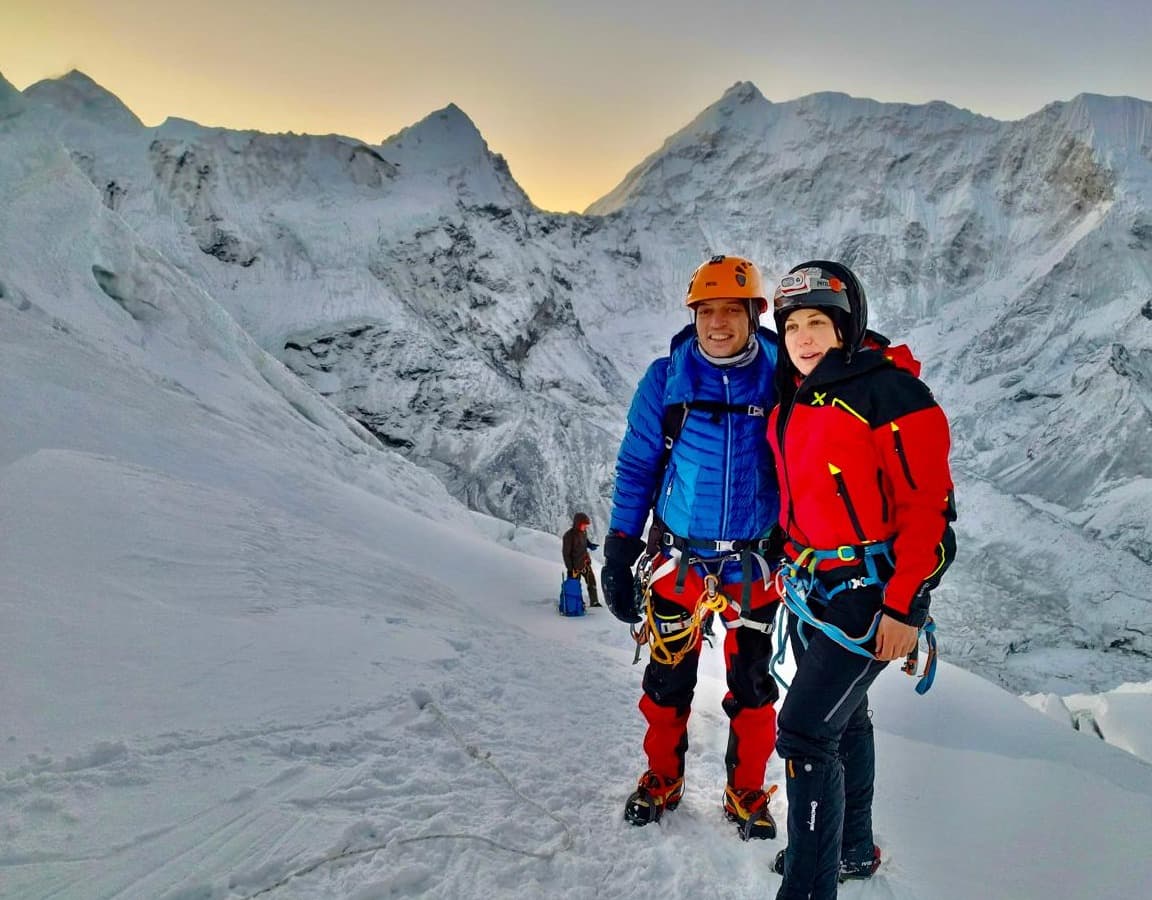
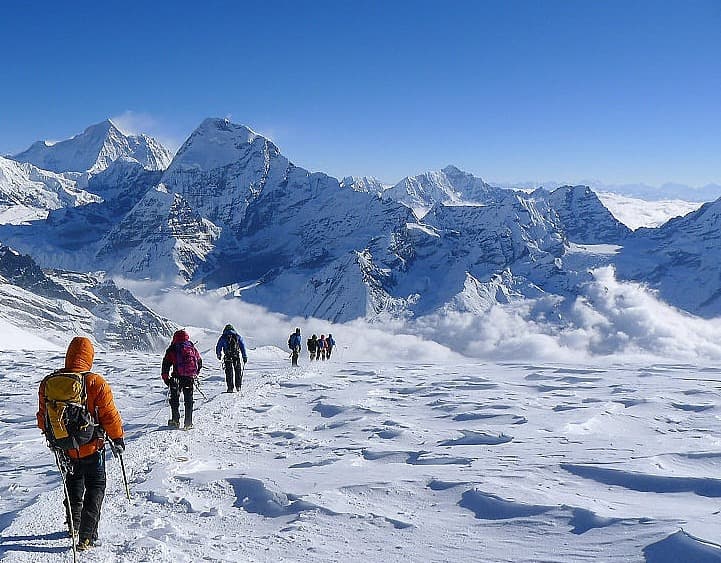
Lobuche Peak Climbing is among the most adventurous pursuits in Nepal's Khumbu. Lobuche Peak lies right on top of the Lobuche Village, and thus calls out to adventurous souls to conquer the summit and achieve one of their greatest successes. There are two separate summits of the Lobuche Peak: Lobuche East Peak (6,119m) and Lobuche West Peak (6,145m). The ridge that joins these two summits together runs continuously. Lobuche East Peak was first conquered by Ang Ang Gyalzen Sherpa and Laurence Neilson back in 1984. Summiting the peak is achieved through the South Ridge. It is adventurous. But there are views of the majestic peaks of Everest, Lhotse, Nuptse, Ama Dablam, Pumori, and other small peaks in the Everest region, which make summiting the peak truly adventurous and unforgettable. For this reason, the climbers feel blessed with the views provided by the majestic peaks. Climbers need permits for climbing this peak.
DestinationNepal
Duration19 days
GradeModerate to Adventurous
ActivitiesPeak and expedition
AccommodationTent camp
Max. Elevation6119m.
Group SizeMin. 1 Pax
Vehicleprivate vehicles
MealsBreakfast, Lunch, and Dinner during The Trek
Overview
Lobuche Peak Climbing is one of the adventurous expeditions of Nepal. It is located just above Lobuche Village, challenging all those adventurous souls who would like to conquer it and achieve the greatest achievement of their lives. There are two summits on the Lobuche Peak that include Lobuche East (6,119m) and Lobuche West (6,145m). These summits are connected through the continuous ridge. Lobuche East Peak was first climbed in 1984 by Ang Ang Gyalzen Sherpa and Laurence Neilson. This summit can be approached through the south ridge of the peak. It is adventurous; however, the view that the summiteers will get is definitely the best of Everest, Lhotse, Nuptse, Ama Dablam, Pumori, and many others. For this, they feel blessed by the presence of the holy giant peaks. The excitement level in this journey will be marvellous. For climbing the peak, a climbing permit is essential for Lobuche East Peak, whereas an expedition permit is essential for Lobuche West Peak.
We start our adventurous Lobuche Peak Climbing trip with a short flight from Kathmandu to Lukla. This flight will take us around thirty-five minutes from Kathmandu. Further, we follow the same route as the Everest Base Camp Trek, via Phakding, Namche, and Tengboche, until Lobuche. On this tour, we visit Sagarmatha National Park, a UNESCO World Heritage Site, and learn about the flora and fauna there. Upon reaching Lobuche village, we head towards the summit and conquer it with a professional climbing team. This summit will be breathtakingly beautiful. Further, we descend to Lukla along the same way and fly to Kathmandu.
Trip Highlights
In the high Khumbu valley, around the Everest region, with great views.
Stunning Mountain views from the summit of Lobuche Peak.
A scenic, short flight to and from Lukla with parallel mountain ranges.
A unique experience of a lifetime with Lobuche Peak climbing.
Visiting the world’s highest Everest Base Camp & scenic Kalapathar top.
In a country with rich Buddhist culture and traditions, and warm hospitality.
Some travellers would like to adjust themselves completely before they go climbing on Lobuche Peak, as well as do some training in peak climbing. Hence, it is recommended that you all do so before you start any adventure with us. The schedule and time of day can differ from traveller to traveller depending on their time period, budget, and physical stamina. The tailored journey can be organised for each adventure lover who wants to take part in climbing up Lobuche Peak using an equipped team.
Climbing needs suitable weather conditions. Climbing the peaks can be done in April and May, or in October and November.
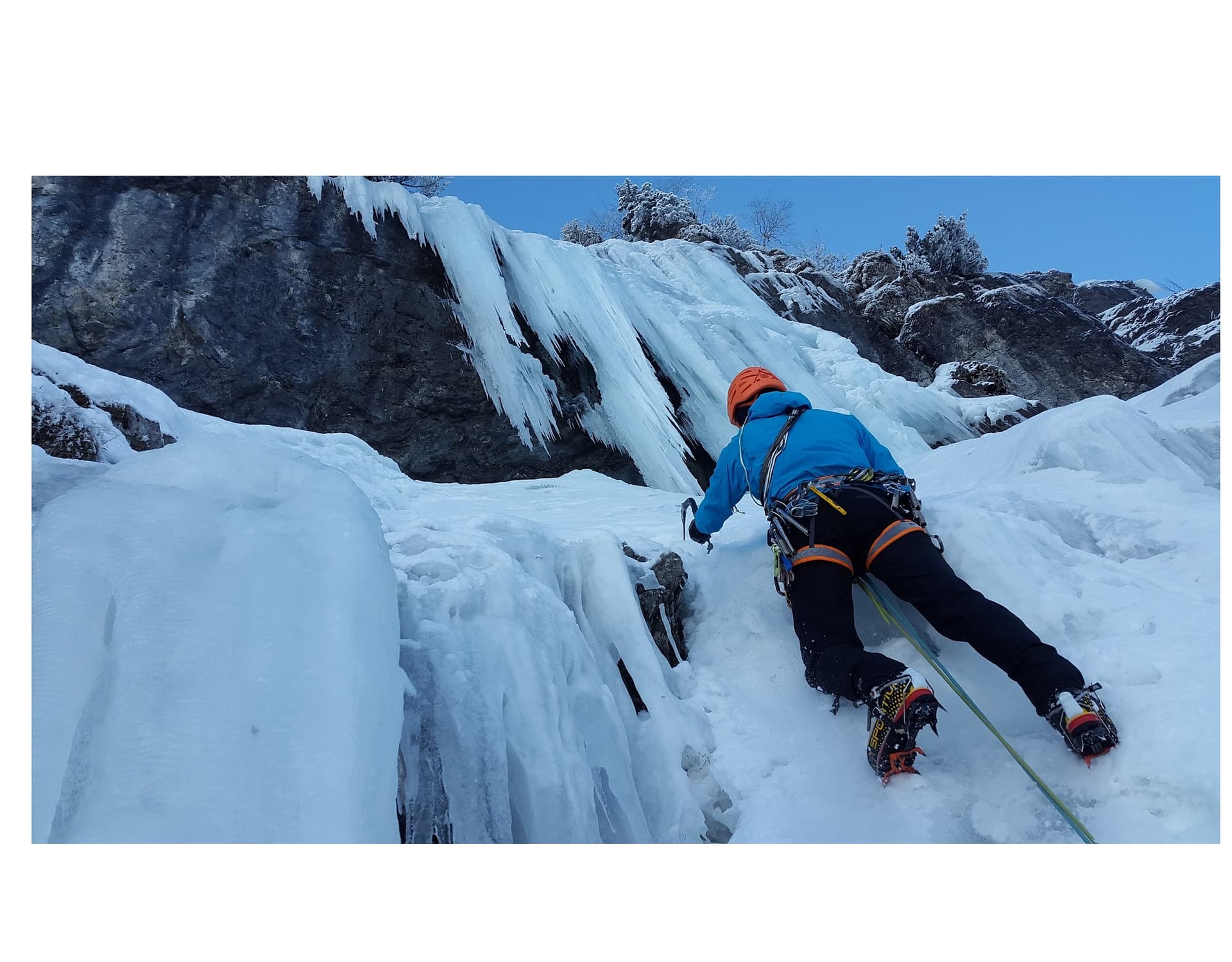
It should be remembered that technical peak-climbing skills are required for Lobuche East Peak. These skills can be learned in Kathmandu if you can take care of yourself before coming to Nepal. Besides that, it needs good physical health and determination. One has to prepare himself/herself completely before climbing.
This tour includes some interesting aspects of the Sherpa community.
Itinerary of Lobuche Peak Climbing - 19 days
Upon arrival in Kathmandu with your respective airline, our TH staff will receive you with a courtesy transfer to hotels in the centre of Kathmandu, around the Thamel area, which has many shops, stores, and excellent world-class restaurants, with time for short walks and to buy necessary items for the trip. At the hotel, our guide will brief us on trekking and other essentials.
Max. Elevation:1300 m
Morning after breakfast at a given time our city and cultural guide will guide you in and around Kathmandu at places of interest and importance, as Kathmandu Valley is full of World Heritage Sites the holy Pashupatinath temple, Bouddhanath (Little Tibet), Swayambhunath (Monkey Temple) & monasteries, ancient Kings Palaces and courtyard in Kathmandu; after an interesting sightseeing back to the hotel, preparation for the trip to Lobuche Peak climb.
Max. Elevation:1300 m
Morning after breakfast at a given time our city and cultural guide will guide you in and around Kathmandu at places of interest and importance, as Kathmandu Valley is full of World An early morning start from the hotel with a short drive to Kathmandu domestic airport for a super scenic flight of 35 minutes to Lukla with awesome views of the mountains ranges, and the shortly landing at strange runways with an uphill, on reaching Lukla with time for rest and to refresh with morning tea and coffee and probably breakfast depending upon the time of arrival, from here a slow start passing the market with shops and stores in Lukla and heading downhill for a while, and then with short ups and gradual winding trail passing many farms and villages, Buddhist prayer monuments and views of snow-capped peaks of Kusum Kanguru and Kwangde and finally reaching the overnight stop at Phakding by the river DudhKosi.
Note: Nepal Civil Aviation will not permit flights from KTM to LUA and back. The flight departs from Ramechap to Lukla and returns from Lukla to Ramechap, including an air ticket and airport transfer.
Max. Elevation:2800
Duration:30 Mins
Distance:135 Km
The morning walk of the 2nd day trekking starts with an easy walk with a few ups following the river Dudh Kosi most of the way, crossing the same river by suspension bridge reaching Monjo village a lovely village with lodges catering the trekkers many years, view of Thermasharkhu peak and Khumbi-la mountain the patron god of Khumbu area, Monjo is the entrance of Sagarmatha National Park at the park entrance a rest after getting the permits to travel this area requires Park permits with fees. As well, TIMS (Trekking Information Management System) continues walking after a brief rest here, crossing the bridge over the Dudh Kosi and heading to Jorsalle village for lunch. This is the only village for 2-3 hours till Namche is reached. From here walk on the river bed for a while and then after crossing the last bridge over Imjatse River (which joins Dudh Kosi) an uphill walk for a few hours through a beautiful alpine forest lined with rhododendrons, pines, and fir trees with the fabulous mountain scenery of Kwangde, Kusum Kanguru if the day is a clear view of Mt. Everest and Lhotse also after a stiff climb of few hours reaching famous Namche Bazaar the Sherpa capital of Khumbu region with many houses with lodges, hotels, pubs, restaurant with fresh bakery and cyber café, health post, post office and banks.
Max. Elevation:3440 m
Duration:5 hours
Distance:10.8 Km
It is essential to have a rest day or spend 2 nights at this altitude to safeguard against AMS (Acute Mountain Sickness), where drinking plenty of fluids is beneficial, but avoiding alcoholic drinks is crucial, as they can dehydrate you. In Namche optional walks around the neighboring area up to Everest View Hotel (believed as world's highest hotel at 3,880 meters) a 2-3 hour hike with promising mountain views of Mt. Everest and magnificent Ama Dablam peak, or a walk to the top of Namche hill with an aerial view of Namche with Mt. Everest, Lhotse, Tawache, Tarmasarku, Kwangde, and Ama Dablam peaks and visit the fascinating museum with full of information of this Khumbu area, afternoon at leisure to browse around the bazaar with nice stores, this place is flooded with locals and trekkers on Saturday big market.
Max. Elevation:3440 m
Duration:5 Hours
Distance:13.5
Morning with a short climb to the ridge above Namche and then on the pleasant walk for the first half of the day with views after views of mountains and surrounding beautiful landscapes, and into pleasant woodland, and then on the downhill slope for an hour to reach lunch break at Phungi-tenga, located in a gorge by the river Imjatse and in the middle of alpine woodland.After a refreshing moment, starting with an uphill for 2 hours through nice tree lines of rhododendrons and pines with beautiful views of snow-clad peaks, and finally reaching the famed Tengboche Monastery (Gomba) for an overnight stop. This beautiful scenic spot offers tremendous views of peaks encircling this place, including Mt. Everest, Lhotse, Nuptse, and towering Mt. Ama Dablam, Kangtenga, Thermasharkhu, and Kwangde. Afternoon visit to this interesting monastery, with Lama and monks chanting prayers in the central hall, a statue of Sakyamuni Buddha, and thanka paintings around the walls and ceiling, and then visit the small museum.
Max. Elevation:3867 m
Duration:5 Hours
Distance:10.5 Km
After an interesting and impressive time here, a morning walk leads to a descent through a serene forest, passing a few prayer walls, and then crossing a bridge over the raging Imjatse River. After the bridge, a slow uphill walk with a few steep climbs and descents to Pangboche village (the last permanent village on the route to Everest base camp) From here a short steep climb to Shomare a small settlement popular stop for lunch on the route trekking higher, after lunch a gradual uphill climb on the windy exposed terrain and crossing the same river and with a climb for an hour reaching our overnight stop at Dingboche a lovely place located at the start of Imjatse valley beneath the towering Ama Dablam North Face and Mt. Lhotse with gorgeous views of Island / Imjatse peak towards east.
Max. Elevation:4410 M
Duration:5 Hours
Distance:11.5 KM
We have set another rest day for proper acclimatization so that you can enjoy the adventure feeling good and healthy, Dingboche optional walk and hike, the sage and best thing to do is to climb a hill above Imjatse valley to Nagajung hill which takes about 1-2 hours of fine climb offering great super views of surrounding mountain panorama with world 5th highest Mt. Makalu towards east adding extra heights of the day helps to acclimatize also, afternoon at leisure.
Max. Elevation:4410 m
From Dingboche with good night's rest, the morning walk leads to a short climb over a hill festooned with prayer flags and Buddhist payer monuments, overlooking superb views of Imjatse Valley, Ama Dablam North Face, Island / Imjatse Peak, and world’s 5th highest Mt. Makalu towards east the peaks of Twache and Cholatse looks closer from this spot, from here on the gentle uphill path leading to a small place at Thukla for a lunch stop, where the trail from Gokyo via Tshola and Pheriche meets. As well, the Khumbu glacier melts into the torrential river. After a nice break, here is a steep climb for an hour to the cairn at the top of Thulga Pass, where many tombs and memorials are placed in memory of the unfortunate mountaineers. From here, a good walk for another hour brings you to Lobuche for an overnight stop. Lobuche has more than adequate lodges around beneath the Lobuche East and West Peaks.
Max. Elevation:4930 m
Duration:5 hours
Distance:8 Km
Today, this awesome journey leads to our goal and highlight of this great trip: a morning walk on the gentle slope for a few hours, passing near the meteorological stations with glass pyramids, managed by Nepalese and Italian scientists, on the glacier in this area. From here, the walk leads over the rocky moraine and ice, and below the Khumbu Glacier, with views of Everest, Nuptse, and Mt. Pumori. After crossing the moraine area, reaching Gorakshep, located on the route to Everest base camp and Kalapathar climb, with Mt. Pumori soaring above this flat valley. After a good rest, continue walking for 2-3 hours to Everest Base Camp through the glacier and moraine sections. On reaching Everest Base Camp, grand views of Nuptse, Lho-la, Changtse in Tibet, and the top of Everest with its notorious Khumbu ice falls and glaciers at a near distance from the base camp. This desolate but tremendous spot feels out of this world. During the high expedition season, around April and May, this place is flooded with various expedition groups. After an overwhelming moment, retrace the walk back to Gorakshep for an overnight stop, feeling high and at ease after reaching the goal of this trip.
Max. Elevation:5164 M
Duration:7 hours
Distance:11 KM
An early morning excursion for two hours to Kalapatthar viewpoint at 5,545 meters, for awesome scenery of Mt. Everest in a close distance and panorama of high mountains peaks all over the northeast range after a great return back to Gorakshep and continue to walk to Lobuche then heading on the same trail for an hour then the route diverts towards Lobuche Base Camp, on the steep and rocky trail along the Lobuche glacier. The trail offers amazing views of Ama Dablam, Cholatse, Pokalde, Thamserku, and Kantega. After several hours of walking to Lobuche Base at 4,865 m / 15,957 ft, our expert guide will inform you about the climb.
Max. Elevation:5545 M
Duration:6 Hours
The morning starts with a gentle climb to reach the high camp. The climb takes almost four hours to reach the overnight stop, via a rocky, moraine-covered path to High Camp, where the final preparations for the climb are made.
Max. Elevation:5600 m
Duration:4 hours
The climb to the summit is steep and slightly technical; our guide will secure a rope along the necessary sections to help you reach the summit. From the top, views of fascinating mountains and valleys await. At the summit top where the dream becomes a reality with overwhelming success, from the top of the summit overlooks a striking panorama that surrounds you with world’s highest mountains lie before you offering views of Mt. Everest 8,848 m, Lhotse 8,501 m, Mt. Ama-Dablam 6,856 m, Mt. Makalu 8, 463 m, and Baruntse peaks in the far distance, after an experience of a life time descends on the same route towards base camp.
Max. Elevation:6119 M
Duration:8 Hours
We have reserved an extra day as a contingency in case of unfavourable weather conditions in this high Himalayan range. The weather can be unpredictable, so an extra day on this type of adventure is very necessary. If all goes well, it can be used on the way back to Lukla with a short day walk, enjoying the great scenery along the way.
Leaving Lobuche base camp with scenic views of Ama Dablam, Nuptse, and Lhotse, then heading on the downhill trails and back to lower altitude and tree lines, the walk trail passes Pangboche, and from the bridge, an hour to climb brings you back to the Tengboche Monastery with the amazing surrounding scenery.
Max. Elevation:3867 m
Duration:5 hours
The morning walk begins with a descent to the Imjatse River at Phunge Tenga, here after crossing the bridge a steep uphill for an hour then a gentle winding walk to Namche Bazaar, (energetic people can use the route to Namche to visit Everest View Hotel or Khumjung and Khunde village) from Namche on the downhill path to Dudh Kosi River bank, from here with short ups and downs to reach the Sagarmatha National Park entrance and then Monjo village for an overnight stop in this quaint friendly village.
Max. Elevation:3440 m
Duration:6 hours
After a memorable trip to Lobuche Peak, including Kala Patthar and Everest Base Camp, today is the last day of walking on this fascinating journey. From here, retrace the trail back to Lukla on the gradual, winding trail, passing Phakding and Ghat village, then make the last uphill climb to Lukla for lunch and an overnight stop. In the evening, enjoy the last meal with fellow trekkers, staff, and porters.
Max. Elevation:2800 M
Duration:5 hours
From Lukla, the flight to Kathmandu departs early in the morning. Sometimes flights can be delayed due to bad weather. According to the flight schedule, board the small plane for a scenic flight back to Kathmandu. Upon arrival at Kathmandu's domestic terminal, the guide and staff will transfer you back to your respective hotels in the hub of Kathmandu, around Thamel.
Max. Elevation:1300 M
Duration:30 mins
After the most memorable experience of a lifetime with Team Himalaya, our staff will transfer you to the airport for your final departure at your scheduled flight time, either to your homeward-bound flight or to your respective countries.
Max. Elevation:1300 m
If the provided schedule isn't suitable for you, we can create personalized travel arrangements.
A "standard package" for the Lobuche Peak climbing expedition is a comprehensive and all-inclusive option designed for trekkers who want to summit a non-technical Himalayan peak. This package typically combines a standard Everest Base Camp trek with the specific climbing portion of Lobuche East Peak, which is the "trekking peak" of the two Lobuche summits.
Book your own private small group trip
**Discounts are determined exclusively by the size of your group. We do not add additional members to your group.
June 2026
Su
Mo
Tu
We
Th
Fr
Sa
31
1
2
3
4
5
6
7
8
9
10
11
12
13
14
15
16
17
18
19
20
21
22
23
24
25
26
27
28
29
30
1
2
3
4
Sold out dates
US $0US $0 per person (based on 1 people)
Cost Includes
All arrival and departure transportation from the airport to/hotel /the airport.
Twin-sharing accommodation in Kathmandu at 3-star category hotels on a bed/breakfast basis.
Kathmandu Valley sightseeing fee and a Tour guide with a private vehicle.
Whole board trek/climb on lodge basis includes (B-L-D) on twin-sharing accommodation.
Full-board trekking on camping includes (B-L-D) with twin-sharing accommodation (single-tent supplement at an extra cost if required). Include a separate kitchen unit with cook-kitchen staff accompanied by guides and porters.
Applicable TIMS (Trekking Information Management Systems) and National Park, including Climbing permits from NMA (Nepal Mountaineering Association)
Service of trekking and climbing guides, their equipment, peak incentive (bonus), daily medical insurance, meals, and transportation allowance.
Service of trekking and camping staff, of cooks-kitchen staff, porters, their daily medical insurance, meals, and transportation allowance.
Welcome and farewell dinners in Kathmandu at an authentic Nepalese restaurant, featuring cultural programs.
Down jackets, sleeping bags (with inner liner), and comprehensive medical kits.
All drinks (tea, coffee, drinking chocolate, and drinking water) are provided on camping trips.
Domestic airfare as per the itinerary, Kathmandu / Lukla / Kathmandu trips briefing with complete information, and reconfirmation of your international air tickets.
Provide a pulse oximeter for monitoring blood oxygen saturation at high altitudes.
Lobuche Peak Trip Map.
Water purification tablets for safe drinking water.
Team Himalaya Appreciation Letter.
Recuse arrangement.
Local SIM cards.
Cost Excludes
Nepal: international airfare, personal travel/medical insurance.
Expenses of a personal nature and meals in Kathmandu, gratuity (tips), and hard/soft drinks throughout the trip.
Personal trekking gear and climbing equipment.
Emergency evacuation by any means of transportation, including helicopter services and a personal medical kit.
Early return from the trip due to personal/medical problems; in this case, the client should bear his/her expenses on return from the trek and in Kathmandu, including the costs of the accompanying guide/porters.
Route Map
Loading map...
Know Before you Go
Equipment Checklist
Team Himalaya's list of outdoor equipment requirements is as follows, depending on the type of holiday chosen: leisure tours, moderate, adventurous, challenging trekking, and climbs.
Gear required depends on the season of travel and the grade of trekking, as Nepal is suitable for all seasons except the wet months of July to mid-September, when few travelers visit.
For Simple Sightseeing Tours in Kathmandu and beyond:
* Personal Toiletries: a small day pack or bag to carry your personal belongings, such as water bottles, cameras, wallets, maps, journey/notebooks, cell phones, light jackets or fleece, and insect repellent cream, as per the season. * Running/sports shoes or comfortable shoes for short walks; walking poles; personal medication; binoculars (optional); T-shirts; long-sleeve shirts; trousers (for entering temples and monasteries); sunscreens. * For long drives, a soft inflatable cushion/pillow is an advisable option, along with a rainproof or umbrella.
For Moderate Hikes and Treks:
* Personal Toiletries, a moderate-sized daypack to carry your personal belongings, such as water bottles, cameras, wallets, maps, journey/notebooks, cell phones, light jackets or fleece, and insect repellent as per the season. * Running/sports shoes, for elderly people; walking poles; personal medication; binoculars (optional); T-shirts; long-sleeve shirts; trousers (for entering temples and monasteries); sunscreens; and torch/flashlights. * Sun Hats, Sunglasses, and water bottles are necessary (try to avoid plastic bottled water, as it creates litter that is hard to recycle in Nepal). Use the same waterfalls to refill your bottle where available, and a rainproof umbrella—a scarf or mask to avoid dust and smoke.
For long Trekking for a week or more above 3,000 meters:
* Personal Toiletries, a moderate-sized day pack or rucksack to carry your personal belongings, including travel documents, water bottles, cameras, wallets, maps, journey/notebooks, cell phones, light jackets or fleece, and insect repellent as per the season. * Running/sports shoes, a good pair of boots, warm woolen/cotton socks, snow gaiters, rain/windproof gear, walking poles (an option), personal medication, binoculars (an option), T-shirts, long-sleeve shirts, trousers (for entering temples and monasteries), sunscreens, torch/flashlights. * Gloves, Woolen Beni (camp), Sun Hats, Sun/snow glasses, and water bottles are necessary (try to avoid plastic bottled water, as it creates litter that is hard to recycle in Nepal). Use the same waterfalls for refills where available—a scarf or mask to avoid dust and smoke. * On trekking, larger kit/duffel bags are carried by porters/pack animals (yaks, mules, or ponies), which include your heavy personal gear, such as sleeping bags, down/duvet jackets, and items you require during daytime walks to designated campsites/lodges.
Challenging Treks and Trekking Peak Climb:
* Personal Toiletries, a moderate-sized day pack or rucksack to carry your personal belongings, such as travel documents, water bottles, cameras, wallets, maps, journey/notebooks, cell phones, light jackets, or fleece as per the season and altitude. * Running/sports shoes, a good pair of boots, warm woolen/cotton socks, snow gaiters, rain / windproof gear, walking poles an option, personal medication, binoculars an option, T-shirts, long sleeve shirts, trousers (while entering temples and monasteries), sunscreens, torch/flashlights, and spare batteries. * Gloves, Woolen Beni (camp), Sun Hats, Sun/snow glasses, and water bottles are necessary (try to avoid plastic bottled water, as it creates litter that is hard to recycle in Nepal). Use the same waterfalls for refills where available—a scarf or mask to avoid dust and smoke. * On trekking, larger kit/duffel bags are carried by porters/pack animals (yaks, mules, or ponies), which include your heavy personal gear, such as sleeping bags, down/duvet jackets, and items you require during daytime walks to designated campsites/lodges.
For Trekking Peak Climb:
Column 1 Column 2 Plastic Boot, a pair Crampons a pair Ice Axe one Harness one Carabiner or Karabiner two each Snow Gaiters, a pair Snow/ Sun Glass one each Warm Gloves, a pair Windproof Jacket & Trouser, a set each Down Jacket one each Down Sleeping Bags, one each with an inner liner Main Ropes 200m (50m per person) as per the peak is chosen Snow Bar 2/4 pieces, depending upon group size Ski Pole (optional) one each
The following items can be bought or hired in Kathmandu. The above list is standard equipment required for all climbs; however, upon booking, we will provide more details on the equipment required, depending on the type of peaks you choose. Ropes, a jumar, and an ice screw are also needed for most of the climbs.
We had a very successful EBC trek in October 2024 because of Team Himalaya! Our guide, Raj, was very knowledgeable in all things Everest. He set us up in the best lodges where we had great service all along. He provided us with a superb porter, who also went above and beyond in taking care of us. Raj was very patient with us and was always looking out for our best interests. We would highly recommend Team Himalaya for any trek!
AAlec S1st Apr, 2024
Everest Base Camp Team Himalaya March 2024
We have just returned from a 14 day, 11 day hike with Raj and Durga from Team Himalaya to Everest Base Camp. From the minute we landed to our departure we were properly looked after and cared for by Team Himalaya. The trek to and from Everest Base Camp was wonderful, our guides and porters really looked after us and were incredibly knowledgeable. In Nepal things can go wrong especially with flights to and from Lukla but Team responded magnificently and found alternative solutions. If this is on your bucket list as ours and you are looking for a company to organise this with I would 100% recommend Raj.
JJourney379926937861st Apr, 2024
Reaching Everest Base Camp with TEAM HIMALAYA
If you are looking for an adventure of a lifetime, don’t hesitate! Choose TEAM HIMALAYA for your Everest Base Camp trek! We completed the EBC trek early November 2023 . My husband and I chose to do a private trek with Team Himalaya. Everything went smoothly with our guide Raj. His team and organization is outstanding! We could not have done it without him. Raj took care of everything throughout the trek and made sure we were well at all times, even providing us fresh fruits every night after dinner! We felt safe at all times , his experience and knowledge of the Himalayas helped us achieve our goal in reaching the EBC! His professionalism went beyond our expectations from our first contact with him for information until the very end. We will forever remember this expedition and gained a friend in our guide Raj!
eevanhH6577DL13th May, 2023
Incredible Experience by evan
It was an incredible experience being surrounded by the towering Annapurna Himalayas. This memorable trek through Nepal offered the best scenic views and stunning landscapes. Despite being surprised at how quickly the trek ended, the daily walks were filled with dramatic views that left a lasting impression.
I highly recommend this adventure, as it is one of the best base camp treks in the Himalayas with minimal risk of altitude sickness. Although there were steep ups and downs that were tiring on some days, the breathtaking views made it all worth it. This was easily the most exciting trek I have ever experienced.
I want to thank Team Himalayas and Raj for providing exceptional service with their expert guide and staff.
Frequently Asked Questions About the Lobuche Peak Climbing
Can I climb a Peak?
A fit person with little or no climbing experience can attempt a non-technical climb. For the technical climb, one needs to be fit and trained, or have prior experience climbing peaks. The difficulty of the climb varies from mountain to mountain.
What are the peak climbing trips you provide?
Currently, we provide the Island, Mera, and Lobuche Peak Climb.
Do I need travel Insurance?
Travel insurance is really important for peak climbing. We recommend that you ensure you have adequate travel insurance in your country. This insurance will help to cover your uncertain medical expenses or helicopter evacuation fees.
What is the best time for mountaineering?
The spring and autumn seasons are the best times for mountaineering activities in Nepal. This includes the August-November and March-May periods.
Who will be my guide for this adventure?
Experienced, well-trained, and licensed Sherpa guides will lead throughout the trek and climb.
Do I need a climbing permit?
You are required to get a permit from the Nepal Mountaineering Association. They will issue the legal document, and then you will be all set for the expedition.
What are the provisions for food and accommodation?
Your accommodation will be in small hotels and tea houses until the base camp. Once your climb commences from the base camp, all your climbing gear and food will be carried by the porters. A spacious tent will be assigned to you, and Sherpas will feed you warm, high-altitude food during the climb.
What should I do about drinking water?
Your major source of drinking water is bottled water. Apart from that, purified, filtered, and boiled water is available in the teahouses and lodges.
What are the problems that may arise at altitude?
The oxygen level is low, so many climbers struggle to breathe and are at risk of AMS. Apart from that, your skin can get sunburned if you don’t apply sunblock or wear protective clothing.
How much time is required to reach the summit?
It depends on the peak that you choose and also the weather. Generally, it requires one or two days to summit the peak. Other factors, such as peak elevation and location, may also affect the time to reach the summit.
I have never seen a mountain before. Can I climb it?
There is always a first time for everything, and climbing a mountain can be one of the best things to try for the first time. There are various non-technical peaks that novice climbers can attempt. Our guides will lead you and, if necessary, train you to reach the summit.
How difficult is the mountain expedition?
The uncertain weather and the mountainous terrain make the climb difficult. This means some peaks require high technical skills, whereas others require none.
What kind of meals will be there?
In teahouses and lodges, you will find a variety of dishes, including soups and continental dishes. In remote regions, Nepali Dal Bhat and noodle soups are available. And on the base camps and during the summit, a Sherpa guide will prepare dry meals for you.
What is the cost of peak climbing?
The cost depends solely on which peak you wish to climb and how many fellow climbers you have in your group. The total price will include trekking, transportation, permits, and guide fees. For more information, contact us.
What kind of boots should I pack?
For a comfortable journey, shoes with thick soles will help you a lot. Given the many rocky, steep trails, getting a pair of specific trekking shoes would be a wise idea. However, on snow routes, you will need crampons, an ice ax, and another climbing harness.
Is there a way to communicate during the trip?
Most popular trails have local VHF Phones, but in remote, isolated regions, communication is limited or unavailable. So, in these cases, a satellite phone is required for communication.