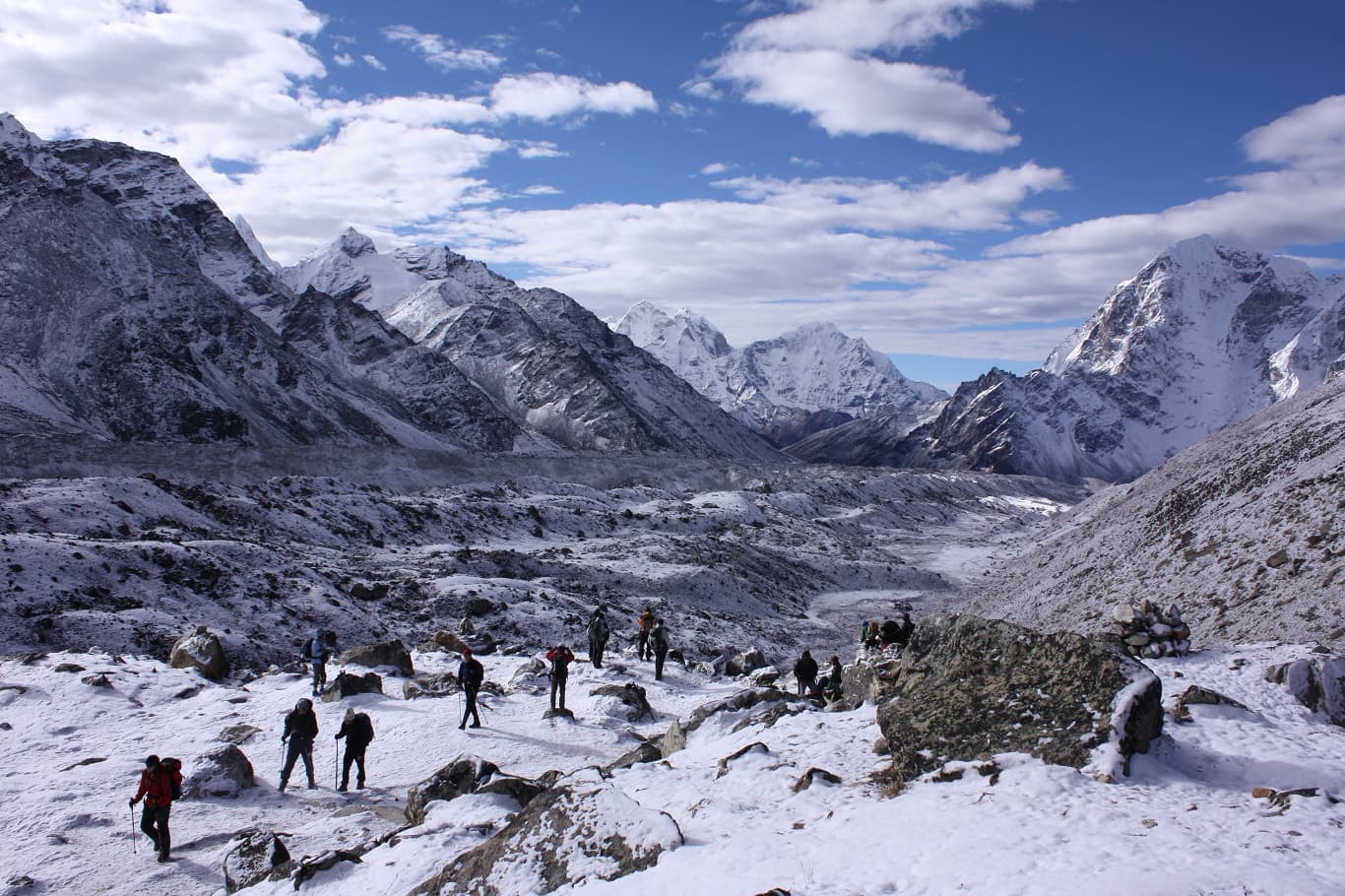
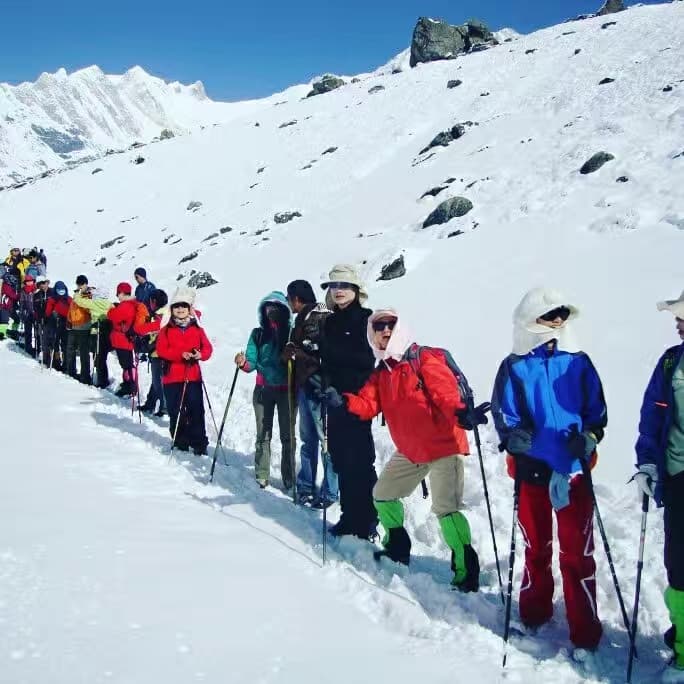
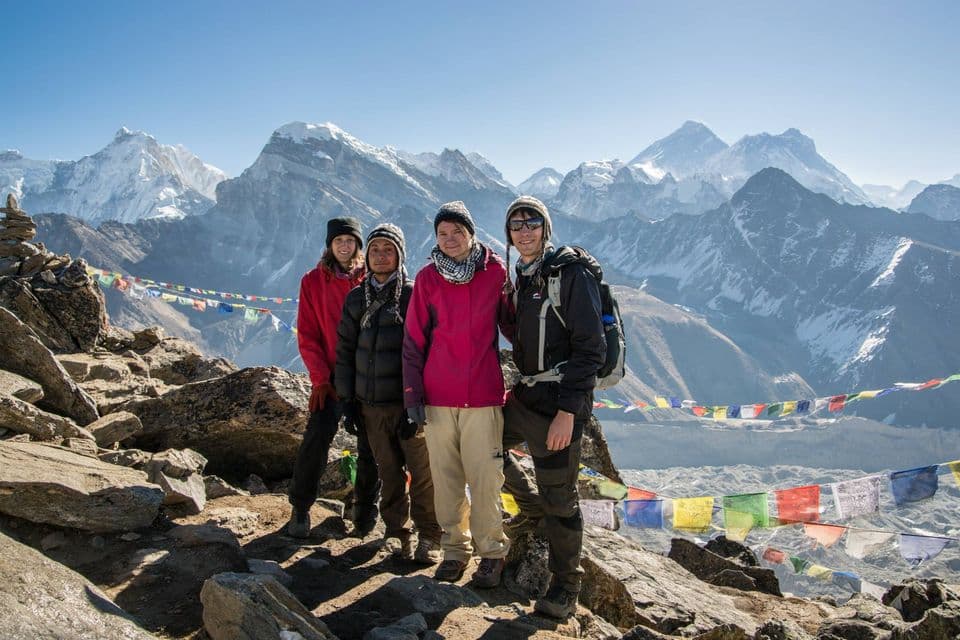
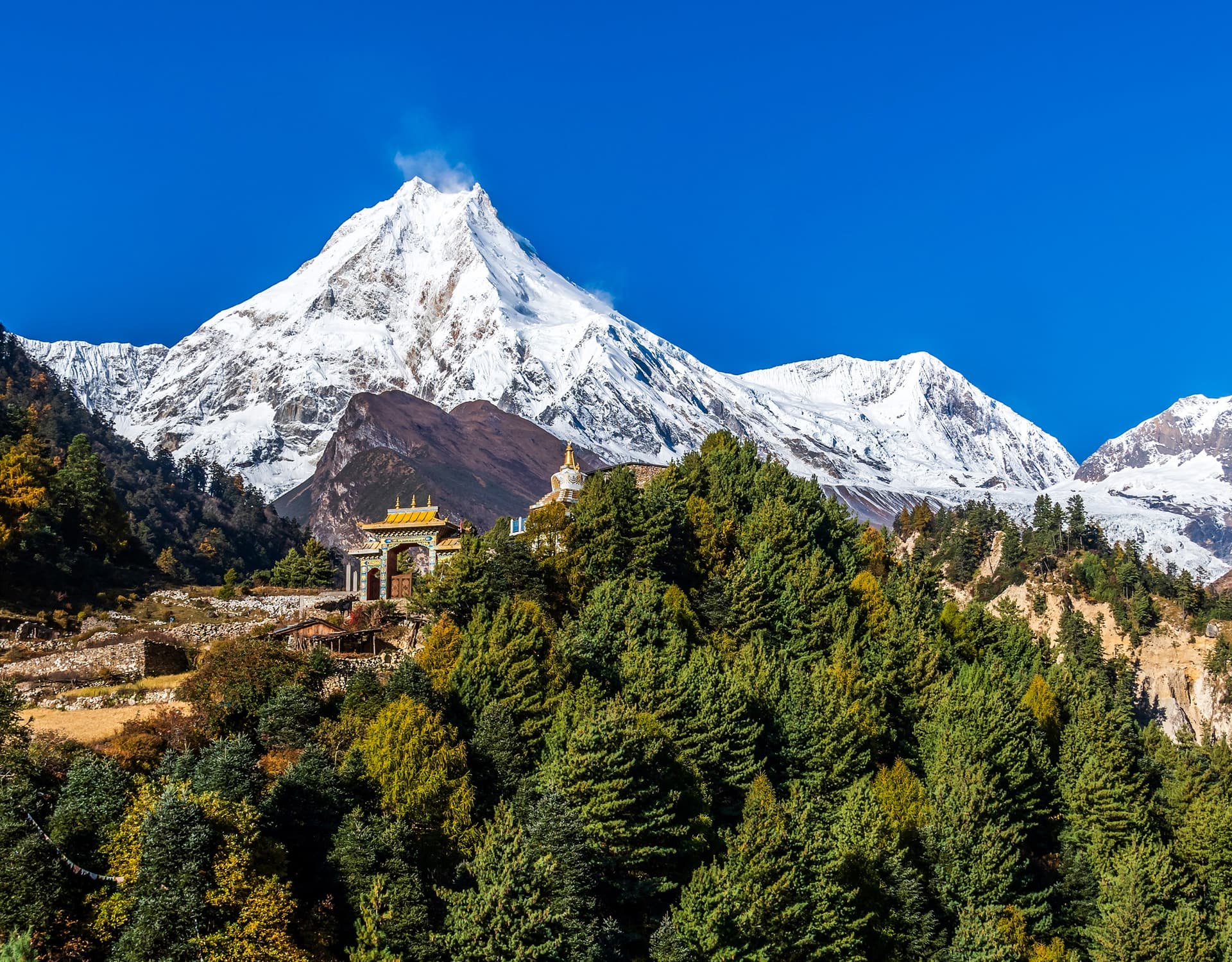
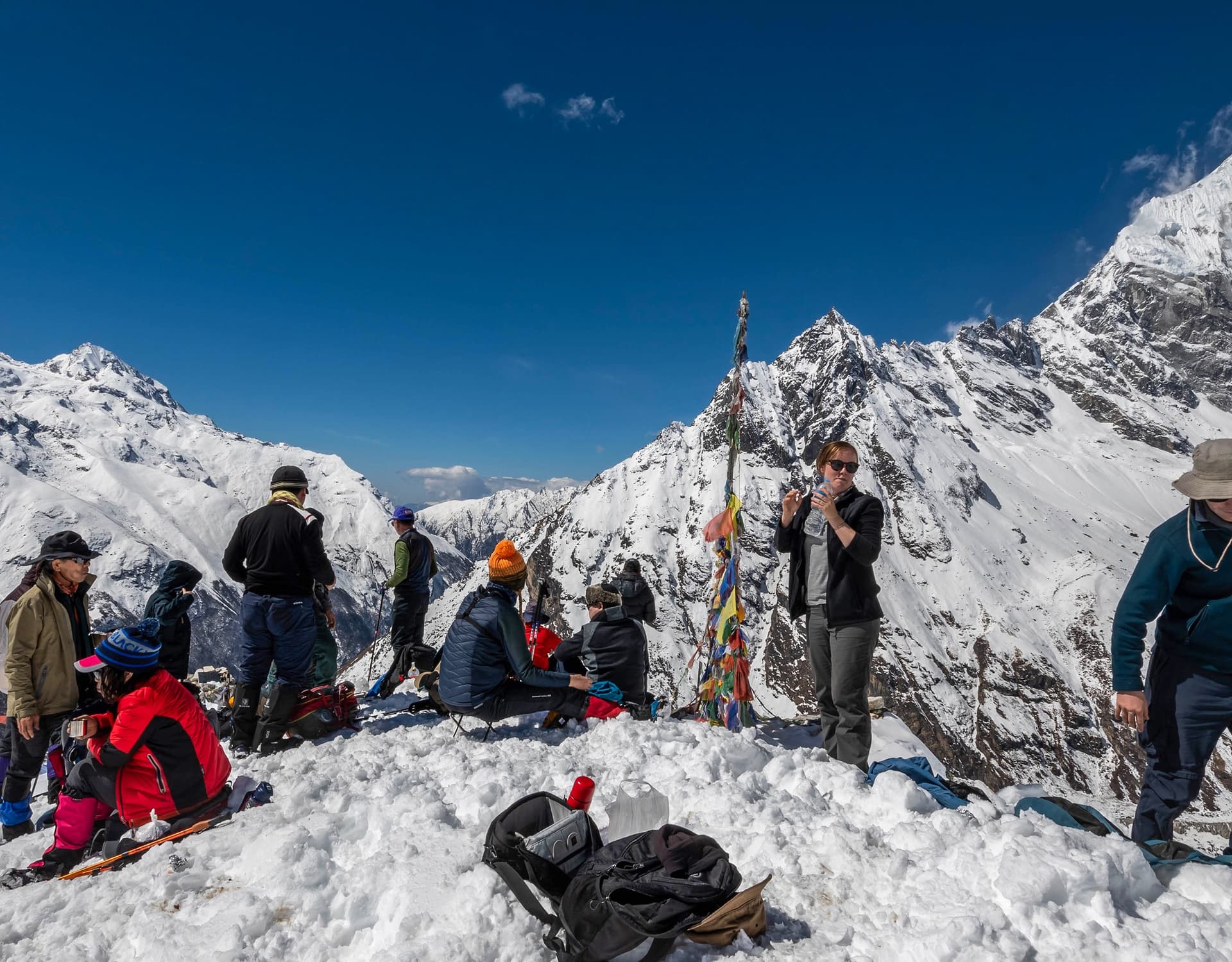
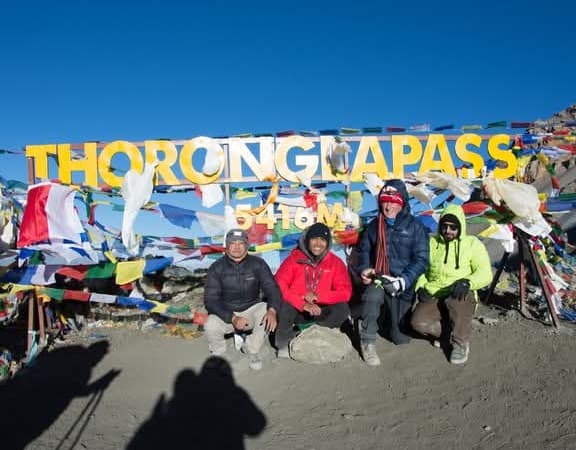
A combination of treks across the high passes of Everest, climbs to Kala Patthar and into the Gokyo Valley, and treks to Everest Base Camp offers the best-ever, purest experience of the great mountain Everest. If that is still not enough, the trek will allow one to visit the more remote locations of Nangpa La Valley, the Sherpa village of Marlung, and the monastery village of Thame for a break from overcrowded paths.
The expedition begins with a 35-minute flight from Kathmandu to Lukla. The trek will start in Phakding and include the unofficial capital of the Sherpas, Namche Bazaar, Thame Monastery, Lungdeng, and Marlung.
DestinationNepal
Duration18 days
GradeExtreme and Adventure
ActivitiesTrekking
AccommodationTea-House and Lodge
Max. Elevation5555m.
Group SizeMin. 1 Pax
Vehicleprivate vehicles
MealsBreakfast, Lunch, and Dinner during The Trek
Overview
Everest High Pass Trek is located in eastern Nepal. Home to the tallest peak in the world, the Solukhumbu district, popularly known as the Everest region, has an almost mystical status in the world of trekking. With its towering 8,000 peaks, colossal glaciers, and icy, emerald lakes, it is the accurate representation of the snowy wonderland of your dreams. Perhaps the most famous trekking region in the world, the Everest region annually welcomes tens of thousands of trekkers who flock there for grandstand views of Everest and its neighbours, Nuptse and Lhotse. One such trek in the region popular for its enthralling adventure is the Everest High Passes Trek. Hailed as one of the finest treks in the region, the Everest Three High Passes Trek is truly a challenging and famed trekking trail that will take you to the absolute best of the Everest region. During the 19-day-long trek, you will be able to visit landmarks like the famous Everest base camp and Chola pass to Gokyo Valley and its magical lakes, and Gokyo Ri, renowned for its panoramic view of the eastern mountains. However, the highlight of the journey is crossing three high-adrenaline passes on Everest. The Trek itinerary involves crossing three very high passes: Khongma-La Pass (5535m), Chola-La Pass (5368m), and Renjo La Pass (5338m), which packs in a good chunk of adventure for thrill-seekers. Trip Highlights
Trekking over three high and scenic passes of the Everest area.
Amazing scenery throughout the trek.
Visiting traditional villages enriched with old culture and religion.
Home of the Highlanders, the Sherpa of Nepal Himalaya.
Into the tranquil woodland of beautiful rhododendrons, pines, and birch trees.
Everest high passes trek, coupled with ascents to Kala Patthar and the Gokyo region, and the exploration of Everest base camp, provides the ultimate and most wholesome Everest experience in the Khumbu region. If that’s not enough, the trek will also take you to less-trodden and remote corners like Nangpa La Valley, the Sherpa village of Marlung, and the monastery village of Thame, which provide a change from often trekker-packed trails. We commence our journey with a scenic 35-minute flight from Kathmandu to Lukla. The trek begins in Phakding and includes famous destinations such as the unofficial Sherpa capital of Namche Bazaar, the ancient Thame Monastery, and the less-frequented villages of Lungdeng and Marlung. Since we will also trek through parts of Sagarmatha National Park, we will witness the changing vegetation and topography, as well as the region's rich flora and fauna. All three passes we will cross during the trek have their own challenges and rewards, which make the experience rich. From Renjo La Pass, we can have surreal views of the Gokyo village and its beautiful cobalt-blue lakes. From the top of Tsho-La Pass, we can have fantastic views of the Ngozumpa Glacier and Everest Base Camp. Finally, the top of Kongma La Pass offers majestic views of the spectacular Mt. AmaDablam, Mt. Thamserku, and Mt. Kongtega, among others. The surroundings of the Everest High Passes Trek are speckled and iconic – the trails and accommodations range from the time-worn classic paths of the Khumbu to the meticulous, less-frequented high passes of Everest. This is the perfect trek choice for you if you are looking for a one-of-a-kind trekking adventure at the highest elevations in the world.
Itinerary of Everest High Passes Trek - 18 days
Hello and Namaste! Today, you'll arrive in Kathmandu, the vivacious capital of Nepal, to start your 18-day Everest High Pass Trek. As soon as you get off the airport, you'll be greeted by the majestic scenery and the energetic atmosphere of the city. Once you have completed the necessary customs and immigration processes, a representative from our company will be ready to greet you.
You will then be transported from the airport to your accommodation in Kathmandu so you can relax after your journey. While in the city, the hotel will provide a comfortable environment. You'll get an opportunity to get to know your fellow trekkers and your trekking guide later in the evening. Your guide will provide a full pre-trip briefing outlining the environment, climate, and sights to expect along the journey. By addressing any concerns you may have, you can ensure you are prepared for the experience ahead. You will also have your trekking supplies ready following the briefing.
After the preparation, you may stroll through Kathmandu's busy streets and explore the city's cultural history. Enjoy the bustling atmosphere, indulge in mouthwatering Nepalese cuisine, and discover Kathmandu's unique blend of traditional practices and modern ideas. Finally, settle into your lodging and have a full night's sleep in order to prepare for the exciting trip that lies ahead of you.
Max. Elevation:1350 M
Early in the morning, you'll leave Kathmandu for your first day of adventure. After a hearty breakfast, a representative from your trekking agency will pick you up from the hotel and drive you to the domestic terminal of Tribhuvan International Airport. Prepare yourself for a thrilling journey as you board a small aircraft for Lukla. Throughout the quick but lovely 35-minute trip, you'll be treated to panoramic views of the spectacular Himalayan mountains and the lovely farmland below.
The real experience starts as soon as you land at Lukla, the entry point to the Everest region. Spend a minute breathing in the fresh air and feel the excitement of beginning your adventure. You'll start your journey to Three Passes with a stunning trek from Lukla to Phakding. The walk winds past scenic Sherpa villages, lush forests, and the shimmering Dudh Koshi River. You will stop for a warm lunch and some relaxation at a lovely tea house or lodge in Phakding before continuing your trip. Once you get to Phakding, you may settle into a cosy tea house or lodge for a hearty lunch and some well-earned rest before resuming your walk the next day.
Max. Elevation:2846 M
Duration:30 to 40 Min
Distance:138 KM
We'll wake up in Phakding today and eat an excellent breakfast to get us ready for the day. Starting your trip from Phakding to Namche Bazaar will lead you on an exciting journey through stunning surroundings. The path follows the flow of the DudhKoshi River, crossing a series of suspension bridges adorned with colourful prayer flags fluttering in the high air. As you climb, you'll pass through picturesque Sherpa villages, catch a glimpse of far-off snow-capped summits, and pass through lush rhododendron and pine forests.
The beautiful views that emerge en route are the reward for the enjoyable effort of the uniform advance. After hours of walking, you will reach the thriving town of Namche Bazaar, which is encircled by powerful mountains. You may relax and get ready for the days of excitement ahead by relaxing in your Namche Bazaar lodge.
Max. Elevation:3440 M
Duration:5 Hours
Distance:10.5 Km
Today will be a well-deserved day of leisure in the thriving town of Namche Bazaar. To help your body acclimate to the high altitude and lower oxygen levels, acclimatisation is essential on this day. As an alternative to hiking, you can explore Namche Bazaar and take part in an excursion to aid your acclimatisation. Discover the vibrant shops and teahouses that line the narrow alleyways. Here, you can shop and get to know the friendly locals.
Further, don't miss the chance to visit the Sherpa Museum, where you can learn about the region's rich cultural heritage and its trekking history. Also, take an afternoon trip to the Everest View Hotel, which offers amazing views of Everest and the other Himalayan giants. This journey not only offers stunning vistas but also helps acclimate you as you slowly ascend to higher altitudes. After a day of sightseeing and adaptation, head back to Namche Bazaar so you can unwind, recover, and spend the evening in one of the lodges.
Max. Elevation:3880 M
Duration:4 Hours
Distance:5.4 KM
Our journey today will be brief and soothing as we head to Thame village, the hometown of several renowned Sherpa mountaineers, including Tenzing Norgay Sherpa, Kami Rita Sherpa, and Apa Sherpa. Following the Bhote Koshi River upstream, the walk will pass through a picturesque forest of rhododendrons, oaks, and pines, and small farming villages, eventually reaching Thamo village. From here, the path leads to a little bridge with intriguing Buddhist murals on the rock wall. It takes an hour to walk from the bridge to Thame village, where we will spend the night. This area is home to Thame Dechen Chokhorling Monastery, one of the region's ancient monasteries.
Max. Elevation:3880 M
Duration:4 Hours
Distance:8.5 KM
Today's journey will be difficult but highly exciting because of the alpine region's rising elevation. We will begin the hike by visiting the Thame Monastery before continuing upstream along the Bhote Koshi River to Marlung Village. From this point on, most of the route will pass through the towns of Thyangmoche and Hungmo, which are surrounded by pastureland and a sparsely populated natural environment. After finally travelling through a less-vegetated area, we arrived in Marlung for an overnight halt.
Max. Elevation:4130 m
Duration:4 Hours
Today's trip to Lungden will pass through historic Himalayan settlements that are set against the best natural scenery. Before China occupied Tibet, the traditional salt route between Nepal and Tibet was open here. As before, we'll take a northeastern route to Lungdeng village. It will take us only a few hours to reach the day's target destination. You may get a great view of the region's high mountains from here. Overnight at the lodge in Lungdeng village.
Max. Elevation:4600 M
Duration:4 Hours
Distance:5 km
As the first pass of our high-altitude trekking approaches from Lungden, our true adventure begins. The road to the pass normally goes to a frozen lake below Renjo La pass. This route crosses the Renjo La pass at an elevation of 5,465 meters and offers breathtaking views of Mount Everest, Lhotse, Cholatse, and Taboche. You will be rewarded with an amazing view of Mount Cho-Oyu and other tall nearby peaks once you reach the top. As the glittering mountains and fresh mountain air surround you, you'll almost forget you were trekking. After trekking for two to three hours, you reach Gokyo Village, a small but beautiful place where you will spend the night.
Max. Elevation:4790 M
Duration:7 Hours
Distance:11 KM
We'll get up early and travel to Gokyo Ri at 5,357 meters to see the dawn over enormous snow-capped mountains. As you work your way to the highest point of this incredible journey highest point, you will be rewarded with a breathtaking view of the world's tallest mountains, including Mt. Cho Oyo, Mt. Gyachung Kang, Mt. Everest, Mt. Lhotse, Mt. Cholatse, Mt. Taweche, and Mt. Makalu. After spending a good deal of time up here on Gokyo Ri, you'll descend steeply to Gokyo and continue walking for a few hours. You will cross the glacier moraines after lunch to reach Thangnag, a small village where you will spend the night. This community is located at the foot of the Thso-La Pass and the Ngozumba Glacier.
Max. Elevation:4750 M
Duration:4 hours
Distance:6 KM
Today will be one of the most intense days of the trip for you, as you will cross Chola Pass. After enjoying breakfast, you will follow the route to a steep hill where you will cross a glacier on its eastern side. Although reaching the top of the pass, at a whopping 5,367 meters above sea level, will be challenging, the views of the mountains and the Cholatse Glacier will undoubtedly leave you in awe. After spending a significant amount of time here, delicately make your way to a tiny pond on the way to Dzongla for an overnight stop.
Max. Elevation:4850 M
Duration:7 Hours
After the arduous day of traversing Tshola Pass, the trek from Dzongla to Lobuche will be simple. You will take a trail that descends to Chola Lake and yak grazing fields this morning. To get to Lobuche from here, we keep travelling along the curved pathways. As you go, you will be able to view Everest Base Camp on one side and the Khumbu Glacier with its floating ice debris on the other. As we move closer to the foothills of Mount Everest, the trail becomes more enticing. A panorama of numerous snowy peaks, including Mount Pumori, Mount Lingtren, and Mount Nuptse, is visible from this village. Overnight at the lodge in Lobuche village.
Max. Elevation:4900 M
Duration:5 Hours
Today in Gorak Shep, you'll get up early, enjoy a filling breakfast, and prepare for a day of adventure you will never forget. You will reach Everest Base Camp by walking through rocky terrain and glacial moraines. As you climb, you'll be greeted by breathtaking views of the Khumbu Icefall and snow-capped mountains. Allow your body to acclimate to the high altitude as you take in the beauty of the surroundings. After a challenging yet rewarding journey, you will reach Everest Base Camp, a historic destination that embodies human grit and the triumph of mountaineering. Spend some time wandering the area, taking photographs, and admiring the spectacular sight of the enormous Everest. Follow your route towards Gorak Shep, where you may spend the night, take a well-earned rest, and talk with other trekkers and reflect on your incredible accomplishment.
Max. Elevation:5364 M
Duration:7 Hours
You will arrive at the high point of this entire journey today, making it yet another intriguing day of your quest. You're going to have a difficult climb as you ascend to Kalapathar from Gorakshep and descend to Lobuche village. You reach Kala Patthar after several hours of a challenging trek and narrow paths. From here, there are a further 50 meters of rough, hard elevation to reach the summit of Main Kala Pattar (5545m). The dawn atop the highest peaks in the world, including Mount Everest, Lhotse, Nuptse, AmaDablam, Thamserku, Kangtega, KusumKanguru, Changtse, Everest Base Camp, and the Khumbu Icefall, is breathtaking from this place.
You might be able to touch Mount Pumori and see Mount Everest up close from this vantage point. The fantasy has finally come true, and the descent will start after returning to Gorakshep for breakfast. For an overnight stay, you'll again trek back to Lobuche from the same route. The journey gives you the chance to view the surroundings from a completely different viewpoint as you bid farewell to the high heights and return to the settlement.
Max. Elevation:5555 M
Duration:7 Hours
The final day of your adventure, as you cross the Kongma La, is today. Because the walk's close to the Khumbu Glacier and Moraine, you will need to start your day well before sunrise. Given that the trek will take you to the Khumbu Glacier and Moraine, you should be careful of the misleading ice path along the route. From this point on, you will travel a rough path beneath Kongma-la and stop to rest briefly. After an adequate rest, cross the Kongma-la pass, which is encircled by the enormous Nuptse wall, Mehara Peak, and Pokalde Peak at a height of 5,535 meters.
After passing through the pass, take the trail that leads to ImjaTse's vast valley for spectacular views of Island Peak, AmaDablam, and other nearby peaks. After arriving in Imjatse Valley, you will need to continue walking for a few hours to get to Dingboche Village for an overnight stay.
Max. Elevation:4410 M
Duration:8 Hours
The route leads you past little Sherpa communities like Somare and Pangboche as you begin your descent today. The surroundings are stunning. The route leads you past little Sherpa communities like Somare and Pangboche as you begin your descent today. The surroundings are stunning. Once you have arrived in Pangboche, you will continue ascending until you reach Debuche, where the path is almost level. From here, you will enter the river and proceed through magnificent woodland.
After a brief hike from here, you will reach Tengboche (3867 m), a famous Buddhist monastery with a mesmerising view of Mt. Everest. Finally, you will descend to PhunkiThang, cross the river, and then begin the difficult ascent to Namche Bazaar, which will take you approximately an hour. Overnight at the lodge in Namche Bazaar.
Max. Elevation:3440 M
Duration:6 Hours
Your last stroll of this wonderful adventure will take you back to Dudh Koshi Valley. You will reach the national park's entrance/exit gate after repeatedly crossing the same river, and after a few more hours of strolling, you will continue to Monjo village. In total, you will finish your 45-minute hike by taking the same route back and passing through the towns of Phakding, Benkar, Ghat, and Cheplung. You will reach Lukla at about midday after travelling for around 6 hours. After that, you'll have plenty of time to visit the town of Lukla. Overnight at the lodge in Lukla.
Max. Elevation:2846 M
Duration:7 Hourd
Distance:13.5 KM
Sadly, today marks the conclusion of your stay in Nepal. After spending a memorable and amazing time in the mountains of the Himalayas with the superb support of Team Himalaya guides and staff, you will say goodbye to us. Three hours before your trip, a courteous representative from our company will transport you to the terminal at Kathmandu International Airport. Though we have parted ways with you now, we are likely to bump into each other again in the future.
Max. Elevation:1350 M
Duration:3o to 40 Min
Distance:138 KM
If the provided schedule isn't suitable for you, we can create personalized travel arrangements.
A "standard package" for the Everest High Passes Trek is a challenging and rewarding option for experienced trekkers. This package is all-inclusive and is designed to cover the core components of the trek, which typically lasts from 17 to 21 days.
Book your own private small group trip
**Discounts are determined exclusively by the size of your group. We do not add additional members to your group.
June 2026
Su
Mo
Tu
We
Th
Fr
Sa
31
1
2
3
4
5
6
7
8
9
10
11
12
13
14
15
16
17
18
19
20
21
22
23
24
25
26
27
28
29
30
1
2
3
4
Sold out dates
US $0US $0 per person (based on 1 people)
Cost Includes
Pickups and drops from hotels and airports.
3-star category hotel in Kathmandu and tea houses \ lodges during the trek.
Breakfast in Kathmandu.
All meals during the trek. (BREAKFAST, LUNCH, AND DINNER)
All necessary paperwork and National Park permits \TIMS.
Domestic flights (ktm–lukla–ktm) and airport departure taxes (allowed to carry a maximum of 15 Kg Luggage), altogether including both backpack and day bag.
All our government taxes. Vat, tourist service charges.
An experienced, knowledgeable, helpful, friendly, and English-speaking guide.
Food, drinks. Accommodation, insurance, salary, equipment, transportation, and medicine are all included.
Down jacket and sleeping bag by Team Himalaya (which need to be returned after the trek).
Group medical supplies (a first aid kit will be available).
Trip achievement appreciation certificate.
Provide a pulse oximeter to monitor blood oxygen saturation at high altitudes.
Farewell dinner in Kathmandu at an authentic Nepalese restaurant with cultural programs.
Water purification tablets for safe drinking water.
Official expense.
Travel and rescue arrangements.
Fresh fruit is seasonal during the trip.
Everest three passes trip map.
Cost Excludes
Lunch and dinner in Kathmandu.
Personal expenses (phone calls, laundry, Hot and cold drinks, battery recharge, extra porter, bottle or boiled water, shower, etc.)
International airfare to and from Kathmandu.
Travel and rescue insurance.
Excess baggage charge.
Extra night accommodation in Kathmandu because of early, late, or early return from the mountain (due to any reason) than the scheduled.
Tips for trekking staff and drivers (tipping is expected).
Route Map
Loading map...
Know Before you Go
Best Time to Go
The most favourable seasons for the Everest High Passes Trek are spring (March to May) and autumn (September to November). During these months, the skies are generally clear, the weather is stable, and the mountain views are spectacular. Spring brings blooming rhododendrons and vibrant landscapes, while autumn offers crisp air and excellent visibility. Winter trekking is possible, but it requires preparation for cold temperatures and potential snowfall. In contrast, the monsoon season (June to August) often brings heavy rains and muddy trails. Tips: Start planning early for spring and autumn, as these are peak trekking seasons with high demand for flights and lodges. Booking in advance ensures smoother logistics and better accommodation choices.
Difficulty
The Everest High Passes Trek is considered challenging. Crossing three high-altitude passes (Kongma La, Cho La, and Renjo La), all above 5,000 meters, requires good physical fitness, stamina, and prior trekking experience. Daily walking ranges from 5 to 7 hours, often on steep, rocky, or icy terrain. It is a rewarding adventure suited to experienced trekkers comfortable with demanding trails and thin air at high altitudes. Tips: Prepare with endurance training, stair climbing, and practice hikes carrying a backpack before starting this trek. Mental preparation and patience are equally important as physical readiness.
Accommodation and Food
Along the trekking route, accommodation is provided in teahouses and lodges. These are basic but comfortable, offering twin-sharing rooms, blankets, and communal dining areas. Meals are usually traditional Nepali dishes such as dal bhat, momos, and thukpa, alongside international options like pasta, noodles, Pizza, and pancakes. In higher altitudes, the variety of food decreases, and prices rise due to transportation challenges. Tips: Carry some snacks or instant foods to supplement meals, especially for energy during long high-pass days. A thermos for hot drinks is also helpful in cold weather.
Permits
To trek in this region, you need two permits: the Sagarmatha National Park Entry Permit and the Khumbu Pasang Lhamu Rural Municipality Permit. These can be arranged in Kathmandu or on the trail itself, usually through your trekking agency. Carry extra passport-sized photos and a photocopy of your passport for these formalities. Tips: Keep permits safe and accessible, as they will be checked at multiple checkpoints along the trek. Store them in a waterproof pouch to protect them from damage.
Cultural and History / Monasteries
The trek offers deep cultural immersion into the Sherpa community, known for its mountaineering legacy and Buddhist traditions. Along the route, you can visit monasteries such as Thame Monastery and Tengboche Monastery, both important centres of spirituality in the Khumbu region. Prayer flags, mani walls, and chortens enrich the cultural atmosphere of the trails. These elements make the trek not only adventurous but also spiritually fulfilling. Tips: Always walk clockwise around stupas and mani walls as a sign of respect to local traditions. Take time to observe rituals quietly to appreciate the cultural depth.
Acclimatisation / Altitude Sickness
The trek involves climbing to elevations above 5,500 meters, making acclimatisation essential. Rest days in Namche Bazaar and Gokyo are included to allow your body to adapt. Trekkers should ascend gradually, stay hydrated, avoid alcohol, and be aware of symptoms of Acute Mountain Sickness (AMS) such as headaches, nausea, and dizziness. Carrying Diamox or consulting with your guide about altitude precautions is highly recommended. Tips: Trek at a slow, steady pace and remember the golden rule: climb high, sleep low. Notify your guide immediately if you experience any serious AMS symptoms.
Equipment Packing List
A well-prepared packing list ensures comfort and safety. Essentials include:
Warm down jacket and layered clothing for varied temperatures
Sleeping bag rated for –15°C or lower
Waterproof trekking boots and trekking poles
Gloves, hats, neck gaiters, and thermal innerwear
Headlamp with extra batteries
Sunglasses with UV protection and high SPF sunscreen
Reusable water bottle or hydration bladder
Water purification tablets or a filter bottle
First-aid kit including AMS medication, bandages, and blister care
Power bank or solar charger
Snacks, energy gels, and dried fruits for long days
Lightweight slippers for evenings in teahouses
Waterproof backpack cover or dry bags
Personal toiletries and a quick-dry towel
Map, compass, or trekking app for navigation
Tips: Test your gear before the trek. Breaking in boots and adjusting your backpack in advance prevents discomfort on the trail.
Travel Insurance
Travel insurance is mandatory for the Everest High Passes Trek. It should cover high-altitude trekking (above 5,500 meters), medical emergencies, helicopter evacuation, accidents, and trip cancellations. Double-check the fine print of your insurance to ensure the Everest region trekking is specifically included. Having the right coverage provides peace of mind in such a remote region. Tips: Carry both digital and printed copies of your insurance policy and emergency contact details at all times. Share them with Us for safety.
Transportation
The trek begins with a domestic flight from Kathmandu or Ramechhap (Manthali) to Lukla, which takes about 30 to 40 minutes. Depending on the season and air traffic, flights may operate either directly from Kathmandu or from Manthali airport, which is a 4- to 5-hour drive from the capital. Ground transfers between airports and hotels are usually included in trek packages. Flight delays are common due to mountain weather. Tips: Always keep one or two buffer days in your schedule for flight cancellations or delays. Travel with flexibility in your itinerary.
Electricity and Communication
Electricity is available in most villages, but charging electronic devices often incurs a small fee. Internet access is limited; some lodges provide Wi-Fi through Everest Link cards, but the signal can be unreliable at high altitudes. Mobile networks work in lower areas but weaken as you ascend. A power bank or solar charger is strongly recommended. Tips: Store phones and batteries inside your sleeping bag at night to prevent them from draining quickly in the cold.
Drinking Water
Safe drinking water is essential. Bottled water is available, but it becomes more expensive at higher altitudes. To reduce waste, trekkers are encouraged to use water purification tablets, filters, or UV purifiers to treat tap or stream water. Most lodges also offer boiled water for a small fee. Carrying your own solution ensures both safety and sustainability. Tips: Hydrate frequently, even when you do not feel thirsty, to help prevent altitude sickness.
Guide and Porter
Hiring a licensed guide and porter is highly recommended for safety, navigation, and cultural insight. Guides share local knowledge, manage logistics, and handle emergencies. Porters help carry loads, allowing trekkers to conserve energy for high-altitude climbs. Trekking with their support not only eases the journey but also supports the local economy. Tips: Pack light and keep your porter’s load within 15 to 20 kg to ensure fair working conditions.
Flight from Kathmandu or Manthali Option
During peak trekking seasons, flights to Lukla often operate from Ramechhap (Manthali) Airport, about 130 km east of Kathmandu. This requires a road transfer of around 4 to 5 hours before the flight. In off-peak months, flights generally depart directly from Kathmandu. It is best to confirm the airport with your trekking company in advance to plan accordingly. Tips: If your flight is from Manthali, consider travelling there the night before to avoid early-morning road stress.
Health and Fitness Preparation
Physical and mental preparation are vital for this trek. Regular exercise, such as jogging, cycling, stair climbing, and long hikes, helps build stamina. Breathing exercises or yoga can also improve lung capacity for high altitudes. Mental resilience ensures you stay positive and motivated through challenges like fatigue or cold conditions. Tips: Begin training at least two to three months before the trek. Gradually increase the weight of your backpack during training hikes to simulate real conditions.
Responsible Trekking and Sustainability
Trekking in the Everest region comes with a responsibility to protect the environment. Trekkers are encouraged to carry reusable bottles, avoid plastic waste, and dispose of garbage properly. Supporting eco-friendly lodges and respecting wildlife helps maintain the fragile Himalayan ecosystem. Responsible trekking also includes respecting local customs and contributing to the local economy. Tips: Follow the principle of “leave no trace.” Dispose of all non-biodegradable waste and avoid overusing firewood to protect forests.
Trips Booking & Payment:
Dear Guests and Travellers to Nepal and other Himalayan destinations, please make sure that you have understood our Terms and Conditions after carefully reading the mutual contract and legal process, which will help maintain our long-term friendly relationship.
After selecting the trip of your choice from our varied programs and itineraries, the first step in the booking procedure is to fill out our booking form and send it upon completion, with a 20% deposit for entire Nepal Trips and Tibet & Bhutan trips, and a 40% non-refundable deposit.
Along with the completed form, you are required to email us a copy of your passport and flight Ticket with all details to the Kathmandu office at Team Himalaya ([email protected]).
Upon receiving your passport copy and details, the completed booking form, and your non-refundable deposit, we will proceed to send you a final affirmation receipt with acknowledgement.
All deposits are required for selected and chosen trips on a personal basis. We will inform you by email regarding the direct deposit procedure and details.
As per the booking and Trip money transfer, service charges of the respective banks may apply and should be paid at the time of deposit.
We will email you the details for making payments by credit card once you have filled out the Booking form.
We accept Visa or MasterCard only with a 4% surcharge added as a processing fee on credit cards and wire Transfers as a service charged by the Banks.
The Condition for clearing the remaining balance as per the trip booked is as follows:
The remaining due balance for all Nepal Trips should be paid and cleared upon arrival.
The remaining balance for other Himalayan countries like Bhutan and Tibet, as well as all multi-country tours, needs to be cleared within 35 days of your trip departure date.
Team Himalaya Treks & Expeditions (P) Ltd reserves the right to cancel your trip if the full amount is not paid on time.
In certain circumstances, we will accept your last-minute booking at least a week before the tour departure date for all trips; in this case, full payment is required.
02: How to pay your selected trip deposit:
Credit Card (Visa & Mastercard):
Please call us at 00977-9841824281 to pay over the phone.
Payment:
Please deposit by wire Transfer to Team Himalaya (P) Ltd and post it to the address below:
Company Address: Team Himalaya (P) Ltd
Bank Transfer:
Bank Address: Himalayan Bank Limited.
Bank address: Tridevi Marg, Thamel, Kathmandu
Account No:01908416120019.
Account Type: Foreign Currency (USD)
Bank SWIFT code: HIMANPKA.
03: Refund & Cancellation:
No refund will be made by the company for the 20% deposit in the event of cancellation of your trip for any reason.
After paying the full amount for any selected trip, you are entitled to a refund if you cancel your trip by informing us as soon as possible, subject to the company's rules and regulations.
Still, the cancellation charge is invoiced to you. Written notification of your cancellation is required to cancel any trip. Nevertheless, you have imposed a cancellation charge as advised below:-
60 days or more deposit retained 45 – 50 days before departure 50% 30 – 40 days before departure, 75% 20 days before departure, 100%
04: Extra Supplement Charge:
Team Himalaya Treks & Expeditions (P) Ltd tour/trek packages, rooms, or tents are provided on a twin-sharing basis. Thus, a single room supplement charge will be imposed as extra for the client who does not have another tour participant to share a room/tent with. It also applies to clients who need a single supplement in tents/rooms in a hotel or lodge.
05: Early return from any Tours or Treks:
No refund will be entertained for clients returning early from our trips due to personal, domestic/medical, or other personal problems, regardless of any unused portions of the itinerary.
06: Amendment in Trip Cost:
Team Himalaya Treks & Expeditions (P) Ltd. reserves the right to revise or change the trip costing rate posted on our website, under any circumstances, or on the pressure of various external factors beyond our control, for instance, changes in exchange rate, government action, etc. inflation, however assuring that we will put our effort as much possible to keep the present cost rate as it is.
07: Unforeseen Circumstances:
If the company has to cancel the trip due to unforeseen circumstances such as natural disasters, political conflict, unfavourable weather, or trail or road closures, we will refer you to an alternative trip of a similar type and standard.
Even if this doesn’t suit your likes and interests, all trip prices you paid to our company will be refunded, with an administration and trip arrangement charge of 15 to 20%, depending on the trip chosen.
Please note that any other expenses incurred by you as a result of this booking are entirely your responsibility.
08: Travel / Medical Insurance:
We strongly recommend that all booking Clients acquire Travel and Medical Insurance as a compulsory requirement for all our tours, trekking, and climbing trips. It should include adequate protection for tour/trekking/climbing/rafting or any other adventure sports, with a duration that covers personal injury, death, medical expenses, and repatriation or emergency evacuation expenses by any means of transportation, such as helicopter rescue or air ambulance, and adequate cover for baggage.
09: Health & Fitness:
All our Treks and Tours require good health and a level of fitness before you sign a booking with us. Clients should always check with their local Doctor or Physician regarding their health and fitness before departing for Himalayan destinations.
It’s solely the client’s responsibility to inform Team Himalaya Treks & Expeditions of any pre-existing medical condition or disability that might reasonably be expected to increase the risk of your required medical attention, which may affect your capability to travel on the trips booked with us.
Children and Elderly people:
An authorised guardian by the parents must accompany all travellers under the age of sixteen.
A person of more than 70 years of age, although in good health, still needs a partner, family member, or friend to accompany he/she.
If you have any queries regarding age and suitability, please contact us for further information.
10: Nepal / Tibet Visas & Passport Conditions:
All clients must have a valid passport with at least 6 months' validity from the return date of travel.
Nepal visas can be obtained from the Nepal Consulate or Embassy in your country or upon arrival at Kathmandu Tribhuvan International Airport. The costs of Nepalese visas are the sole responsibility of clients. All clients must have a valid passport with at least 6 months of validity from the return date. As you are unable to obtain visas for Tibet, you need to send your passport details to Team Himalaya Treks & Expeditions for visa applications to travel there. We require this information at least three weeks before departure.
11: Risk and Liabilities:
Team Himalaya's main concern is your safety and satisfaction, as well as our staff's welfare. We carry out all our assignments sincerely & honestly to ensure your holiday is hassle-free.
Nevertheless, unless stated otherwise, the trip may be changed due to uncertain and inherent circumstances such as landslides, roadblocks, floods, heavy snow, political unrest, flight cancellations, delayed arrivals, sickness, or accidents. Any extra cost incurred there is your responsibility and should be borne on the spot.
Flight Delay/Cancellation:
Possibility of domestic flight delay or postponement due to bad weather in the Himalayan regions, which sometimes happens, in particular around the Everest region, Lukla, Phaplu, Annapurna / Mustang / Manang region, Humde, Jomsom, and on the Far West Dolpa, Simikot, and Jumla region, and on the Far East sector, Tumlingtar, and Taplejung area.
When trekking in remote areas or as described above, especially during the off-season, you are strongly advised to reserve extra days to account for delays and avoid frustrating consequences.
In case of a flight cancellation, pre- or post-tour, you need to cover the accommodation and food costs yourself.
12: Our Responsible Adventure Policy:
Our entire tour/trekking guide representing Team Himalaya Treks & Expeditions deserves full authority during tours, trekking/rafting, or climbs.
Team Himalaya Treks & Expeditions will make every effort to ensure all our trips are comfortable and satisfactory, but one must understand that the Himalayan region, Third World, and Developing Countries like Nepal cannot afford many Western and highly developed facilities, sometimes depending on the area of travel. However, we will do our best to make your travel enjoyable and memorable with us.
Weather is another factor that directly impacts some trips; hence, patience in mind, enthusiasm, and proper preparation before heading out are a must.
Your personal belongings:
On any account, we’re not responsible for any loss or damage to your baggage/luggage or property, even when it is shouldered by our porters, ponies, or vehicles. Our trip escorts and guides will provide the necessary safety precautions so that this does not arise while you are with us.
Papers & Documents:
All necessary papers and documents should be presented in sequence, for example, to issue visas and permits. We’re not accountable if any trip formalities aren't completed in time before the trip departs due to missing essential papers and documents.
We had a very successful EBC trek in October 2024 because of Team Himalaya! Our guide, Raj, was very knowledgeable in all things Everest. He set us up in the best lodges where we had great service all along. He provided us with a superb porter, who also went above and beyond in taking care of us. Raj was very patient with us and was always looking out for our best interests. We would highly recommend Team Himalaya for any trek!
AAlec S1st Apr, 2024
Everest Base Camp Team Himalaya March 2024
We have just returned from a 14 day, 11 day hike with Raj and Durga from Team Himalaya to Everest Base Camp. From the minute we landed to our departure we were properly looked after and cared for by Team Himalaya. The trek to and from Everest Base Camp was wonderful, our guides and porters really looked after us and were incredibly knowledgeable. In Nepal things can go wrong especially with flights to and from Lukla but Team responded magnificently and found alternative solutions. If this is on your bucket list as ours and you are looking for a company to organise this with I would 100% recommend Raj.
JJourney379926937861st Apr, 2024
Reaching Everest Base Camp with TEAM HIMALAYA
If you are looking for an adventure of a lifetime, don’t hesitate! Choose TEAM HIMALAYA for your Everest Base Camp trek! We completed the EBC trek early November 2023 . My husband and I chose to do a private trek with Team Himalaya. Everything went smoothly with our guide Raj. His team and organization is outstanding! We could not have done it without him. Raj took care of everything throughout the trek and made sure we were well at all times, even providing us fresh fruits every night after dinner! We felt safe at all times , his experience and knowledge of the Himalayas helped us achieve our goal in reaching the EBC! His professionalism went beyond our expectations from our first contact with him for information until the very end. We will forever remember this expedition and gained a friend in our guide Raj!
eevanhH6577DL13th May, 2023
Incredible Experience by evan
It was an incredible experience being surrounded by the towering Annapurna Himalayas. This memorable trek through Nepal offered the best scenic views and stunning landscapes. Despite being surprised at how quickly the trek ended, the daily walks were filled with dramatic views that left a lasting impression.
I highly recommend this adventure, as it is one of the best base camp treks in the Himalayas with minimal risk of altitude sickness. Although there were steep ups and downs that were tiring on some days, the breathtaking views made it all worth it. This was easily the most exciting trek I have ever experienced.
I want to thank Team Himalayas and Raj for providing exceptional service with their expert guide and staff.
Frequently Asked Questions About the Everest High Passes Trek
When is the best time to do the Everest High Passes Trek?
The most favourable months are spring (March to May) and autumn (September to November). These months provide clear skies, stable weather, and excellent mountain views.
Can I trek during winter or monsoon?
Yes, but winter requires preparation for extreme cold and snow, while the monsoon season brings heavy rain, muddy trails, and reduced visibility.
How difficult is the Everest High Passes Trek?
It is a challenging trek involving three passes over 5,000 meters (Kongma La, Cho La, and Renjo La). Good physical fitness, stamina, and prior trekking experience are necessary.
How many hours do we walk each day?
On average, trekkers walk 5-7 hours daily, often on steep, rocky, or icy terrain.
Do I need trekking experience for this trek?
Yes, prior high-altitude trekking experience is highly recommended due to the route's difficulty.
What type of accommodation is available?
Teahouses and lodges provide basic but comfortable twin-sharing rooms with communal dining areas.
What food options are available on the trek?
Meals include Nepali staples such as dal bhat, momos, and thukpa, as well as pasta, noodles, and pancakes. Choices decrease at higher altitudes.
What trekking permits are required?
You need the Sagarmatha National Park Entry Permit and the Khumbu Pasang Lhamu Rural Municipality Permit.
Where can I get these permits?
Permits can be arranged in Kathmandu, at Lukla entry checkpoints or through a trekking agency.
What is altitude sickness, and how can I prevent it?
Altitude sickness occurs at high elevations due to low oxygen. Prevent it by ascending gradually, staying hydrated, avoiding alcohol, and including acclimatisation days.
What are the acclimatisation stops on this trek?
Key acclimatisation days are usually spent at Namche Bazaar and Gokyo.
Do I need travel insurance?
Yes, insurance covering high-altitude trekking, medical emergencies, and helicopter evacuation is mandatory.
What should I pack for the trek?
Essential items include a down jacket, warm layers, trekking boots, a sleeping bag (–15°C), trekking poles, sunglasses, sunscreen, a first-aid kit, and water purification tools.
How can trekkers access the starting point of the journey?
The trek begins with a flight to Lukla, either from Kathmandu or Manthali (Ramechhap), depending on the season.
Are flight delays common?
Yes, Lukla flights often face delays due to unpredictable mountain weather. Keep buffer days in your schedule.
Is safe drinking water available?
Yes, but bottled water is expensive at high altitudes. Trekkers are encouraged to use purification tablets, filters, or boiled water provided by teahouses.
Should I hire a guide and porter?
Hiring a licensed guide and porter is highly recommended for safety, navigation, cultural insights, and load carrying.
What cultural highlights will I see on the trek?
You’ll encounter Sherpa traditions, monasteries like Tengboche and Thame, prayer flags, mani walls, and chortens along the trail.
How can I trek responsibly and sustainably?
Use reusable bottles, avoid plastic, carry out your waste, respect wildlife, support local businesses, and follow the “leave no trace” principle.
What level of fitness is required?
A good level of physical fitness is essential. Regular cardio, strength training, and long backpacking hikes before the trek help prepare your body for high-altitude walking.
Are there ATMs on the trekking route?
ATMs are available in Namche Bazaar and Lukla, but they are unreliable. It’s best to carry enough cash (Nepali Rupees) from Kathmandu.
Can I charge my devices during the trek?
Yes, most teahouses offer charging for a small fee. Carrying a power bank or solar charger is recommended, especially for higher altitudes where electricity is limited.
Do I need a visa for Nepal?
Yes, most travellers require a Nepal tourist visa, which can be obtained on arrival at Tribhuvan International Airport in Kathmandu or online through the e-visa system.