The longest-running festival of Nepal, Rato Machhindranath Jatra
Nepal is a beautiful, small country, but it is home to a long-established multicultural, multiethnic population. Nepal is a country of mountains, but it is also multicultural. Nepal is home to temples, or it is a country of temples. Hindus worship the crystal stone as an incarnation of God, so we have many cultural variations, traditions, festivals, local Jatra, and more that have been passed down since ancient times. In Nepal, there are 125 ethnic groups and 123 spoken languages, each with its own cultural aspects and beliefs. Every community has its own unique culture and traditions. Some of them are similar to other communities, but some are truly unique. The national festivals and cultural parts are the glories of Nepal. From where one can understand Nepal's prehistory and ancient culture.
Bisket Jatra, Buddha Jayanti, Ghodejatra, Mahashivaratri, Holi, Machhindranath Jatra, Krishnajanmaashtami, Teej, Gai Jatra, Indra Jatra, Dashain, Tihar, Chhath, Lhosar, and Maghesakranti are the major festivals of Nepal. Each festival has important meanings and links to myths and legends. Every festival in Nepal has legends and stories behind it. Probably, there are some temples or festivals without any traditional myths and legends. Among them, the Rato Machhindranath festival is associated with rain in the Kathmandu Valley. The Rato Machhindranath festival is one of them and is celebrated in Nepal every year in the month of Jeshtha (May-June) according to Nepal's lunar calendar. Local Newar people called it Bhotejatra, Jawalajatra, and Pwankalan Jatra. Normally, this festival marks the onset of the rains for crops. Nepal is an agricultural country, so without rain or irrigation, crops will not do well, and there will be no good harvest. Normally, June and July mark the start of planting in Nepal, with rice, millet, and many other crops sown for production.
Summer is the main season for planting seeds for production in Nepal. So the Ratomachhindranath jatra festival is associated with rain in the Kathmandu Valley. Once upon a time, the people of Kathmandu were suffering from drought, and the king and local people worshipped the God Ratomachhindranath, who then brought more rain for agriculture. Since that period, the Ratomachhindranath festival has been dedicated to the rain god of the Kathmandu Valley. This festival, celebrated in Kathmandu, marks one of the year's longest days. Normally, it is celebrated for 14 days across Kathmandu, Bhaktapur, and Patan. This festival is celebrated in the hope of bringing rain for crops and a good harvest. It will finish when they show the Bhoto(bejewelled vest) at Jawalakhel. Showing the Bhoto will end for the next year.
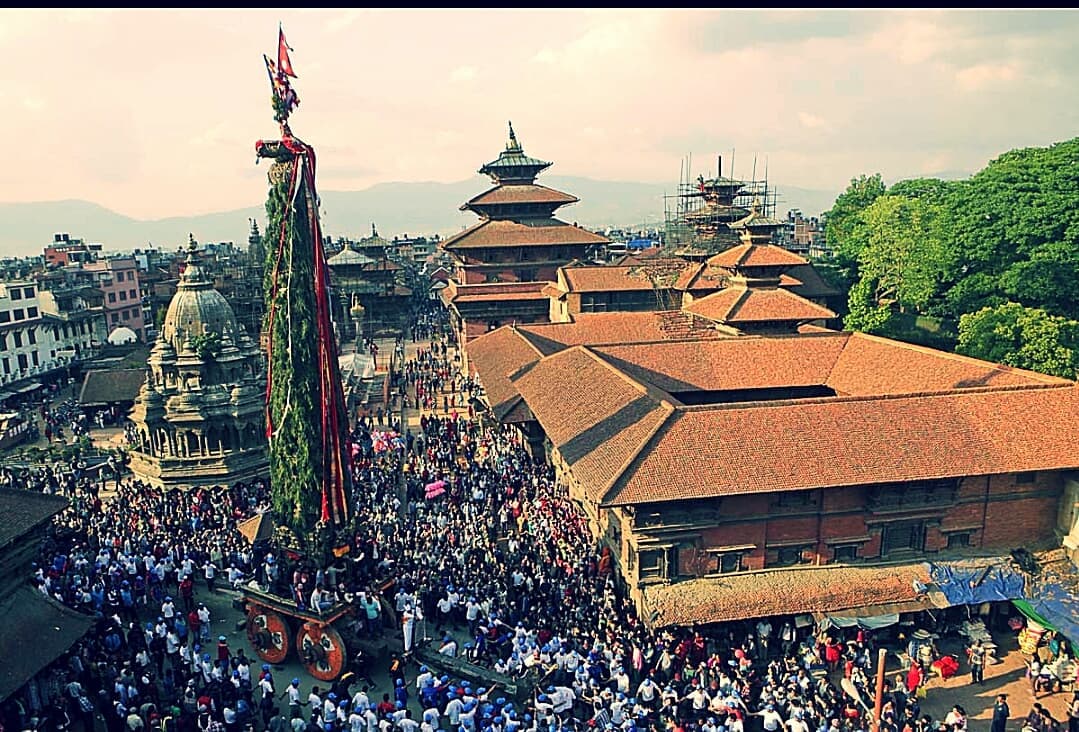
In these festivals, the main attractions are pulling a 32-foot-long chariot of Rato Machhindranath from different parts of Patan and displaying the Bhoto (bejewelled vest), a piece of clothing adorned with a diamond, to the public at Jawalakhel, Lalitpur. To celebrate this festival, the local Newar people of Kathmandu build a huge 32-foot-high chariot made of wood, bamboo, and cane, with two large wooden wheels. With the help of the ropes, they pull the huge Chariot of Rato Machhindranath to different places in Patan. First, they pull from the Pulchok through Gabahal, Mangalbazar, Hakha, Sundhara, Chakrabahal, and Lagankhel, and finally, they keep at Jawalakhel near Patan Durbar Square. From where do they decide when to show the Bhoto (bejewelled vest)? To mark this festival, the head of state and the Kumari (living Goddess) attend.
Why are they displaying the Bhoto every year?
The question may arise: so legends tell, once upon a time, there was a Newar farmer or peasant who worked hard for a living or for survival. Once, he received a bejewelled vest from the Kornatoka ( god of the snake) after helping him. That present he had kept safely in his house. But one day his Bhoto was stolen from his home, and he became so sad. Once, while participating in the Rato Machhindra Jatra, he saw a man with his stolen Bhoto. He was confused, and there was a dispute about this. Finally, the head of the state declared that until the real person presented evidence to collect this Bhoto, it would belong to the priest of Rato Machhindranath in Bungamati. Since then, they have shown the Bhoto or cloth attached to the diamonds to the public every year to mark this festival. So, since the 6th- or 7th-century reign of the Lichchhavi king Narendra Dev. Present-day, it is a major festival in Kathmandu. During this festival, all government offices remain closed in celebration of Ratomachhindra Jatra.
The Rato Macchindranath festivals reflect the culture, history, and civilisation of the Kathmandu Valley. For those who want to experience Nepal's festivals, cultures, and civilisation, a pilgrimage tour will be a great trip. Bungmati and Khokan have long been typical Newar villages. So one can explore the day tour in Khokana to understand the Newar village from close and to see the way of life around Khokana and Bungamati, which are among the tourist destinations from Kathmandu or Patan Durbar Square, UNESCO World Heritage Sites of Nepal.