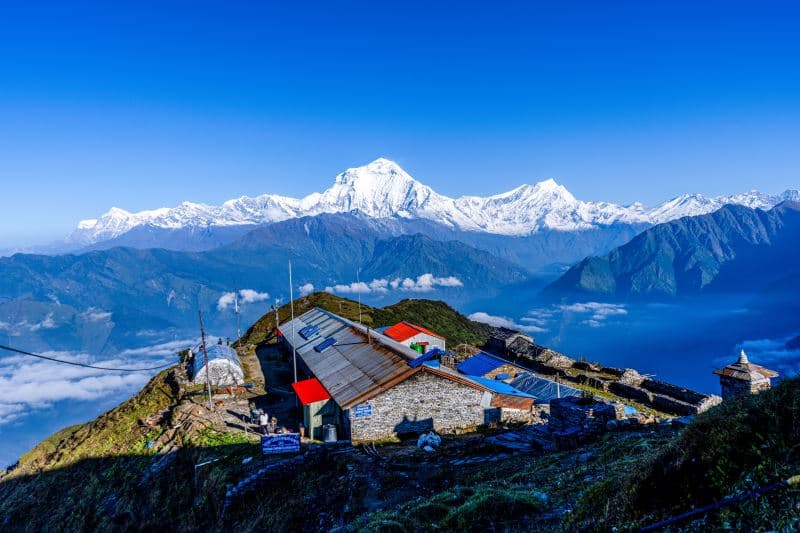
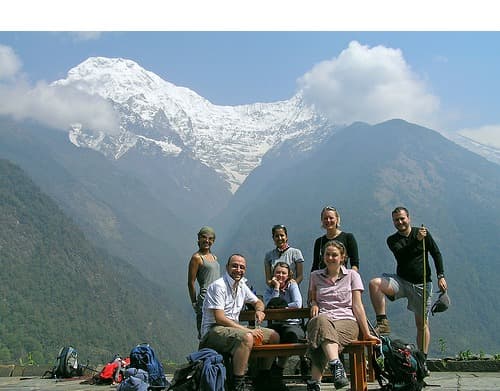
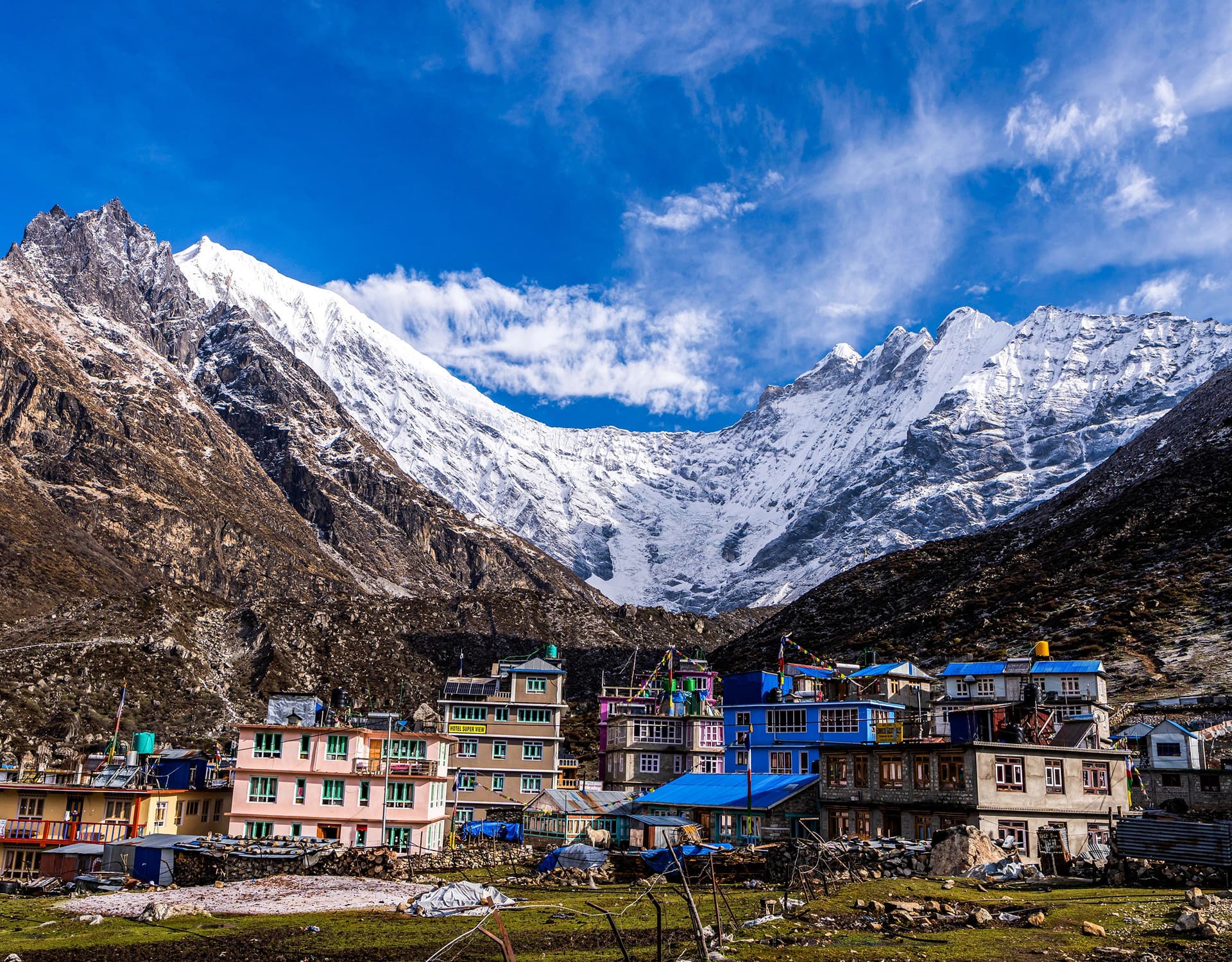
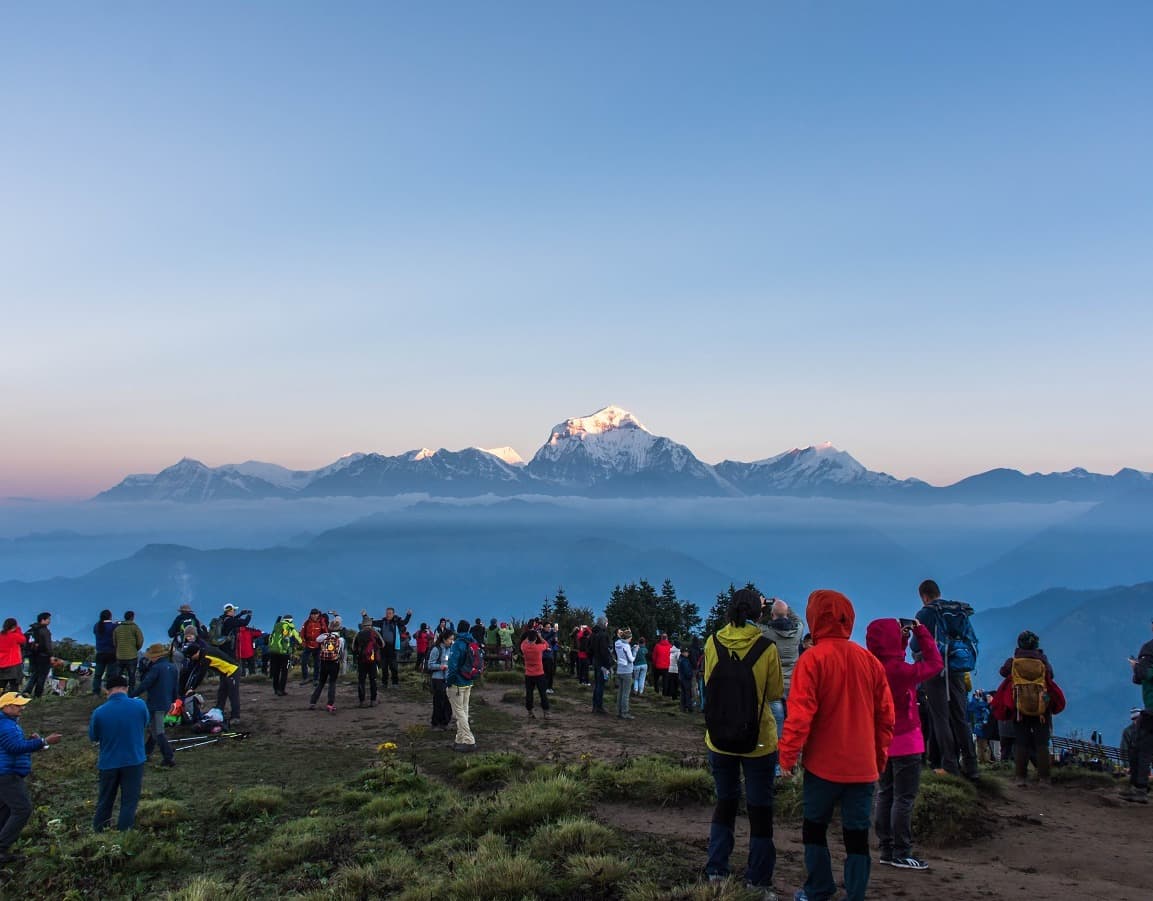
Trekking in Nepal offers various choices; however, the North Annapurna Base Camp trekking trail is considered one of the newer trails that has not been taken by many people. The trek will end at the new trail, which was discovered in the northern part of Annapurna I.
DestinationNepal
Duration11 days
Overview
Among many other trekking paths in Nepal, the North Annapurna Base Camp Trek is a relatively new route that has not yet been visited by many travellers. It follows an unexplored path into the north side of Annapurna I. Unlike the busy trekking route on the popular Annapurna Base Camp trek, this trek offers travellers an authentic Himalayan experience. The trek leads one into pristine wilderness, untamed landscape, authentic mountain villages, amazing glaciers, beautiful waterfalls, beautiful meadows, and fantastic views of the Annapurna massif.
The exciting trek begins at the pretty village of Narchyang in Myagdi district. This trek involves a gradual ascent through forests, yak meadows, suspension bridges, rugged mountain passes, and steep mountain cliffs. The destination of this exciting trek is the amazing Annapurna North Base Camp, at an altitude of about 4,190 meters above sea level.
Trip Highlights
Explore the hidden and newly opened North Annapurna Base Camp route
Experience untouched Himalayan wilderness and remote mountain landscapes
Enjoy panoramic views of Annapurna I, Nilgiri, Dhaulagiri, and surrounding peaks
Trek through traditional Magar villages and local culture
Walk beside waterfalls, alpine forests, glaciers, and high mountain valleys
Reach Annapurna North Base Camp at 4,190m
Cross the scenic Thulo Pass and descend toward Lete
Less crowded trail compared to the classic Annapurna Base Camp Trek
Scenic drive and optional flights between Kathmandu and Pokhara
Perfect adventure trek for nature lovers and experienced trekkers
This trekking route is a perfect destination for adventure seekers looking for something different to explore in Nepal. During this trek, travellers are sure to enjoy amazing views of Annapurna I (8,091m), Nilgiri, Himchuli, Dhaulagiri range, and other nearby mountains.
The trip begins with a drive from Kathmandu to Pokhara and Tatopani, then a trek from Narchyang. On completion of the North Annapurna trek, trekkers descend from Annapurna North Base Camp via Thulo Pass and Lete.
It's an 11-day itinerary that promises an exciting adventure and exploration of the pristine wilderness of Annapurna Massif.
Itinerary of North Annapurna Base Camp Trek - 11 days
Upon arrival at Tribhuvan International Airport in Kathmandu, you will be welcomed by us and taken to your hotel. On completion of the check-in process, you can explore the streets of Thamel or have a brief discussion about your trekking arrangements.
Overnight: Kathmandu
After breakfast, you can either drive for pleasure or take a domestic flight to Pokhara. After reaching Pokhara, check into the hotel and rest. Duration by Driving: 6–8 Hours Duration by Domestic Flight: 25 Minutes Overnight in Pokhara
Drive to Tatopani via scenic mountain roads and riverside areas. Then trek to Narchyang village, which is famous for its cultural traditions and mountain vistas. Duration of Drive: 5-6 Hours Duration of Trek: 2-3 Hours Lodging: Narchyang
The path slowly climbs through jungles, over suspension bridges, past waterfalls, and through natural and rocky areas. You will enjoy the peaceful, scenic mountain wilderness along the way. Duration of Trek: 6-7 Hours Stay Overnight at ChhoteBugin.
Today’s trek takes you deeper into alpine landscapes with incredible mountain panoramas. Sandhikharka is an important campsite before heading to the North Annapurna Base Camp. Trek Duration: 5–6 Hours Overnight at Sandhikharka
This is the most exciting day of the trek. The trail passes glaciers and rugged high-altitude terrain before reaching the breathtaking Annapurna North Base Camp. Enjoy close-up views of Annapurna I and surrounding snow-covered peaks. Spend quality time exploring and photographing the magnificent Himalayan scenery. Maximum Elevation: 4,190m Trek Duration: 5–6 Hours Overnight: Annapurna North Base Camp
After witnessing a memorable Himalayan sunrise, descend back to Sandhikharka following the same scenic route. Trek Duration: 4–5 Hours Overnight: Sandhikharka
Cross the scenic Thulo Pass while enjoying magnificent mountain and valley views. The descent toward Lete offers beautiful forests and traditional settlements. Trek Duration: 7–8 Hours Overnight: Lete
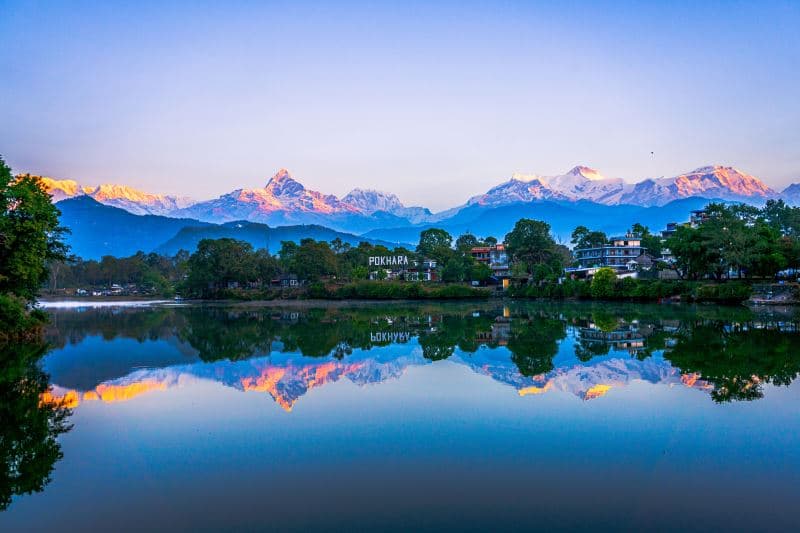
After breakfast, drive back to Pokhara. Enjoy a relaxing evening near Phewa Lake and celebrate the successful completion of the trek. Drive Duration: 6–7 Hours
Overnight: Pokhara
Return to Kathmandu by flight or tourist vehicle. In the evening, enjoy a farewell dinner and celebrate your Himalayan adventure. Overnight: Kathmandu
Our team will transfer you to Tribhuvan International Airport for your final departure.
If the provided schedule isn't suitable for you, we can create personalized travel arrangements.
**Discounts are determined exclusively by the size of your group. We do not add additional members to your group.
July 2026
Su
Mo
Tu
We
Th
Fr
Sa
28
29
30
1
2
3
4
5
6
7
8
9
10
11
12
13
14
15
16
17
18
19
20
21
22
23
24
25
26
27
28
29
30
31
1
Sold out dates
US $0US $0 per person (based on 1 people)
Cost Includes
Airport Transfers: Arrival and departure transfers via private tourist vehicle according to your international flight schedule. Ground Transportation:
Kathmandu to Pokhara/Tatopani and return via comfortable private 4WD Jeep.
Off-road Jeep transfers from Tatopani/Narchyang to the Humkhola trailhead and back.
Accommodation:
Twin-sharing accommodation in a standard 3-star hotel in Kathmandu and Pokhara (including breakfast).
Best available local teahouse/lodge accommodations during the lower transit days.
High-quality, windproof mountain tents (twin-sharing) during the alpine camping phases.
Meals: All meals (Breakfast, Lunch, and Dinner) during the trek, including fresh fruits, hot beverages (tea/coffee), and hygienic, freshly prepared camp food cooked by our professional expedition chef.
Trekking Crew:
Government-licensed, English-speaking, and highly experienced Wilderness Trekking Guide.
Professional Expedition Cook and Kitchen Assistants for the camping days.
Highly resilient local porters to carry personal baggage and group camping/kitchen equipment (1 porter assigned per 2 clients; max weight $15\text{ kg}$ per client).
Permits & Fees:
Annapurna Conservation Area Project (ACAP) entry permit.
Trekkers' Information Management System (TIMS) card.
All local government taxes and entry fees.
Camping & Group Equipment:
High-altitude member tents, kitchen tents, dining tents with tables and chairs, toilet tents, mattresses, cooking utensils, and fuel.
Safety & First Aid:
A comprehensive medical first-aid kit is carried by the guide.
An oximeter to monitor daily oxygen saturation levels at high altitudes.
Crew Insurance: Full insurance cover, wages, equipment, food, and lodging for all accompanying guides and porters.
Cost Excludes
International Airfare: International flights to and from Kathmandu (Tribhuvan International Airport). Nepal Tourist Visa:Visa fee payable upon arrival at the Kathmandu airport ($30$ for 15 days, $50$ for 30 days). Travel & Medical Insurance: Mandatory comprehensive travel insurance that explicitly covers high-altitude trekking (up to $4,500\text{ m}$), medical treatments, and emergency helicopter evacuation. Meals in Cities: Lunch and dinner during your stay in Kathmandu and Pokhara (allowing you to explore local restaurants). Personal Equipment: Personal cold-weather trekking gear, down jacket, backpack, and a sleeping bag rated to at least $-10^\circ\text{C}$ (sleeping bags can be rented in Kathmandu if needed). Drinks & Confectionery: All bar bills, bottled mineral water, carbonated soft drinks, alcoholic beverages, and personal snacks (chocolate bars, nuts, energy bars). Battery Charging & Wi-Fi: Hot showers, Wi-Fi access tokens, and electronic device charging fees at the lower teahouses (where applicable). Tips & Gratuities: Tips for the guide and porters at the end of the trek as a token of appreciation for their hard work. Contingency Costs: Any extra expenses arising from unforeseen circumstances such as flight delays, political strikes, roadblocks, landslides, or personal illness. Pro Operational Tip: If you want to offer an "Express Luxury" variant of this trek, you can easily adapt this list by moving Domestic Flights (Kathmandu ⇄ Pokhara) into the Includes section to cut down on long highway driving days for high-budget international clients.
Know Before you Go
Best Time for North Annapurna Base Camp Trek
The best seasons for the North Annapurna Base Camp Trek are:
Spring Season (March – May)
Blooming rhododendrons in the forest
Clear weather and visibility of mountain ranges
Good temperature to trek
Autumn Season (September – November)
The Himalayan landscape is very visible
Clear weather with no clouds
Perfect season for trekking
Winter trekking is possible but can be challenging due to snow and cold temperatures.
Trek Difficulty
North Annapurna Base Camp Trek is regarded as a moderate to strenuous trek. Therefore, trekkers need to be physically fit and have previous trekking experience, as there will be many steep hills and rough terrain. It will also involve high-altitude trekking.
Accommodation and Meals
Accommodation on the trek includes hotels in Kathmandu & Pokhara and tea houses in the trekking region. Sometimes in remote areas, camping arrangements will also be needed. Meals typically include:
Nepali Dal Bhat
Noodles and soups
Fried rice
Tibetan bread
Tea and coffee
Seasonal vegetables
Permits Required
Trekkers need the following permits:
Annapurna Conservation Area Permit (ACAP)
TIMS Card (Trekkers’ Information Management System)
These permits help support conservation and trekking management in the Annapurna region.
What to Pack
Recommended trekking gear includes:
Warm down jacket
Sleeping bag
Trekking boots
Trekking poles
Gloves and a woollen cap
Sunglasses and sunscreen
Water bottle and purification tablets
Personal first aid kit
Rain jacket and thermal wear
North Annapurna Base Camp Trek Facts
Facts
Details
Trek Name
North Annapurna Base Camp Trek
Trek Duration
11 Days
Trek Region
Annapurna Region, Nepal
Trek Starting Point
Kathmandu
Trek Ending Point
Kathmandu
Highest Elevation
4,190 meters (Annapurna North Base Camp)
Trek Difficulty
Moderate to Challenging
Accommodation Type
Hotel, Tea House & Basic Lodge
Transportation
Tourist Bus, Private Jeep or Domestic Flight
Best Trekking Seasons
Spring (Mar-May) & Autumn (Sep-Nov)
Major Attractions
Annapurna I, Nilgiri, Dhaulagiri, Glaciers, Waterfalls
We had a very successful EBC trek in October 2024 because of Team Himalaya! Our guide, Raj, was very knowledgeable in all things Everest. He set us up in the best lodges where we had great service all along. He provided us with a superb porter, who also went above and beyond in taking care of us. Raj was very patient with us and was always looking out for our best interests. We would highly recommend Team Himalaya for any trek!
AAlec S1st Apr, 2024
Everest Base Camp Team Himalaya March 2024
We have just returned from a 14 day, 11 day hike with Raj and Durga from Team Himalaya to Everest Base Camp. From the minute we landed to our departure we were properly looked after and cared for by Team Himalaya. The trek to and from Everest Base Camp was wonderful, our guides and porters really looked after us and were incredibly knowledgeable. In Nepal things can go wrong especially with flights to and from Lukla but Team responded magnificently and found alternative solutions. If this is on your bucket list as ours and you are looking for a company to organise this with I would 100% recommend Raj.
JJourney379926937861st Apr, 2024
Reaching Everest Base Camp with TEAM HIMALAYA
If you are looking for an adventure of a lifetime, don’t hesitate! Choose TEAM HIMALAYA for your Everest Base Camp trek! We completed the EBC trek early November 2023 . My husband and I chose to do a private trek with Team Himalaya. Everything went smoothly with our guide Raj. His team and organization is outstanding! We could not have done it without him. Raj took care of everything throughout the trek and made sure we were well at all times, even providing us fresh fruits every night after dinner! We felt safe at all times , his experience and knowledge of the Himalayas helped us achieve our goal in reaching the EBC! His professionalism went beyond our expectations from our first contact with him for information until the very end. We will forever remember this expedition and gained a friend in our guide Raj!
eevanhH6577DL13th May, 2023
Incredible Experience by evan
It was an incredible experience being surrounded by the towering Annapurna Himalayas. This memorable trek through Nepal offered the best scenic views and stunning landscapes. Despite being surprised at how quickly the trek ended, the daily walks were filled with dramatic views that left a lasting impression.
I highly recommend this adventure, as it is one of the best base camp treks in the Himalayas with minimal risk of altitude sickness. Although there were steep ups and downs that were tiring on some days, the breathtaking views made it all worth it. This was easily the most exciting trek I have ever experienced.
I want to thank Team Himalayas and Raj for providing exceptional service with their expert guide and staff.
Frequently Asked Questions About the North Annapurna Base Camp Trek
What is the location of the North Annapurna Base Camp Trek?
The trek starts from Narchyang village in Myagdi District, in the northern part of the Annapurna massif in Nepal's Annapurna region.
How challenging is the North Annapurna Base Camp Trek?
It is moderate to tough due to its steep ascent, mountainous terrain, and high-altitude treks.
What is the highest elevation of the trek?
The highest elevation reached in the trek is Annapurna North Base Camp at 4,190 meters above sea level.
How many days does the trek take?
The trip takes about 11 days, including arrival, trek days, and departure from Nepal.
Which season is better to take this trek?
The best season to trek is spring (March to May) and autumn (September to November).
Do you need any trekking experience for the trek?
Trekking experience will be useful, but it is not compulsory. However, good health and preparation are recommended.
What are the chances of developing altitude sickness on the trek?
There is a moderate risk of altitude sickness at elevations above 3,500 meters above sea level.
What documents are needed for the trek?
Annapurna Conservation Area Permit (ACAP), TIMS card.
Do you require a guide and porter for the trek?
A guide is highly recommended, given that the trek is not as well explored as other treks. Hiring porters is optional, too.
Which kind of accommodation is available?
Accommodation consists of hotels in Kathmandu & Pokhara, tea houses, lodges, and other options on trekking days.
Which food is provided on the trek?
Commonly available foods include Dal Bhat, noodles, soups, fried rice, potatoes, tea, coffee, and some local dishes.
Is drinking water available on the route?
There are sources of drinking water on the route. Moreover, water purification tablets or filters may also be used.
Will internet or mobile coverage be available?
Coverage of both the internet and mobile networks is minimal in remote places.
Can beginner travellers undertake this trek?
Yes, fit beginners with a positive attitude and good guidance can undertake this trek.
Which items should I take for the trek?
Recommended items include a down jacket, trekking boots, warm clothes, a sleeping bag, gloves, a hat, a trekking pole, sunglasses, sunscreen, and personal medicines.
Is the rescue helicopter service available during the trek?
Helicopter rescue services are available during emergencies.
What would be the lowest temperature of the route?
Temperature can fall below zero degrees Celsius at night and in the morning, especially in autumn and winter.
Does the trek to Annapurna Base Camp become very crowded?
No, the route is relatively free of crowds and considered off the beaten path.
Can you customise the trek itinerary?
Yes, the itinerary can be customised depending on the trekking period, fitness levels, and preferences.
Why should you opt for the North Annapurna Base Camp Trek?
This trek offers untouched Himalayan landscapes, fewer crowds, authentic mountain culture, and spectacular close-up views of Annapurna I and surrounding peaks.