Everest Base Camp Trek Distances: Everything You Need To Know
The Everest Base Camp Trek can be difficult but also extremely fascinating and challenging. The distance is around 130 km (80 miles) over 12 to 16 days, depending on your speed and acclimatisation needs.
Thus, if you are going to take on this ultimate adventure in front of Mount Everest, then this article is for you.
I will tell you about the Everest Base Camp Trek distances and the distances you are expected to cover each day, the acclimatisation days required, the altitude to reach, preparation, and other useful tips.
What are the distances you are supposed to cover on the Mount Everest Base Camp Trek?
Adventure enthusiasts converge in Lukla, which is a tiny village and the starting point of the trekking route. Lukla is accessible by air from Kathmandu. Here you start to climb to increasingly high altitudes, with amazing Sherpa villages, hanging bridges, and mesmerising views of the Himalayas.
Namche Bazaar, Tengboche Monastery, and Dingboche are among the legendary places you will visit during the trek and are good for acclimatisation as well as for discovering local culture.
After reaching Everest Base Camp with the steep climbs and descents, there is no doubt that getting to the foot of the highest mountain will be extremely rewarding. Coming down from there, many trekkers take another route.
Standard Route Plan for EBC
The Everest Base Camp trek typically takes 12-15 days to allow proper acclimatisation and complete the trek.
Planning for the Trekking to Everest Base Camp.
Days 1-2: travellers land in Kathmandu, sightseeing the city and preparing for the trek.
As part of your preparations for the Everest Base Camp Trek, you will today set aside some days for heritage exploration in Kathmandu. Today will be spent visiting Kathmandu Durbar Square, Pashupatinath Temple, Boudhanath Stupa and Swayambhunath Stupa.
Day 3: fly to Lukla (2,860m) and trek to Phakding (2,652m).
Distance: 8 km (5 miles)
Duration: 3-4 hours
Elevation gain: 2,860m to 2,610m
The vibe: The gentle introduction route. Ironically, your first day on the Everest trek is a predominantly downhill trek as you follow the Dudh Koshi River valley.
Day 4: trek from Phakding to Namche Bazaar (3,440m).
Distance: 11 km (6.8 miles)
Duration: 5-6 hours
Elevation gain: 2,610m up to 3,440m
The vibe: The first real challenge. Includes crossing the iconic, lofty-high Hillary Suspension Bridge. The last two hours comprise a difficult, uphill zigzag through pine forests to reach the Sherpa capital of Namche.
Day 5: acclimatisation day in Namche Bazaar, a trek to Everest View Hotel included.
Distance: 4-5 km (3 miles) round trip
Duration: 3 hours
Elevation gain: Up to 3,880m (Everest View Hotel) and down
The vibe: "Hike high, sleep low." You won't get any closer to the camp today, but the relatively short, difficult hike up to the Everest View Hotel is essential to stimulate red blood cell production.
Day 6: trek from Namche Bazaar to Tengboche (3,860 m) and explore the iconic Tengboche Monastery.
Distance: 10 km (6.2 miles)
Duration: 5-6 hours
Elevation gain: 3,440m up to 3,860m
The vibe: Amazing ridge walking. The day starts with a flat, scenic stretch and ends with a steep descent to the river for lunch at Phunki Tenga. Then, you have to complete a challenging, two-hour-long uphill hike to reach the famous Tengboche Monastery.
Day 7: trek from Tengboche to Dingboche (4,410m).
Distance: 11 km (6.8 miles)
Duration: 5-6 hours
Elevation gain: 3,860m up to 4,410m
The vibe: Entering the alpine zone. No tree lines anymore, only low shrubs in the wide and windy valleys, overshadowed by the huge wall of Ama Dablam.
Day 8: acclimatisation day in Dingboche; a trek to Nangkartshang is recommended.
Distance: 5 km (3.1 miles) round trip
Duration: 4 hours
Elevation gain: Up to 4,800m (Nagarjun Hill) and down
The vibe: Another mandatory resting day. Steep acclimatisation hike to Nagarjun Hill will reward you with amazing views of Makalu and Lhotse.
Day 9: continue the trek from Dingboche to Lobuche (4,940m).
Distance: 9 km (5.6 miles)
Duration: 5-6 hours
Elevation gain: 4,410m up to 4,910m
The vibe: The emotional centre of the trek. The trek includes a slow grind up the Thukla Pass, home to the poignant stone memorials to climbers who lost their lives on Everest.
Day 10: trek from Lobuche to Gorak Shep (5,164 m) and Everest Base Camp (5,364 m).
Distance: 15 km (9.3 miles) total
Duration: 8-9 hours
Elevation gain: 4,910m to 5,164m (Gorak Shep), and from there to 5,364m (EBC) and back to Gorak Shep
The vibe: Achievement unlocked. This is a challenging and exhausting day in the rocky glacial moraine. You leave your heavy bags at Gorak Shep, go to the Everest Base Camp marker stone, celebrate and return to Gorak Shep to spend the night.
Day 11: trek to Kala Patthar (5,644 m) in the morning to see the sunrise and then trek back to Pheriche (4,243 m).
Distance: 16 km (10 miles) total
Duration: 7-8 hours
Elevation gain: Up to 5,545m (Kala Patthar), and then down to 4,240m (Pheriche)
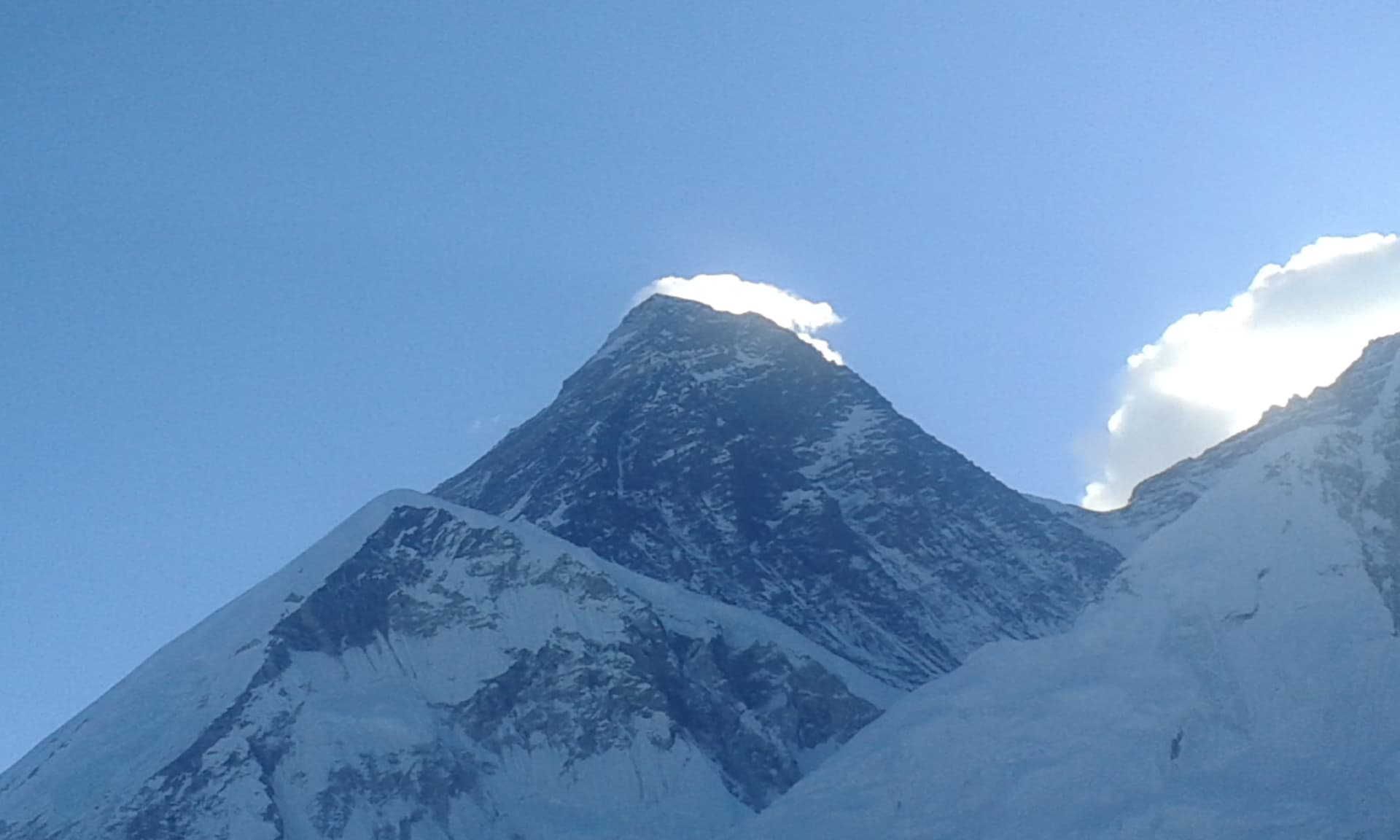
The vibe: The ultimate views. Base camp itself doesn't really offer any views of Everest's summit (as it's overshadowed by Nuptse). The morning trek to Kala Patthar is the way to get the iconic, clear postcard view of the highest point on Earth.
Days 12-13: trek from Pheriche back to Namche Bazaar, then from Namche Bazaar to Lukla.
Daily distance: 15-20 km (9-12 miles) per day
Duration: 6-8 hours daily
The vibe: Easy downhill treks. As you're now descending back to the air rich in oxygen, you can comfortably cover twice the daily uphill distance. You will quickly descend from Pheriche to Namche, and then to Lukla to catch your flight.
This is the sample itinerary, although it can be adjusted to your fitness level, preferences and acclimatisation needs. Contact the trekking agency or guide to get an individual plan.
Everest Base Camp trek walking hours
On the Everest trek, you'll usually be trekking 4-6 hours per day on average, depending on a number of factors.
Fitness level: in good condition, one may achieve the Everest Base Camp trek distance faster and finish the daily trek sooner.
Acclimatisation: some days include shorter treks to help the body adapt to the altitude.
Weather conditions: snow or high winds can slow you down and make the trek difficult.
Personal pace: some people might choose a slower pace to better enjoy the scenery.
Take care of yourself, adjust the pace, and take breaks when needed. Drink plenty of water and never underestimate the importance of acclimatisation.
Everest Base Camp trek altitude chart
The Everest Base Camp trek offers an amazing journey through high-altitude terrain from Lukla (2,860m, 9,383ft) to Kala Patthar (5,545m, 18,200ft).
Everest Base Camp trek altitude chart:
Lukla - 2,860m (9,383ft)
Phakding - 2,652m (8,698ft)
Namche Bazaar - 3,440m (11,283ft)
Tengboche - 3,860m (12,661ft)
Dingboche - 4,410m (14,465ft)
Lobuche - 4,910m (16,109ft)
Gorak Shep - 5,140m (16,863ft)
Everest Base Camp - 5,364m (17,598ft)
Kala Patthar - 5,545m (18,200ft)
These are estimated altitudes that may differ somewhat from your exact trek route.
Proper acclimatisation is key to avoiding altitude sickness. Most trekking itineraries have rest days to allow recovery.
Never trek alone; always consult a trekking agency or guide to get an itinerary suitable for your fitness and acclimatisation.
Getting to these altitudes is not easy, but with proper preparation, it's an amazing adventure!
Difficulty of the Everest Base Camp Trek
The Everest Base Camp trek is tough, both physically and due to the challenges of high altitude. You'll walk for several hours per day on rough terrain at altitudes which exceed 5,000 meters (16,400 feet). Although it's tough, the experience is amazing.
Challenges of the Trek
Altitude: altitude sickness is widespread in the Himalayas and can lead to serious consequences if not properly accounted for.
Physical Exertion: You have to be prepared for long hours of uphill walking in rough physical conditions.
Weather: The climate of the Himalayan region is changeable and unpredictable, with sudden changes from rain to snow or windstorms.
Rough Terrain: The paths are rough and uneven. There are some steep ascents and descents.
Why It's worth it:
Spectacular Scenery: stunning Himalayan peaks, glaciers and other sights will surround you on all sides.
Culture: you'll experience Sherpa culture, explore monasteries and learn how they live.
An Achievement: Standing at the Everest Base Camp will be an unforgettable accomplishment.
How to Prepare for This Challenging Trek
Advance Training: It is important to have proper training before undertaking the Everest Base Camp trek.
Pack Lightly: take only the things that you need to avoid heavy backpacks.
Drink Plenty of Water & Eat Healthy: drinking plenty of water and maintaining a healthy diet will help with adapting to altitude.
Pace Yourself: take breaks when necessary and leave time for acclimatisation.
Hire a local Guide and Porter: they will help you organise the trip, provide navigation, and transport the load. Hiring a guide has been mandatory since 2023.
How should you prepare for the Everest Base Camp Trek?
Preparing for the Everest Base Camp trek requires physical training, mindset preparation and appropriate gear. Here is what you have to do to be ready:
Physical Training
Cardio Exercises: improve your endurance through exercises such as running, swimming, cycling, or climbing stairs.
Strength Training: work out the leg, core, and back muscles to endure steep ascents and descents.
Hiking Practice: hike with a backpack regularly to mimic a real trekking experience.
Mental Preparation
Awareness of Altitude: understand the nature of altitude sickness and learn its symptoms, prevention and treatment methods.
Trekking Etiquette: follow the principles of Leave No Trace and be culturally sensitive.
Mindset: be ready for long and challenging treks in unpredictable conditions. Positive thinking matters!
Gear & Equipment
Clothing: wear moisture-wicking base layers, warm layers, and a weatherproof outer layer to adapt to the weather.
Footwear: put on well-worn hiking boots for ankle support.
Backpack: choose a comfortable, reliable backpack to carry all your essentials.
Sleeping Bag & Sleeping Mat: It's important to have the right sleeping bag and mat to insulate you from the cold and help you sleep comfortably during this exhausting trek.
Other Must-Have Gear & Equipment: a headlamp, sunglasses, sunscreen, first aid kit and any personal medication.
Additional Tips
Medical Examination: consult a doctor to determine whether you are fit enough to undertake high-altitude trekking and to receive any necessary vaccinations or medication.
Guide or Porter Hire: hiring a local guide will help with navigation, acclimatisation, and learning about Sherpa culture.
Travel Insurance: You are required to provide your travel insurance policy, including cover for medical emergencies, altitude sickness, trip cancellation, and evacuation.
Hotel Selection in Kathmandu: Start your journey with comfort by booking a hotel centrally located in Kathmandu.
Under the condition of sufficient preparation and the right attitude, the Everest Base Camp (EBC) trek can become one of the most rewarding experiences in your life.
Now that you know all the practical information concerning distances, high altitudes, standard itineraries and alternative routes.