Kailash Mansarovar Yatra 2026/2027: kailash Tour by Helicopter vs kailash Overland Route
Your choice of entry to the house of Lord Shiva is one you will make, considering either the Classic Overland Route or the Kailash Tour by Helicopter. Here, we present a detailed comparison of the two options, including all relevant permit information, health requirements, and cultural considerations, so you can plan your ultimate journey.
Overview & Comparative Analysis
| Feature | Classic Kailash Overland Route | Kailash Tour by Helicopter |
| Duration | 14 to 15 Days | 10 to 13 Days |
| Primary route | Drive from Kathmandu via the Kerung (Gyirong) Border directly into Tibet. | Fly from Kathmandu to Nepalgunj, onward to Simikot, then a helicopter flight to the Hilsa Border. |
| Acclimatization | Excellent. Slow, gradual ascent over several days of driving. | Rapid. Drastic elevation gains require aggressive hydration and rest. |
| Cost Range | Approx. $2,900 – $4,100 USD |
Approx. $3,500 – $6,000+ USD (Subject to aviation fuel shifts)
|
| Weather Risk | Low. Land crossings are rarely halted completely by minor weather changes. | High. Domestic flights to Simikot and helicopters to Hilsa require clear visibility. |
| Best For | Budget-conscious travellers, first-timers at high altitude, and those who enjoy vast road journeys. | Senior citizens, time-crunched professionals, and travellers wanting to avoid hours of rough mountain driving. |
Highlighting the Journey and Major Events
No matter what mode of transport you use to get to the border, both routes converge in Tibet and complete the major aspects of the Yatra:
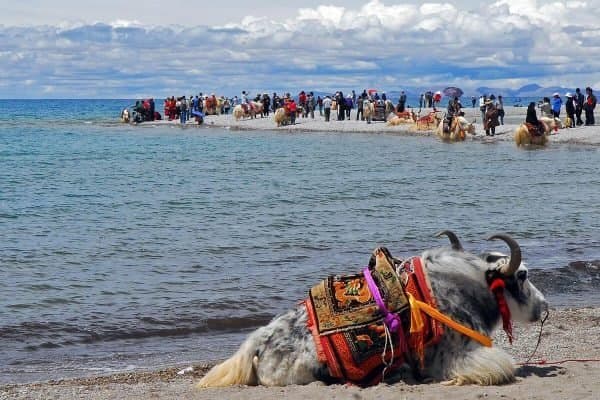
Lake Mansarovar: A freshwater lake located at 4,590 meters. Pilgrims perform spiritual rituals here and observe the contrast between Lake Mansarovar and the nearby Rakshas Tal (the dark crescent lake of demons).
The Outer Kailash Parikrama (Kora): A challenging three-day-long walk around Mount Kailash at 52 kilometres.
Dolma La Pass: The highest physical point during the pilgrimage at 5,630 meters, covered with multicoloured prayer flags.
Yam Dwar: The “Gate of the God of Death” and the beginning of the holy circuit.
History & Spiritual
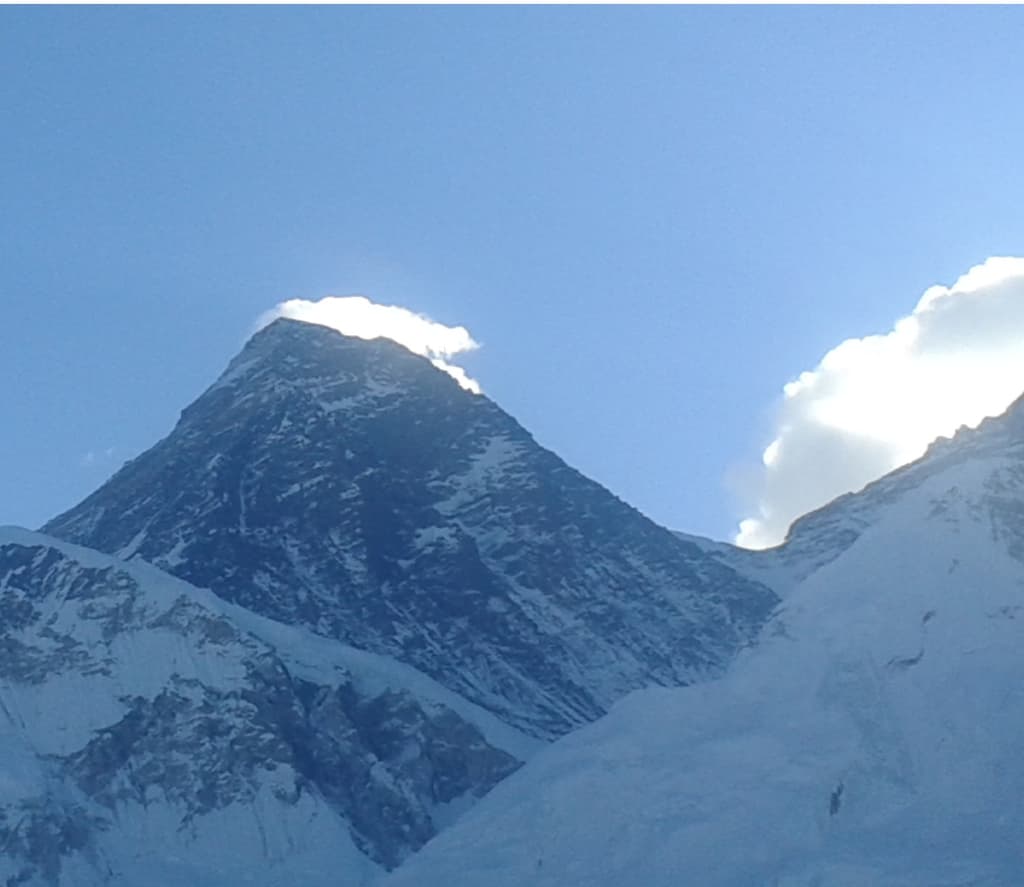
Mount Kailash (6,638 m) is regarded as the physical centre of the universe, the Axis Mundi. This mountain has a lot of multi-religious significance:
Hinduism: Considered the home of Lord Shiva and his wife, Goddess Parvati. According to tradition, drinking water from Mansarovar will absolve one of sins accumulated across more than a hundred lives.
Buddhism: Known as Kang Rinpoche (“Precious Peak of Snow”). It is associated with Demchok (supreme bliss) and the place of victory of the great yogi Milarepa in the battle of spells against a shamanic priest.
Jainism: Known as Mount Ashtapada. It is considered the site of enlightenment for Rishabhadeva, the first-ever Tirthankara.
Bon: The Indigenous pre-Buddhist religion of Tibet sees this area as the abode of the entire celestial pantheon of sky gods.
Major Change: The side trips called Charan Sparsh (touching the feet of Mount Kailash) and Asthapad were prohibited by the Tibetan Tourism Bureau to preserve the environment and glaciers.
Scenery & Culture Contrast
Overland Views: The journey through the Kerung border marks a change in scenery from Nepal's green valley landscapes to Tibet's dry, brown plateau.
Helicopter Views: The flight is parallel to the Himalayan snow-covered wall, followed by the descent into the deep river canyons of far western Nepal.
Altitude & Acclimatisation
Elevation is the biggest threat posed by the trekking expedition. You will be spending days at elevations higher than those of the highest mountain peaks.
Kathmandu: 1,350m/4,429 ft.
Kerung/Taklakot (Border towns): 2,700m-4,000m (Key acclimatisation stop points)
Lake Manasoravar: 4,590m/15,060 ft.
Darchen (Kailash Base): 4,700m/15,420 ft.
Dirapuk (Night 1 during Parikrama): 5,210m/17,093 ft.
Dolma La Pass (Highest point on the trek): 5,630m/18,471 ft.
Guidelines to Stay Healthy
Gradual Ascent: The Kailash overland route allows you an additional 24-48 hours for the natural production of red blood cells before reaching elevations of 4,500+ meters.
Hydration: The air is extremely dry. Make sure you drink 3-4 litres of clean water each day, as dehydration can worsen AMS (Acute Mountain Sickness).
Medical Precautions: Visit a doctor to discuss preventive medications such as Diamox (Acetazolamide). Make sure your travel insurance plan covers helicopter evacuation at high altitudes.
Permits, Visas, and Regulations
The management of Tibet is carried out through a complex, hierarchical set of regulations. Independent travel is strictly forbidden.
Documents Required
All permits need to be arranged collectively by a licensed Tour operator. These permits cannot be arranged independently as follows:
Tibet Travel Permit (TTP): issued by Tibet Tourism Bureau
Aliens Travel Permit: Required for travelling to the restricted areas of Ngari/Kailash
Military & Foreign Affairs Permits: Required for sensitive border regions
Chinese group visa: collected physically from the Chinese embassy in Kathmandu. The minimum processing period for your passport is 3-4 business days in Kathmandu before you cross the border.
Restrictions on Age and Fitness
Official Restrictions on Age Limit: The official age range required for the group permit is 18 to 70 years. However, certain operators may obtain exceptions for individuals both under and over the age limit, provided they hold a comprehensive physical health certificate from a registered doctor.
Valid Passport: Must be valid for at least 6 months from the date of travel and have at least 2 blank pages.
Best Time to Travel Kailash Tour (2026/2027)
The Kailash Tour season runs from May to October.
Season Peak (May-June & September-October): Sunny days, clear vision and great conditions for high pass trekking.
Monsoon (July-August): Since the Tibetan Plateau lies in the rain shadow of the Himalayas, the region receives minimal rainfall. Hence, travel by land is feasible. However, helicopter service from Simikot, Nepal, to the Kailash Range is severely affected by cloud cover.
Full Moon Rush: Many people want to time their visit to Mansarovar Lake with the full moon day. It is spiritually auspicious, but expect the guesthouses and borders to get terribly crowded on such days.
Kailash Tour Overland Route
Arrive in Kathmandu
Days 1-2: Arrive in Kathmandu, Nepal. Give your original passport to the tour operator to obtain your Group Visa to China.
Drive to the Border
Day 3: Overland drive through the green hills of Nepal to the Rasuwagadhi border point of Kerung, clearing customs for exit.
Crossing into Tibet and Acclimatisation
Days 4-6: Cross over into the Tibetan Autonomous Region. Drive through towns like Kerung and Saga. Stay in such areas for at least 48 hours to acclimatise to an altitude of 4,500 m+.
Reach Lake Manasarovar
Day 7: Drive through the high-altitude Tibetan plateau to reach Lake Manasarovar. Have a day at this stunning location with views and an overnight camp.
The 3-Day Kailash Kora
Days 8-10: Drive further to Darchen, the base of the trek. Trek 52 km within 3 days, crossing Dolma La Pass and come back to Darchen before commencing your return drive.
Kailash Tour by Helicopter
Day 1: Arrive in Kathmandu (1,400m).
Arrival at Tribhuvan International Airport. Transfer to your deluxe hotel.
Evening trip briefing, equipment check, and passport collection for visa/Tibet permit processing.
Day 2: Kathmandu sightseeing and fly to Nepalgunj (150m).
Kathmandu sightseeing/Morning Darshan of the sacred Pashupatinath Temple and Budhanilkantha Temple (Sleeping Vishnu).
Afternoon domestic flight from Kathmandu to Nepalgunj (about 50-60 minutes near the India/Nepal border). Stay overnight in the Nepalgunj hotel.
Day 3: Fly from Nepalgunj to Simikot (2,910m).
Early morning domestic flight from Nepalgunj to Simikot (in the far west of Nepal) (about 45-50 minutes).
The rest of the day is free for acclimatisation to altitude. Stay overnight in a Simikot guesthouse.
Day 4: Helicopter from Simikot to Hilsa (3,640m) and drive to Taklakot/Purang (3,900m).
Take a beautiful 25-minute helicopter ride from Simikot to Hilsa (the Nepal-Tibet border town).
Cross the border bridge over the Karnali River on foot, complete the Chinese immigration process, and meet your Tibetan guide and vehicle.
Drive about 30 km to Taklakot. Overnight in a Taklakot hotel.
Day 5: Acclimatisation day in Taklakot (3,900m).
An important acclimatisation day before continuing the climb. You can go for a short walk in the area or to the monasteries. Overnight in Taklakot.
Day 6: Drive from Taklakot to Lake Mansarovar (4,590m).
An excellent 90 km drive (about 2-3 hours) over the high Tibetan plateau to the holy Lake Manasarovar, crossing the ghost lake Rakshas Tal with the first view of the Kailash mountain range.
Arrive at the holy Lake Mansarovar. Do a parikrama of the lake in a vehicle. Take a holy dip/water sprinkling and do prayers/Havan. Overnight in basic eco-lodge/dormitory guesthouse at Chiu Gompa.
Day 7: Drive to Darchen (4,575m).
Morning prayers at the lake, and then drive to Darchen, the base camp and starting point of the holy trek.
Spend the whole afternoon relaxing and preparing for the trek; hire horses or porters if necessary. Overnight in a hotel in Darchen.
Day 8: Kailash Parikrama Day 1 - Drive to Yam Dwar and Trek to Dirapuk (5,210m).
Drive 10 km to Yam Dwar (Tarboche), the entrance gate to Kora.
Start the 13 km trek (about 5-7 hours) on the west face of Mount Kailash to Dirapuk Monastery. NOTE: If you do not wish to trek, you can stay behind at Darchen and wait for the trek party. Overnight in a basic monastery guesthouse.
Day 9: Kailash Parikrama Day 2 – Trek to Zuthulphuk (4,790m) via Dolma La Pass (5,630m).
The toughest day of the Parikrama: a challenging 22 km trek (about 8-10 hours) over the very steep Dolma La Pass, which is the highest point on the journey.
After the pass, you will pass the holy Gauri Kund Lake and trek through the valley to Zuthulphuk. Overnight in a basic dormitory guesthouse.
Day 10: Kailash Parikrama Day 3 - Trek to Darchen and drive back to Taklakot.
Complete the last leg of the trek (about 6 km / 2-3 hours) to the drop point near Darchen.
Board the vehicle and drive to Taklakot to celebrate the end of the Kora. Overnight in the Taklakot hotel.
Day 11: Drive to Hilsa, Helicopter to Simikot and fly back to Kathmandu.
Drive to the Hilsa border, re-enter Nepal and take the helicopter shuttle back to Simikot.
Immediately connect to the domestic flights from Simikot to Nepalgunj, and finally to Kathmandu.
Transfer to your hotel for the farewell dinner.
Complete packing list and gear checklist for the Mount Kailash Kora Trek.
High Altitude Layering System
Do NOT use any cotton on the trek, as it traps moisture, dries slowly, and can cause hypothermia at high altitudes.
Layer Base (moisture management): 2-3 sets of synthetic or merino wool thermal wear, top and bottom. (Keep one set absolutely dry and clean for sleeping.
Layer Mid (insulation): 1 mid-weight fleece jacket and 1 light insulated sweater/jacket.
Layer Outer (weather protection): 1 waterproof, windproof, and breathable hardshell jacket (preferably Gore-Tex or similar) and 1 pair of rain/snow pants.
Insulating layer outer: 1 heavy-duty, high-loft down jacket with a hood (essential for staying warm in freezing conditions).
Bottoms for trekking: 1-2 pairs of soft-shell trekking pants (convertible or flexible).
Feet, Head, and Hands
Maximum heat loss happens through the feet, head, and hands, and the ground over Dolma La is famously slippery and rocky.
Footgear:
1 pair of high-ankle waterproof trekking boots (must be well broken in before your trip).
1 pair of light camp shoes/sandals for guesthouses.
Socks: 4-5 pairs of merino wool or synthetic-heavy-weight blend hiking socks and 2 pairs of thin sock liners for blister prevention.
Headwear:
1 fleece beanie or balaclava to cover ears completely.
1 wide-brimmed sun hat/baseball cap.
1 pair of UV-protection sunglasses (Category 3 or 4) with retainer.
Hands and Neck:
1 pair of glove liners.
1 pair of heavy-duty, windproof, insulated and waterproof gloves.
1 fleece neck gaiter/buff to keep your face and neck protected from the hacking "Khumbu cough" caused by the dry and freezing air.
Technical Trekking Gear
Sleeping gear: 1 down-filled sleeping bag (−10∘C to −20∘C / 5∘F to 15∘F) and 1 thin sleeping bag liner.
Trekking Poles: 1 pair of solid, collapsible trekking poles (indispensable to help with treks, especially over Dolma La).
Illumination: 1 high-power headlamp with extra lithium batteries (cold climates drain the batteries).
Gaiters: 1 pair of low or mid-calf gaiters to keep the mud, scree, and occasional snow from entering your boots.
Medicines for altitude, skin, and general health
Health facilities on the Kailash Kora Trek are virtually non-existent. You need to be totally self-sufficient in basic first aid.
Altitude: Acclimatisation pills (Diamox/Acetazolamide) for altitude sickness prevention (consult doctor about the usage of the same), personal prescription medicines, and an optional small personal aerosol oxygen canister.
Pain and symptom relief: Ibuprofen/Naproxen for altitude headaches, anti-nausea medicine, antidiarrhea tablets, and ORS sachets.
Blister and wound care: Blister treatment patches (Compeed/moleskin), zinc oxide medical tape, antiseptic ointment, and various adhesive bandages.
Skin protection: Very high SPF 50+ sunscreen, SPF-containing lip balm, moisturiser, and lubricating eye drops (very dry, dusty air at alpine altitudes).
Personal hygiene, electronics, nutrition
Guesthouses along the Kailash Kora Trek are extremely basic, with no water supply and rudimentary squat toilets.
Sanitation: 3-4 packs of wet wipes/baby wipes (for dry showers), 2-3 rolls of toilet paper (not provided in the teahouse), hand sanitiser, and paper soap sheets.
Hydration: 1 wide-mouthed insulated bottle/thermos (1-2 litres) with boiling capacity, water purification tablets or high-filter-capacity UV/pump purifiers.
Battery power: 1 high-capacity power bank (20,000 mAh+), to be carried in your inner pockets close to your body and universal plug adapters for Chinese outlets.
High-energy snacks: 10-15 energy bars, nuts, dark chocolate, glucose tablets. (Note: Local food during the 3-day loop is very limited to instant noodles and vegetable soups from tent houses.
Critical checklist reminder: Never put your passport and Tibet Travel Permit into your checked duffel bag. Carry your passport and Tibet Travel Permit in your daypack or waist pouch at all times, along with cash (Chinese Yuan/RMB for porters, snacks, and hot water).
Frequently Asked Questions (FAQs)
How is the accommodation in Tibet?
Roads connecting Saga, Darchen, and Lake Mansarovar have been greatly improved with paved roads and new lodges. However, accommodation on the 3-day circuit (Dirapuk and Zuthulphuk) consists of basic mud-brick tea houses with communal toilets.
How early should I plan my Yatra?
Given that the permit process can be complicated and the season group quotas are limited, it is strongly advisable to book your trip 2-3 months in advance (ideally January/February for a spring trip).
Can I climb to the top of Mount Kailash?
No, climbing the Kailash is completely forbidden due to its religious significance for four different religions. So far, nobody has climbed to the mountain's summit.
Is it a difficult trek? Do I need some mountaineering experience?
The mountaineering experience is not required, but the trekking is quite difficult. You walk on rocks, dirt, and scree for 6-8 hours every day at a very high altitude. Cardiovascular training is strongly advised.
What is the accommodation like during the trek?
Apart from cities, accommodation on the 3-day circuit route is extremely modest. There are only primitive stone guesthouses or mud-brick lodges operated by local monasteries.
How much does a tour around Mount Kailash cost?
As of 2026, a standard overland group tour from Kathmandu costs around $2,400- $4,500 USD per person.